Manuals & Paper items
Showing 61–120 of 289 results
-
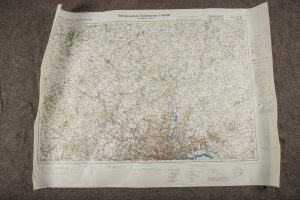
Rare Befestigungskarte 1:1 000 000 Grossbritannien London-Nord
€300.00Rare Befestigungskarte or defence overprint 1:1 000 000 Grossbritannien London-Nord. This map contains all the RAF and British Army installation in the area south of London. This is a vital and secret map which is very hard to find, a special piece for the Battle of Brittain collector!
-
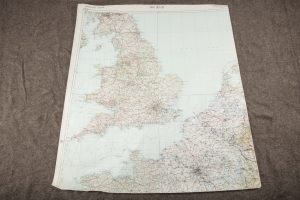
Luftwaffe laminated Fliegerkarte 1:1 000 000 Europa, France, Belgium, Netherlands and United Kingdom
€200.00Luftwaffe laminated Fliegerkarte 1:1 000 000 Europa, France, Belgium, Netherlands and United Kingdom This map was used by Pilots. The backside is laminated to endure long during folding. This is a hard to find map!
-
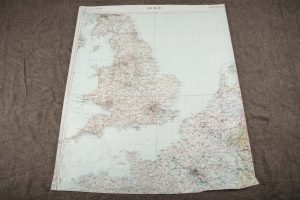
Luftwaffe laminated Fliegerkarte 1:1 000 000 Europa, France, Belgium, Netherlands and United Kingdom
€200.00Luftwaffe laminated Fliegerkarte 1:1 000 000 Europa, France, Belgium, Netherlands and United Kingdom. This map was used by Pilots. The backside is laminated to endure long during folding. This is a hard to find map!
-
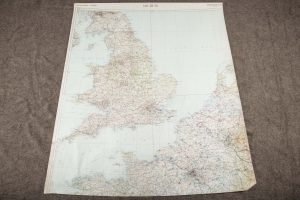
Luftwaffe laminated Fliegerkarte 1:1 000 000 Europa, France, Belgium, Netherlands and United Kingdom
€200.00Luftwaffe laminated Fliegerkarte 1:1 000 000 Europa, France, Belgium, Netherlands and United Kingdom in good condition. This map was used by Pilots. The backside is laminated to endure long during folding. This is a hard to find map!
-
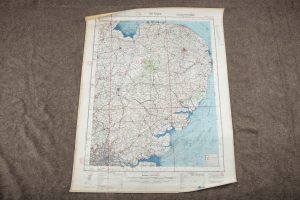
Luftwaffe laminated Fliegerkarte 1:250 000 – Ost Anglia, London, Cambridge, Ipswitch
€175.00Luftwaffe laminated Fliegerkarte 1:250 000 – Ost Anglia, London, Cambridge, Ipswitch. This map was used by Pilots. The backside is laminated to endure long during folding. This is a hard to find map!
-
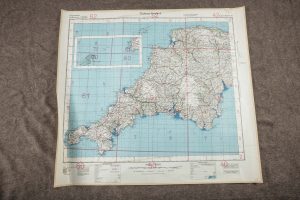
Luftwaffe laminated Fliegerkarte 1:250 000 – Südwest-England, Plymouth, Exceter
€175.00Luftwaffe laminated Fliegerkarte 1:250 000 – Südwest-England, Plymouth, Exceter. This map was used by Pilots. The backside is laminated to endure long during folding. This is a hard to find map!
-
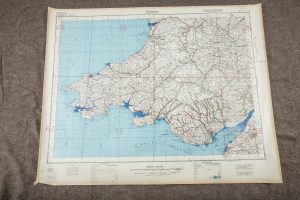
Luftwaffe laminated Fliegerkarte 1:250 000 – Südwales, Bristol, Swansea, Hereford
€200.00Luftwaffe laminated Fliegerkarte 1:250 000 – Südwales, Bristol, Swansea, Hereford. This map was used by Pilots. The backside is laminated to endure long during folding. This is a hard to find map!
-
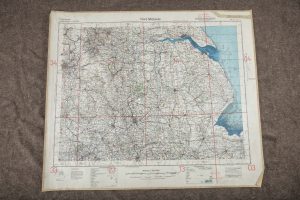
Luftwaffe laminated Fliegerkarte 1:250 000 – Nord Midlands, Leicester, Derby, Nottingham, Sheffield, Manchester
€175.00Luftwaffe laminated Fliegerkarte 1:250 000 – Nord Midlands, Leicester, Derby, Nottingham, Sheffield, Manchester. This map was used by Pilots. The backside is laminated to endure long during folding. This is a hard to find map!
-
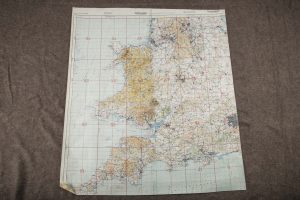
Luftwaffe laminated Fliegerkarte 1:250 000 – Midlands, Wales, London, Bristol, Birmingham, Christchurch
€200.00Luftwaffe laminated Fliegerkarte 1:250 000 – Midlands, Wales, London, Bristol, Birmingham, Christchurch. This map was used by Pilots. The backside is laminated to endure long during folding. This is a hard to find map!
-
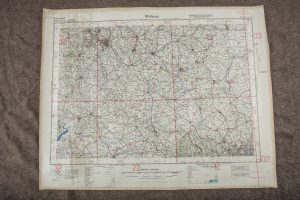
Luftwaffe laminated Fliegerkarte 1:250 000 – Midlands, London, Oxford, Bedford
€200.00Luftwaffe laminated Fliegerkarte 1:250 000 – Midlands, London, Oxford, Bedford. This map was used by Pilots. The backside is laminated to endure long during folding. This is a hard to find map!
-
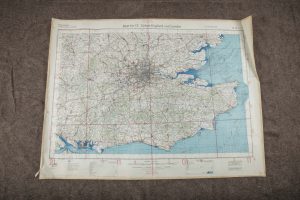
Luftwaffe laminated Fliegerkarte 1:250 000 – Südost-England und London
€225.00Luftwaffe laminated Fliegerkarte 1:250 000 – Südost-England und London. This map was used by Pilots. The backside is laminated to endure long during folding. This is a hard to find map!
-
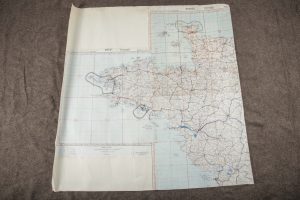
Luftwaffe laminated Fliegerkarte 1:500 000 – Rennes, Brest, Lorient, Cherbourg, Carentan, Caen
€200.00Luftwaffe laminated Fliegerkarte 1:500 000 – Rennes, Brest, Lorient, Cherbourg, Carentan, Caen. This map was used by Pilots. The backside is laminated to endure long during folding. This is a hard to find map!
-
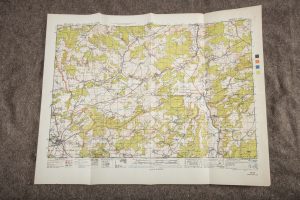
Ardennes map 1:50.000 1943 – Arlon, Mersch, Ettelbruch
€150.00Ardennes map 1:50.000 1943 – Arlon, Mersch, Ettelbruch in good condition.
-
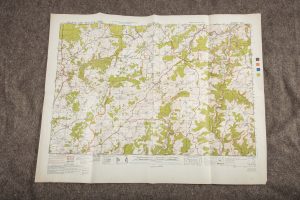
Ardennes map 1:50.000 1943 – Houffalize, Clervaux, Daleiden
€200.00Ardennes map 1:50.000 1943 – Houffalize, Clervaux, Daleiden in good condition. Hard to find Ardennes map!
-
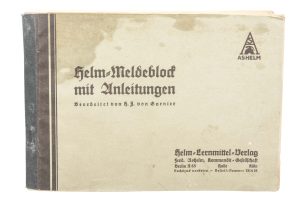
Rare German mapcase notebook Helm-Meldeblad mit Anleitungen
€150.00One of the rarest mapcase accessories: an original paper notebook for map sketching, taking notes and write down findings and messages. This is a beautiful period example for military use! The Helm-Meldeblad mit Anleitungen is one of the most sought after type of these note books. Hard to find example in very good condition designed for military use!
-
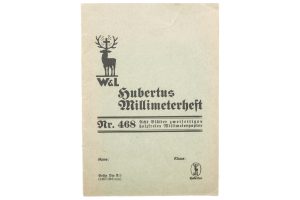
Rare German mapcase notebook Hubertus Millimeterheft
€125.00One of the rarest mapcase accessories: an original paper notebook for map sketching, taking notes and write down findings and messages. This is a rare example with millimeter sized boxes. This example would go perfect together with the Hubertus Meldeblock. Hard to find example in very good condition designed for military use!
-
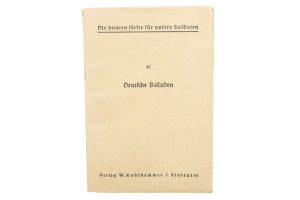
German song book 47 Deutsche Balladen für unsere Soldaten
€50.00Nice original German soldiers song book in very good condition. 47 Deutsche Balladen is a part of the Der bunte Hefte fur unsure Soldaten series which are rather hard to find. Nice Feldpost sized example!
-
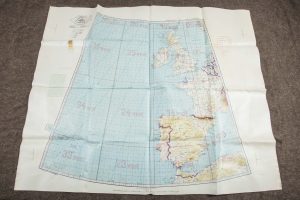
German 1:4 000 0000 flight map Westeuropa u. Atl Ozean
€175.00German 1:4 000 0000 flight map Westeuropa u. Atl Ozean in good condition. Nice rubberised map!
-
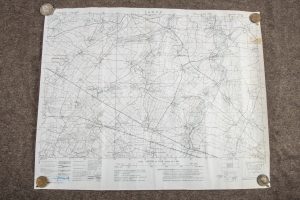
British 1:25 000 map Thaon, Bretteville, Buron, Rots, Abbaye d’Ardenne
€250.00British 1:25 000 map Thaon, Bretteville, Buron, Rots, Abbaye d’Ardenne. This is a very good British Normandy map which shows the full area of operation of the 12th SS Panzer Division. The area depicted is some of the most hard fought over grounds in Normandy with some of the most Iconic photographs in the war taken there. Hard to find region in good condition!
-
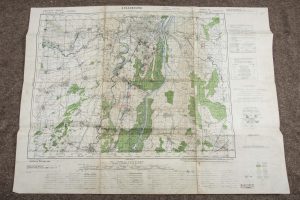
Marked British map 1:50 000 Strasbourg
€150.00Marked British map 1:50 000 Strasbourg with a lot of period tactical markings. This is a nice map which would be intersting for someone researching the Liberation of Strassbourg by Free French troops late 1944.
-
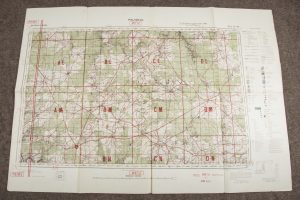
German 1:40 000 Ardennes map, Paliseul/Metz
€90.00German 1:40 000 Ardennes map, Paliseul in good condition. The map shows a interesting portion of the Ardennes offensive such as Recorgne and Bras
-
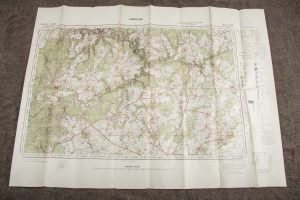
German 1:40 000 Ardennes map, Laroche, Houffalize, Bertogne, Noville and Recogne.
€150.00German 1:40 000 Ardennes map, Laroche in good condition. The map shows a interesting portion of the Ardennes offensive La Roche, Houffalize, Bertogne, Noville and Recogne.
-
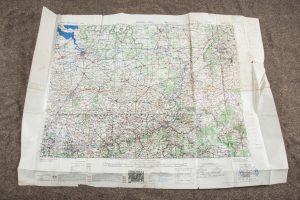
British 1:250 000 Ardennes map, Brussels-Liege
€100.00British 1:250 000 Ardennes map, Brussels-Liege in good condition. This map shows almost Belgium in full; or the Ardennes Offensive from start to calculated, not reached finishline.
-
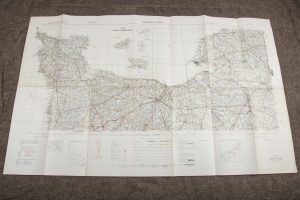
British 1:200 000 Normandy map Sheet 54 Cherbourg – Rouen
€250.00British 1:200 000 Normandy map Sheet 54 Cherbourg – Rouen in excellent condition. This map shows the whole Normandy area. This is a nice and large map which would be very decorative in your house or collection room!
-
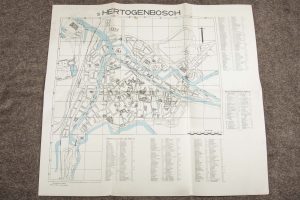
German map S Hertogenbosch, Generalstab des Heeres
€150.00German map S Hertogenbosch, Generalstab des Heeres, Abteilung für Kr.-Kart u. Verm.-Wesen in good condition. Unlike normal military maps which would have been important for the terrain; this map indicates all buildings of interest such as schools, hospitals, pharmacists, military buildings, police stations, churches and more. This is a rare and decorative map!
-
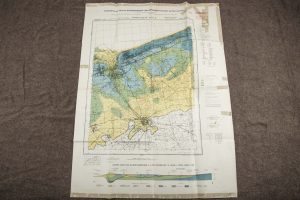
German 1:25 000 map Dunkirk, Geheim
€100.00This map draws the salt and fresh ground water on the map.
-
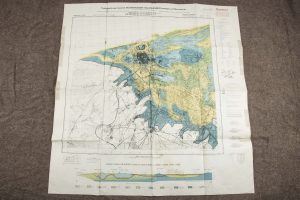
German 1:25 000 map Calais, Geheim
€100.00German 1:25 000 map Calais, Geheim dated summer 1942. This map draws the salt and fresh ground water on the map.
-
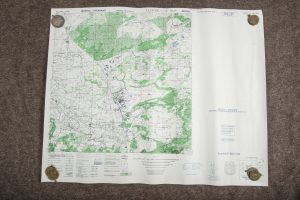
British 1:25 000 map Harskamp, Defence Overprint, Secret
€200.00British 1:25 000 map Harskamp, Defence Overprint, Secret in good condition. This secret map was printed early in 1945, prior to the liberation of the town in mid april 1945. The map is in good condition and has many secret military markings noting the positions of the Germans at the time.
-
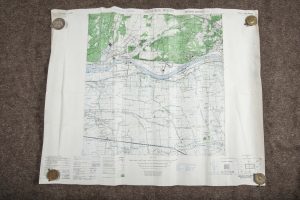
British 1:25 000 map Arnhem West, Emergency Print
€250.00British 1:25 000 map Arnhem East, Emergency Print in good condition. The map shows Renkum and Oosterbeek. The map would be a nice Market Garden display piece!
-
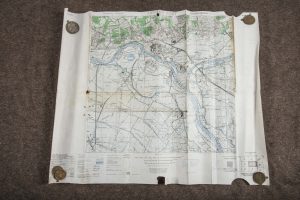
British 1:25 000 map Arnhem East, Emergency Print
€250.00British 1:25 000 map Arnhem East, Emergency Print in good condition. There are some missing pieces in the corners but otherwise great for a display. The map has several period markings for codenames along the Rhine in Arnhem such as Michael, Christopher, Violin, William, Geoffrey, Horace, Tony, Henry VI, Henry V, Henry III, Henry 1, Richard. The map would be a nice Market Garden display piece!
-
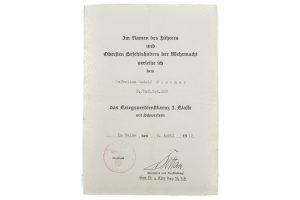
War merit cross with swords second class or KVK2 award document to Gefreiten Rudolf Fischer, 8. / Inf.Rgt. 102
€50.00Nice original rar merit cross with swords second class or KVK2 (Kriegsverdienstkreuz 2. Klasse mit Schwerten) award document to Gefreiten Rudolf Fischer, 8. / Inf.Rgt. 102 Nice original example.
-
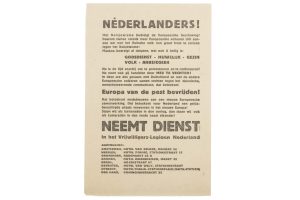
Dutch Waffen-SS recruitment flyer Nederlanders! Neemt dienst in het Vrijwilligers-Legioen Nederland
€140.00Nice original Dutch Waffen-SS recruitment flyer Nederlanders! Neemt dienst in het Vrijwilligers-Legioen Nederland in good condition.
-
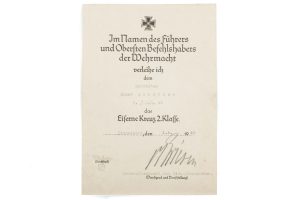
Iron cross second class or EK2 award document to Gefreiten Ernst Schröder, 5. / I.R. 46
€150.00Nice original Iron cross second class or EK2 (Eisernez Kreuz 2. Klasse) award document to Gefreiten Ernst Schröder, 5. / I.R. 46. Nice original example. This award was awarded to Ernst Schröder serving in the 5. Kompanie Infanterie Regiment 46. It was signed at Einsatzort indicating he was awarded it at the same place of the action at 1.6.1940. The unit Infanterie Regiment 46 which was a part of the 30 Infanterie Division which took part of the Polish campaign and later Fall Gelb. Judging from where the division was on 1.6.1940 he had the Iron Cross for a action in the Netherlands or Belgium. Nice document in good condition, perfect for further research!
-
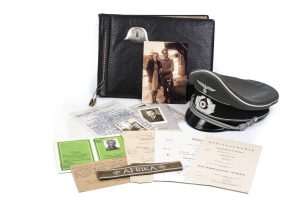
Rare Heer Afrikakorps grouping with cufftitle, album and more
€2,325.00A fantastic Set that came out of the Son of the Veteran, last October (2022), The Veteran s name was Lothar Schauer, member of the 164.Leichte AFRIKA Division. Lothar apparently Died around 2005. I borrowed the text from the consignor who, in my opinion, did a great job at describing the set.
The set Includes a Lothar’s
– Fantastic Erel Schirmmütze marked “Offizier Kleiderkasse Berlin Erel Sonderklasse Extra” with photo proof of Lothar Schauer wearing it
– Afrika Cufftitle Uniform removed with photo proof of him it
– Original Afrika CT Award Document
– Photo Album of Lothar with circa 220 very nice Photos including his RAD Armband glued in the Album and also Photo proofed of him wearing it
– Lothar’s Grundschein
– Lothar’s Letter from his Captain in 1941 about the Greek Campaign and congratulating him about the job done there also attacking the Metaxas line.
– Lothat’s Russian POW Letter to the Family from Moscow – Lothar’s father Kennkarte – Lothar s Brother GOTTFRIED Driving License
– Letter about Lothar’s Brother GOTTFRIED Death in December 1944 and photo of Gottfried.
– Feldpost Letter From Lothar to his Brother 4 Days after He died.
– Two copies of photos with his wife as the son apparently decided to keep the originals; Photos of Lothar and his Wife where the Schirm and the Afrika Cufftitle of this Estate are worn
– Copy of his Wound Badge in Black Award Document
– Copy of his Westwall Award Document. Lothar Joined the Rad in late 1939 until early 1940, After the RAD,Around December 1940 and January 1941 He was then sent to the Infanterie Regiment 382 of the 164.Infanterie Division. He Participated in the 1941 Greek Campaign Where the 164.I.D. Attacked from the North east of Greece while attached to the XXX.Army Corps. The Album shows all the Locations in Romania, Bulgaria, Greece and from January to July 1942 in KRETA (where the 164.Infanterie Division was Briefly renamed FESTUNGS DIVISION KRETA before Being finally renamed again into 164.Leichte AFRIKA Division) and Then was sent to North Afrika. He was wounded in North Afrika and then I think he was Promoted to Leutnant Between October and December 1942 basing myself on the Dates of the photos in the Album. After The Afrika Campaign He was sent to the Grenadier Ersatz und Ausbildungs Bataillon 104 first and then with Grenadier-Ausbildungs-Bataillon 414 based in Plauen which is beside Where he was from in Oelsnitz. As He was in Eastern Germany he likely was sent with his units to the front facing the Red Army towards the end of the war and Was taken POW by the Russians as confirmed from the Russian POW Letter. His Brother Gottfried was part of the Grenadier Regiment 1084 of the 544.Volksgrenadier Division and Died on 16 December 1944 in southern Poland near Debica. There s a Letter that Lothar wrote to his Brother on 20 December 1944 not knowing that his brother was already dead 4 days before he wrote the letter.A spectacular group that would be hard to upgrade!
-
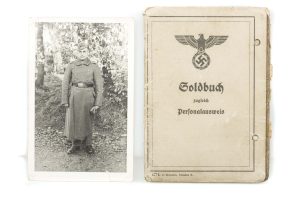
Soldbuch to Hans Schühmacher, Füsilier Regiment 27, 12. VGD, Aachen, Hürtgenwald, Malmedy, Elsenborn
€400.00Soldbuch to Hans Schühmacher serving with Füsilier Regiment 27, 12. Volks Grenadier Division at the end of the war fighting at Aachen, Hürtgenwald, Malmedy and Elsenborn.
The Soldbuch was first filled in 10.6.1941 enlisting with Schutzen Ersatz Kompanie 193. He was then drafted to Landesschützen-Bataillon 479 which was tasked guarding POW’s near Groß-Hesepe. After this he was sent to Infanterie Regiment 27, later to be renamed into Füsilier Regiment 27.
He was promoted to Oberschütze 1.2.42. He was promoted to Gefreiter on 1.3.42 and Obergefreiter on 1.1.44.
He was issued a number of interesting field gear items such as a Tarnnetz or helmet net, a sewing kit, a visor cap, a two piece reversible winter suit and Kopfhaube. He was armed with a K98.
He was wounded a number of times.
11.5.42 wound code –
26.12.43 wound code – Reserve Lazarett Königsberg.
13.1.44 wound code – Reserve Lazarett Brumat, Elsass
25.11.44 wound code 31b indicating shrapnel wounds. Reservelazarett Günzburg / Donau. He was probably wounded during the fighting in Aachen or the Hürtgenwald at this point.He was awarded several awards;
20.2.42 Iron Cross second class when his unit was fighting between Olenin-Bjeloje
15.5.42 Wound badge in Black, same area
20.11.44 Infantry Assault Badge in Silver when his unit was fighting in Aachen or the HürtgenwaldHis unit was part of the 12. Volksgrenadier Division which saw a lot of action on the Western front from early october 1944 until the end of the war. The unit was first sent to defend Aachen and saw heavy fighting for the Hürtgenwald. Mid november the division saw heavy action at Stolberg, Hastenrath and Eschweiler which was his hometown and probably the area he was wounded as well. The division was then merged with the 47 Volksgrenadier Division because of heavy losses on 25.11.44. Two days later US troops breached the line near Inden. Late November they were pulled from the line near Merode and sent for rest and refit between Jülich and Düren. Starting 14.12.44 it was moved to Hallschlag and Scheidt in preparation for the Ardennes Offensive. The first line of troops consisted of Grenadier Regiment 48 and Füsilier Regiment 27. The offensive started from Losheimergraben and on 17.12.44 they started opening the road from Büllingen trough Bütgenbach to Malmedy. The attack stalled at Bütgenbach until the 25.12.44. The division was moved to Hierlot where it severed heavy losses in January 1945 consisting of only 600 battle ready troops. It was sent to the Rhine between Leverkusen and Knapsack. In march 1945 it was sent to the Remagen bridgehead and shortly after it capitulated to the American troops in the Ruhrkessel.
A interesting Soldbuch with a load of entries, great for research!
-
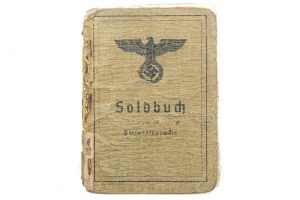
Soldbuch to Unteroffizier Hartjes, Artillerie Regiment 179, 79 VGD – Ardennes, Luxembourg, Eifel
€350.00Soldbuch to Unteroffizier H. Hartjes. The Soldbuch was first filled in 26.8.39 when he enlisted with 2. Batterie Artillerie Regiment 11. His battery was subsequently merged with 5. Batterie Artillerie Regiment 291 between July and August 1940. He was promoted to a Obergefreiter on 1.7.1940 serving with Artillerie Regiment 291. He was promoted to Unteroffizier on 1.12.1940 serving with Artillerie Regiment 306. After serving with this unit for some time he was sent to Artillerie Regiment 170 which was a new unit formed in may 1944. With him being hospitalised and healing he was enlisted with this newly formed unit. This unit was destroyed in the fighting for Walcheren, the Netherlands in November 1944. After this he was sent to Artillerie Regiment 179 right in time for the Ardennes Offensive.
He was issued a number of interesting uniform and equipment pieces under which;
Tragegestell or carrying frame
Tarnnetz or helmet net
Pelzweste or Fur winter vest
Knee warmers
Felt in lay soles
Mapcase
Greatcoat
Gasmask size 3He was issued many different weapons of which 1 rifle and 3 different pistol including one Belgian.
He was wounded 3 times;
15.6.44 wound code 18 indicating Pneumonia, hospitalised at Feldlazerett (Motorisiert) 5 Luftwaffe
1.4.44 wound code 31a indicating bulletwounds, hospitalised in Kriegslazarett Belgrad
6.9.44 wound code 31u(is probably a) indicating bulletwounds, hospitalised in Reserve Lazarett II Olmuss Teillazerett Pöttingeum which is a Neo Gothic style school building in Olomouc, Czech. During the war this was used as a Feldlazarett.He was awarded the Iron Cross second class on 26.1.1943. He was awarded the black wound badge on 8.9.44.
His last furlough was granted on 20.10.44 and lasted 7 days indicating he was back with his unit 27th of October.
Prior to the Ardennes offensive he was drafted in Artillerie Regiment 179 which was a part of the 79 Volksgrenadier Division during the Ardennes offensive. His unit fought in the Ardenes at Vianden, Bourscheid and later retreated to the Westwall. Early in 1945 it fought hard battles with US divisions in Germany. The soldbuch would be a good base for further research! -
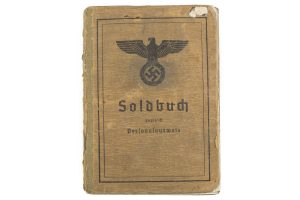
Soldbuch to Gefreiter Fränzel, Artillerie Regiment 179, 79 VGD- Ardennes, Luxembourg, Eifel
€350.00Soldbuch to Gefreiter Fränzel serving with Artillerie Regiment 179 which was part of the 79 Volksgrenadier Division. The Soldbuch was filled 28.6.44 with Stammbatterie Leichte Artillerie Esatz und Ausbildungs Abteilung (Motorisiert) 4. He was later part of 1. Batterie Artillerie Regiment 179 which was a part of the 79 Volksgrenadier Division during the Ardennes offensive. His unit fought in the Ardenes at Vianden, Bourscheid and later retreated to the Westwall. Early in 1945 it fought hard battles with US divisions in Germany. He carried a K98 rifle. He was wounded in March 1945 and was awarded the black wound badge. The soldbuch would be a good base for further research!
Page 5 is loose but present.
-
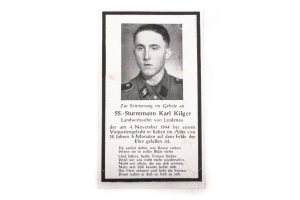
Waffen-SS Deathcard to Karl Kilger KIA Italy 4.11.1944
€75.00Deathcard to Karl Kilger killed in action at a front line position in Italy 4.11.1944.
-
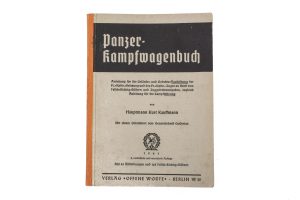
Rare Panzerkampfwagenbuch manual
€250.00Rare Panzerkampfwagenbuch which is a instruction manual for tactical movement of armoured vehicles. It features many examples on the best and right way to fight in armoured vehicles. Rare to find manual in good condition!
-
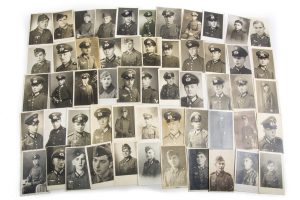
Large collection of Heer portraits
€180.00Large Collection of Heer portraits in good condition. Approximately 55 separate portraits with interesting details such as badges, headgear and uniforms. A nice case study for any collector and a good price at approximately 3 euro per photo.
-
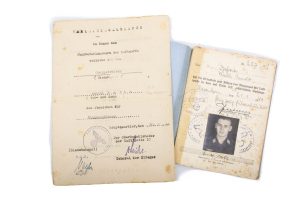
Flugzeugführer document grouping to Obergefreiter Arnold Merth
€350.00Flugzeugführer document grouping to Obergefreiter Arnold Merth. The grouping consists of his Flugzeugführer document and his Luftwaffe Flugzeugführerschein. Merth attended the Flugzeugführerschule B20 and learned to fly the Ju 52, Si 204 and HE 111- E, F, B, P.
-
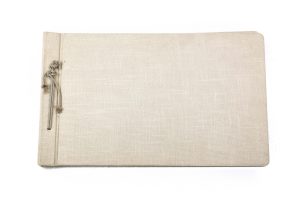
Luftwaffe photo album
€140.00Luftwaffe photo album in good, complete condition for a soldier most probably serving in France.
-
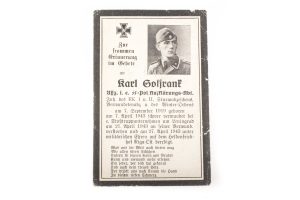
Waffen-SS Deathcard Karl Golfranz KIA 7.4.1943
€90.00Waffen-SS Deathcard Karl Golfranz KIA 7.4.1943
-
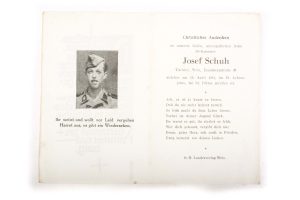
Waffen-SS Deathcard Josef Schuh KIA 15.3.1945 Sankt Pölten
€80.00Waffen-SS Deathcard Josef Schuh killed in action 15.3.1945 in Sankt Pölten.
-
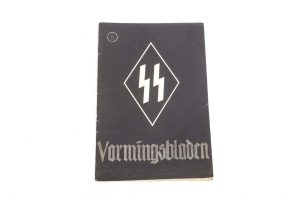
Dutch Germaansche SS-Vormingsbladen 1943 #8
€125.00Original Dutch Germaansche SS-Vormingsbladen in very good condition.
-
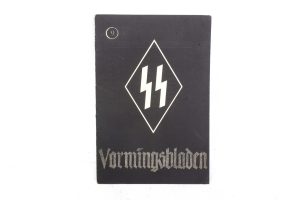
Dutch Germaansche SS-Vormingsbladen 1943 #9
€125.00Original Dutch Germaansche SS-Vormingsbladen in very good condition.
-
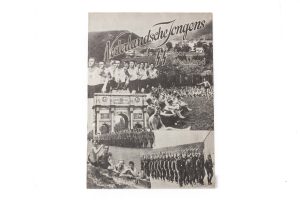
Dutch SS-Standarte Westland recruitment leaflet
€275.00Dutch SS-Standarte Westland recruitment flyer in very good condition. Hard to find example.
-
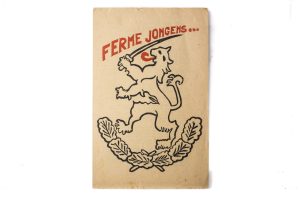
Dutch 34. SS-Freiwilligen Grenadier Division Landstorm Nederland recruitment leaflet
€300.00Rare Dutch 34. SS-Freiwilligen Grenadier Division Landstorm Nederland recruitment flyer. This is a rare smaller sized flyer printed later in the war.
-
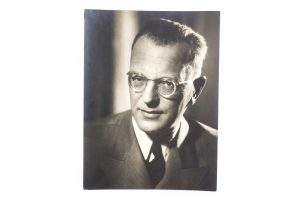
Press photo portrait of Reichskommissar der Besetzten Niederländische Gebieten Dr. Artur Seyss-Inquart
€150.00Press photo portrait of Reichskommissar der Besetzten Niederländische Gebieten Dr. Artur Seyss-Inquart in very good condition. The portrait is sharp with great details and sized 23,5×17,5 cm. The photo retains its original stamps on the back including one that indicates it was once a part of and removed from the Dutch war documentation instutute.
-
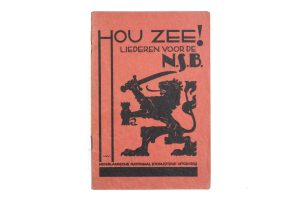
NSB song book
€70.00A Dutch collaboration songbook for the NSB. Published by the Education Division of the National Socialist Movement in the Netherlands (NSB), Nenasu, Utrecht.
-
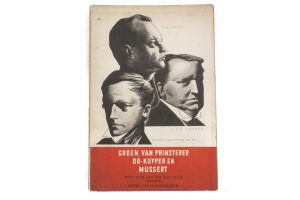
Dutch NSB brochure; Open brief aan een Christleijk Arbeider, Groen van Prinsterer, Dr. Kuyper and Anton Mussert
€20.00This original brochure, dating back to World War II and associated with Dutch collaboration, is titled “Open Brief aan een Christelijke Arbeider.” It references prominent figures such as Groen van Prinsterer, Dr. Kuyper, and Anton Mussert. Published by the Education Division of the National Socialist Movement in the Netherlands (NSB), Nenasu, Utrecht, 1941.
-
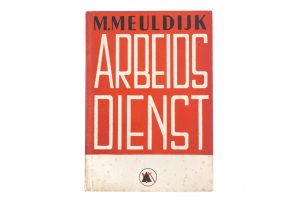
Dutch NSB Brochure: Arbeitsdienst, M. Meuldijk
€20.00NSB Brochure by M. Meuldijk – “Arbeidsdienst,” Published by De Amsterdamsche Keurkamer, 1941. This booklet, authored by M. Meuldijk and titled “Arbeidsdienst,” was published by De Amsterdamsche Keurkamer in 1941.
-
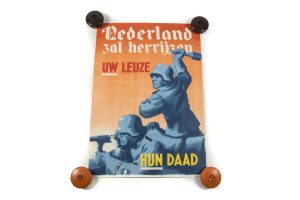
Dutch Waffen-SS volunteer poster size 81,5×57,5 cm
€2,250.00Rare original Dutch Waffen-SS volunteer poster size 81,5×57,5 cm. The poster reads; Nederland zal herrijzen, uw leuze, hun daad. This poster was printed in 1943 and is in very good condition. I photographed it with some butterdishes on top to lay it out flat as it has always been rolled up. The artwork of the poster was done by Lou Manché. On the bottom it is marked Goedgekeurd door het departement van volksvoorlichting en kunsten Nr. 116. Uithangtermijn van 15 Juli tot 15 Augustus 1943, Very rare to find poster!
-
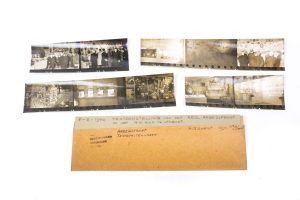
Dutch NSB photo grouping ‘Tentoonsteling van het Nederlandse Arbeitsfront’
€75.00Dutch NSB photo grouping ‘Tentoonsteling van het Nederlandse Arbeitsfront’. Original envelope with contact sheets from the NSB Fotodienst. The photographs are clear and have great details. These photographs were a part of the NSB photo archive.
-
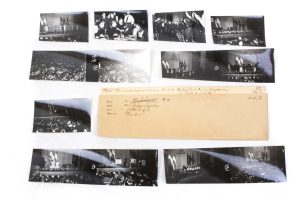
Dutch NSB photo grouping ‘Kameraadschapsavond hoofdkwartier, Waffen-SS, WA en Jeugdstorm te Utrecht’
€185.00Dutch NSB photo grouping ‘Kameraadschapsavond hoofdkwartier, Waffen-SS, WA en Jeugdstorm te Utrecht’. Original envelope with contact sheets from the NSB Fotodienst. The photographs are clear and have great details. These photographs were a part of the NSB photo archive.
-
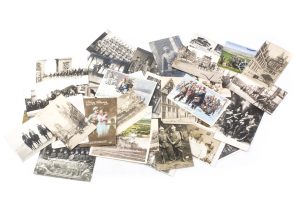
Imperial post card lot
€75.00Interesting lot of first world war post cards with interesting stories on the back.
-
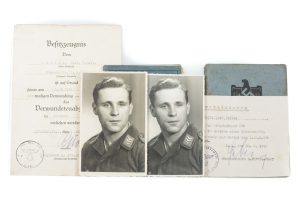
Soldbuch grouping of Kurt Helbig, Art Regt 276, 276 VGD, MP44, Ardennes
€550.00Soldbuch grouping of Unteroffizier Kurt Helbig, serving with Artillerie Regiment 276 under the 276 Volksgrenadier Division during the Ardennes offensive. He was first serving with several Luftwaffe search light units such as Flakscheinwerfer-Abteilung 238 and on 16.10.44 drafted in 276 VGD. The first page on his Soldbuch notes the fact that he was not issued a Heer Soldbuch but was part of the army. He participated during the Ardennes offensive and must have whitnessed a large portion of the combat in the area of the 276 VGD as described below. He was issued a MP44 for the Ardennes Offensive which he later had to turn in in March 1945. He was wounded 13.2.45 near Prüm.
-
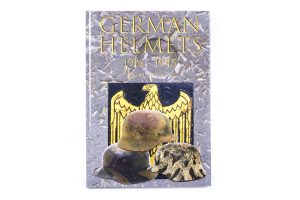
Reference book; German Helmets 1916 – 1945 by Jan Meland
€120.00One of the most recent additions to my personal library is German Helmets by my friend Jan Meland. This comprehensive book describes the German helmets as used in world war one and world war two in all its details. This book is a great reference for starting or advanced collectors; next to the basic helmet knowledge it dives deep into different decals, the differences between the makers and application. The helmets pictured are most if not all sourced by the author in Norway. The book is in new condition and has only been opened to photograph it. I have a limited amount of examples which are signed on the first page by the author, as long as they last. I have 10 pieces available, The book is a A4 sized hardcover in the English language with 234 pages and more then 1450 clear pictures surely to soothe the need of any novice or advanced collector looking to expand his or her library! This is a must have for any helmet collector!
-
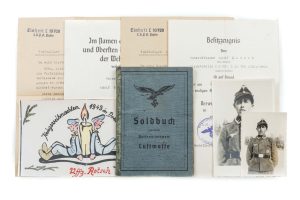
Soldbuch grouping to Unteroffizier Adolf Rotsch, Fallschirmjäger Regiment 13, Ardennes
€875.00Soldbuch grouping to Unteroffizier Adolf Rotsch who served with Fallschirmjäger Regiment 13 during the Ardennes offensive.
A Soldbuch belonging to a Feldwebel who began his military career in December 1941 with the Flieger-Ausbildungs-Regiment 42, based in Frankfurt an der Oder. After completing his basic training, he was assigned to the Fliegerhorst Kompanie (e) 3/1, which was stationed in Brjansk, Russia, from 1941 until 1943. In 1943, he was awarded both the EK 2 and EK 1, an unusual achievement for a member of a Fliegerhorst Kompanie.
In April 1944, his unit was renamed Fliegerhorstkommandatur (e) 257 III. By October 1944, he was drafted into the Fallschirmjäger Ersatz und Ausbildungs Regiment 2. After a few weeks, he was sent to the 15./Fallschirmjäger Regiment 13, which was part of the 5th Fallschirmjäger Division. This division, rebuilt in Holland, was preparing for the “Wacht am Rhein” offensive, better known as the Battle of the Bulge.
On December 16, 1944, during the fighting in Luxembourg, between Stolzembourg and Vianden, the division was ordered to break through the lines near Vianden and Bette. Following an artillery bombardment in the early morning, the Fallschirm Pionier Battalion 5 constructed bridges over the Our River, allowing the 15th and 13th Fallschirmjäger Regiments to cross successfully. The town of Vianden itself was captured by the 4th company of the 5th Fallschirm Pionier Battalion under the command of Leutnant Hans Prigge, who later fell near Livarchamps, Belgium. Elements of the 14th Fallschirmjäger Regiment and the 11th Fallschirm Sturmgeschutz Brigade also crossed the Our River, reaching their objectives. The division achieved its goal of establishing a defensive line south of Bastogne.
However, by the end of December 1944, the U.S. Third Army, commanded by General Patton, broke through the division’s lines. In January 1945, the division was forced to retreat through Luxembourg and reached the village of Dasburg on the German side of the border by the end of the month.
On January 12, 1945, the Feldwebel was hospitalized at the Reserve Lazarett Jugenheim III for frostbite (wound code 33). After 1.5 months of recovery, he was promoted to Feldwebel. Shortly thereafter, he rejoined his unit, which continued to retreat towards the Harz region. The remnants of the 5th Fallschirmjäger Division were eventually captured by American forces. During the final battles, he was wounded by a bullet (wound code 31).
The Soldbuch is in good condition with no missing pages, though an award page seems to have been removed. It comes with a portrait photo showing his EK 1 award. His known awards include the Kriegsverdienstkreuz 2nd class with Swords, Wound Badge in Black, EK 2, and EK 1. It is likely that he received other awards, such as the Erdkampfabzeichen, but these cannot be confirmed.
Very hard to find original Fallschirmjäger Soldbuch with Ardennes references!
-
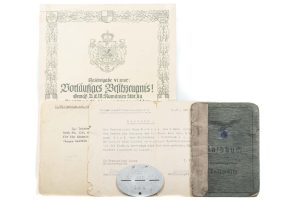
Soldbuch grouping of Johann Robens, 5. Fallschirmjäger Div, Ardennes
€650.00Soldbuch grouping of Heinz Schultz, Fallschirmjäger, Ardennes. Wachtmeister Heinz Schultz served with Fallschirm Artillerie Regiment 5 in the 5. Fallschirmjäger Division. He was first a part of several Luftwaffe Bau and Flak Abteilungen. In 1944 he was transferred to his field unit Fallschirmjäger Artillerie Regiment 5. This unit was part of the 5. Fallschirmjäger Division of which the brief unit history during this period until the end of the war is described;
In October 1944, Fallschirmjäger Regiment 15 was relocated from its assembly area near Oldenburg to the Netherlands for coastal defense. At this time, most of the division’s units were still stationed at training grounds in northern Germany. As a result, the assembly of the division could not begin before mid-November. Although the division was only partially combat-ready and still in the process of being organized, it was transferred to the Eifel region at the end of November 1944, after Fallschirmjäger Regiment 15 was reassigned to it, in preparation for the planned Ardennes Offensive. The units were stationed in the Bitburg – Oberweis – Sülm area.
Even during the march to its assembly area, the division suffered considerable losses due to low-flying Allied air attacks. Fallschirm-Panzerjäger-Abteilung 5 lost all of its vehicles, rendering it inoperable. During the Ardennes Offensive, the 5th Fallschirmjäger Division was tasked with advancing on the right flank of the 7th Army, as part of LXXXV Army Corps, from the area around Bitburg. After crossing the Our River near Vianden, it was to break through enemy positions at Wahlhausen, Putscheid, Nachtmanderscheid, and Walsdorf, and secure the line St. Hubert – Neufchâteau – Mellier – Attert, where it would establish a mobile defensive position to protect the southern flank of the 5th Panzer Army, which was advancing through Bastogne.
On the morning of December 16, after a short artillery preparation, the division crossed the Our River at Stolzembourg and Roth. By the evening of the first day, the advance elements of Fallschirmjäger Regiment 15 had reached the Diekirch – Hosingen road. The left neighbor, the 352nd Volksgrenadier Division, was making slow progress east of Fouhren, while the right neighbor, Panzer Lehr Division, was already engaged west of Hosingen. On December 17, Fallschirmjäger Regiment 15 secured the river crossings near Bourscheid, while Fallschirmjäger Regiment 14 attacked between Putscheid and Weiler. Fallschirmjäger Regiment 13 was fighting alongside the 352nd Volksgrenadier Division at Fouhren.
On December 18, elements of Fallschirmjäger Regiment 14 reached the western edge of Weiler, while Fallschirmjäger Regiment 15 secured the bridges at Bourscheid intact and linked up with Fallschirmjäger Regiment 14 at Weiler. Meanwhile, the division’s attached Fallschirm-Sturmgeschütz-Brigade XI was engaged in combat at Nachtmanderscheid and Walsdorf. Fallschirmjäger Regiment 13, still under the command of the 352nd Volksgrenadier Division, continued to fight at Fouhren. On December 19, Fallschirmjäger Regiment 15 advanced through the Sauer Valley without significant enemy resistance, while Fallschirmjäger Regiment 14 reached the Wiltz Valley near Kautenbach and Nocher by evening.
The division’s advance continued rapidly, with Fallschirmjäger Regiment 14 moving south of Doncols toward the Bastogne-Arlon road. Fallschirmjäger Regiment 15 and Fallschirm-Sturmgeschütz-Brigade XI pushed southwest beyond the division’s left boundary, toward Bigonville and Martelingen, to support the neighboring division, which was still engaged in heavy fighting near Ettelbruck. By the end of the day, the division’s lead elements had reached the general line: northern edge of Martelingen – Vaux-les-Rosières – Sibret. On the evening of December 21, Martelingen was captured by Sturmgeschütz-Brigade XI with support from elements of Fallschirmjäger Regiment 15.
Since the left neighboring division was still lagging behind, exposing the left flank of both the 5th Fallschirmjäger Division and the 5th Panzer Army (which had already advanced far west beyond Bastogne), the 5th Fallschirmjäger Division was ordered to assume flank protection. On December 22, the division reorganized its units, shifted from offensive to defensive operations, and established defensive positions against attacks from the southwest and south along the line: Vaux-les-Rosières – Martelingen – Bigonville – Arsdorf – Heiderscheid, covering a front of 40 km.
Between December 23 and 25, the division was forced to abandon several positions, including Vaux-les-Rosières, Hotte, Strainchamps, Martelingen, Titange, and Bigonville, due to heavy attacks from the U.S. 3rd Army from the southwest and south along the Bastogne road. On December 26, American forces continued their advance toward Bastogne. Between Fallschirmjäger Regiment 14, still holding out near Chaumont, and the 26th Volksgrenadier Division to the northwest, American units broke through northward. Fallschirmjäger Regiment 14 withdrew its right flank to Assenois, barely preventing an enemy advance on Losange and Villers-la-Bonne-Eau.
By December 27, the 5th Fallschirmjäger Division’s front stretched from Assenois to Lutrebois, Villers-la-Bonne-Eau, Harlange, and Bavigne. Following the successful American breakthrough at Bastogne, the division was threatened on its flank near Nothum. The American advance was halted only by deploying the last available reserves along the Harlange – Nothum – Buderscheid line. By December 29, 1944, the division, now under the command of LIII Army Corps, was still holding the line Lutrebois – Villers-la-Bonne-Eau – Harlange – Bavigne – Nothum against continued enemy attacks.
On January 2, 1945, following further American breakthroughs near its left neighbor, the division was at risk of encirclement in the Harlange and Bavigne area. It held its positions until January 7 but was then forced to withdraw northeast, abandoning Villers-la-Bonne-Eau, Harlange, and Bavigne. On January 9, American forces attacked the division at Bras, Doncols, and Nothum, encircling a large portion of its forces and taking many prisoners. The remaining elements of the division regrouped near Wiltz and were later transferred to the Düren area.
During their retreat, these remnants were diverted southeast and committed to counter an Allied breakthrough near Prüm. By the end of February, the remaining troops repelled Allied attacks near Wilwerath, Gondenbrett, and Olzheim. However, in early March, American forces bypassed the division’s defensive positions on both flanks, forcing it to retreat further northeast.
At the Nürburgring, the division was encircled west of the Rhine, with most of its remaining troops taken prisoner. Only small remnants managed to escape to the Wernigerode area in April 1945.
He was awarded the Ehrenzeichen Bulgarischen Infanterie IV Klasse, Rumanische Medaille “Kreuzzug gegen den Kommunismus” with document, and probably more awards which were not noted in his Soldbuch. The Grouping is complete with Erkennungsmarke. Hard to find grouping in excellent condition!
Showing 61–120 of 289 results