
Manuals & Paper items
Showing 1–60 of 303 results
-
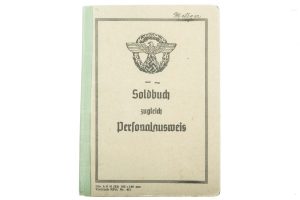
Polizei Soldbuch to Hanz Metger Kampftage im Bandeneinsatz
NewPolizei Soldbuch to Hans Metzger with Kampftage im Bandeneinsatz.
His erkennungsmarke was marked Hipo. E. Batl. Serbien 469. He served with Polizei Wach Bataillon XVII. This unit saw heavy action fighting Partisans with SS Grenadier Regiment Schill in Slovakia. There is a large number of entries of Kampftage in Bandeneinsatz in Poland, Ukraine, and Slovakia.
Metzger would be qualified for the Bandenkampfabzeichen in Bronze because he had more then enough Kampftage in Bandeneinsatz. But it seems he was never awarded it. This is a nice Polizei Soldbuch with a large number of entries.
-
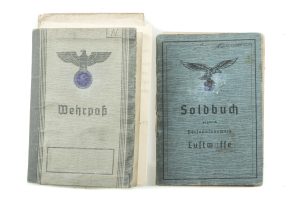
Soldbuch and Wehrpass grouping to Obergrefreter Heinz Naumann
New€225.00Soldbuch and Wehrpass grouping to Obergrefreter Heinz Naumann. He enlisted 29.1.1942 with Flieger Ausbildungs Regiment 61. He later was sent to the Fliegerwaffentechnische Schule 2. He served with Luftdienstkommando 1, Flieger Ersatz Bataillon IV and Jagd Geschwader 27.
The 27. Jagdgeschwader was stationed in Afrika, Germany, Austria, Italy, France and Belgium. This unit flew with BF109’s and Naumann was most probably serving as ground crew or weapon maintenance.
He was issued a number of technician specific items such as rubber soled boots. He was promoted to Unteroffizier on 1.6.45.
A nice grouping complete of Soldbuch and Wehrpass.
-
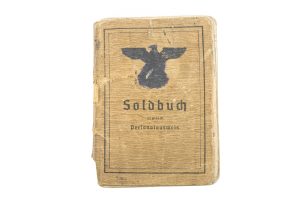
Soldbuch to Gebirgsjäger Helmut Berlinghof
New€175.00Soldbuch to Reiter Helmut Berlinghof. His Erkennungsmarke was marked Reiter-Ersatz-Schwadron 6. His Soldbuch was first filled in 28 April 1942. He first served with Gebirgsjäger Regiment 98, Gebirgs Pionier Bataillon 74 and Gebirgsjäger Veterinär Ersatz und Ausbildungs Abteilung 18. He was wounded numerous times and contracted Malaria later in the war.
The back of the Soldbuch and the award page are missing, most probably a preparation to being taken prisoner in 1945.
He was issued a number of different K98 rifles and later a P38 pistol. Hard to find Gebirgsjäger Vetenarian Soldbuch!
-
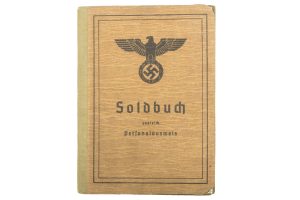
Soldbuch to Schützen Gustav Hansch, Litztmannstadt
New€165.00Soldbuch to Schützen Gustav Hansch from Litztmannstadt. His Erkennungsmarke was marked 1./ L.S.B. 588 indicating Landesschützen-Bataillon 588 which was stationed in Litztmannstadt which was infamous for its Ghetto and the recycling of captured French, British and Polish army equipment. This bataillon was destroyed in 1945 in Litztmannstadt as the Russians advanced. He was released from service in 1944 as he had very short vision.
-
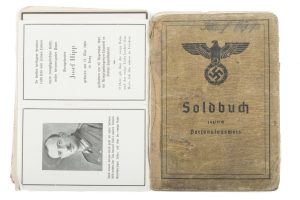
Soldbuch with Edelweiss for Josef Hipp
NewSoldbuch for Josef Hipp. His erkennungsmarke first read 1. G. Erg. Btl. 55 indicating Grenadier Bataillon 55. Later he was issued a new one which read I. Ers. Btl. 7 indicating Infanterie-Ersatz-Bataillon 7. Hipp had a interesting moustache. His Soldbuch was first filled in 31 August 1939. Interestingly a Edelweiss was glued inside the Soldbuch page 1.
He served with Landesschütz Ausbildungs Bataillon 7 and Landesschütz Bataillon 823 which was stationed in Croatia. He earned the KVK II Kl. with swords on 20.4.45.
He was wounded twice in 1940. After the war he died in a Kriegsgefangenen Lazarett in Indija, Yugoslavia. -
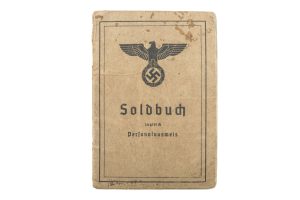
Soldbuch to Pionier Erich Köstner
New€175.00Soldbuch to Pionier Erich Köstner. His Erkennungsmarke reads 1.Pi. 198 / 102. He entered the war on 24 september 1940 with 1 Kompanie Pionier Bataillon 198. This unit fought with the 98 Infanterie Division. This division was destroyed on 10 may 1944 after heavy fighting over the Krim. It was posted as coastal defence in Italy. It fought at Rimini and later retreated to Pieve di Cadore where it surrendered.
He was issued a rifle named f. E36 most probably indicating a French Mas 36 rifle. He was issued a heavy overcoat, gloves, sunglasses, dustgoggles, hbt uniform and sport shorts.
-
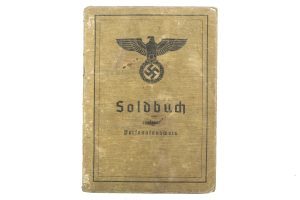
Soldbuch Panzergrenadier Viktor Dohmen
New€175.00Viktor Dohmen was first drafted in 1939. He entered service with Grenadier Regiment 36. He had a number of units but the last unit was Feldersatz Bataillon 57 and Panzergrenadier Ersatz Bataillon 4. He also served with a guard bataillon under Stalag 6.
He was wounded in September 1943 and was awarded the black wound badge.
He most likely served under the 6. Panzerdivision towards the end of the war. He has a postwar British zone identification book. Nice Soldbuch for further research!
-
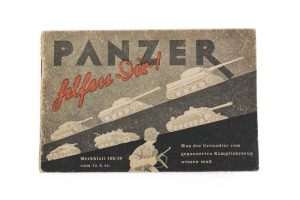
Rare Panzer helfen sie manual
New€700.00Rare original German army Panzer manual Panzer Helfen Sie; Merkblatt 18b/38. The manual is a well illustrated basic guide for Panzergrenadier troops. It sums up the essential tactics, models and maintenance. A very rare late war printed manual in colour, as issued to Panzergrenadier and Panzer troops!
-
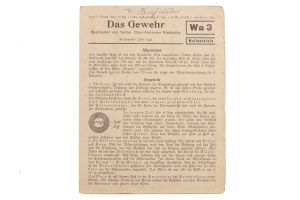
Rare K98 ‘ das Gewehr ‘ manual
New€125.00K98 ‘ das Gewehr ‘ manual in excellent condition. Hard to find manual!
-
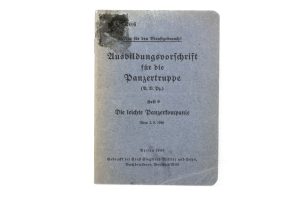
Rare Panzer troops training manual – Ausbildungsvorschrift für die Panzertruppe, heft 6, Die leichte Panzerkompanie
New€150.00Rare original Panzer troops training manual or Ausbildungsvorschrift für die Panzertruppe, heft 6, Die leichte Panzerkompanie. The manual is in very good condition and is nicely dated 2.9.1940. Nice Panzer related training manual!
-
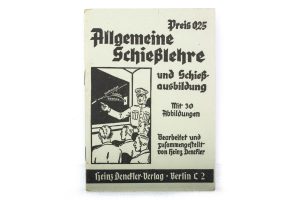
General shooting manual – Allgemeine Schiesslehre
New€75.00Very nice original general shooting manual – Allgemeine Schiesslehre in very good condition.
-
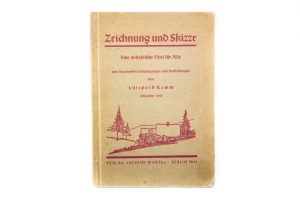
Manual: Zeichnung und Skizze by Luitpold Kamm, 1935
New€125.00Very nice period manual: Zeichnung und Skizze or “drawings and sketches”. The manual is written by Leopold Kamm in München in 1935. Nice example with a number of tactical lessons!
-
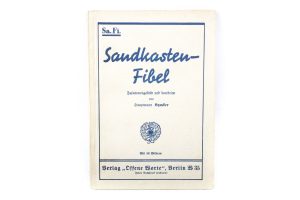
Manual: Sa. Fi. or Sandkastenfibel
New€125.00Nice original German army issued tactical booklet/manual or Sa. Fi. “Sandkastenfibel”. Original and interesting example!
-
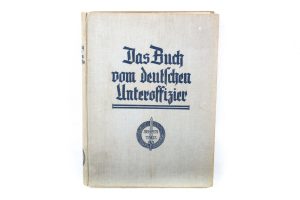
Manual: Das buch vom Deutschen Unteroffizier
New€125.00Very nice period book: Das buch vom Deutschen Unteroffizier or “The book from the German Corporal”. This book was given to a Unteroffizier within I.R. 37 (Infanterie-Regiment 37), most likely when he became an Unteroffizier. Nice period book!
-
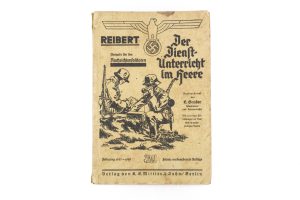
Heer issue Reibert manual; Der Dienstunterricht im Heere, Ausgabe für den Nachrichtensoldaten
NewHeer issue Reibert manual; Der Dienstunterricht im Heere, Ausgabe für den Nachrichtensoldaten. These manuals are very thorough and they talk over every single aspect the German soldier was taught in. The book contains German history, Drills, Mannerisms, squad formations, weapons handling, shooting and maintenance, airplane recognition, horse riding, ranks, how to behave/write/talk, heavy weapons and so on. These where brought out in different versions, this one being the variant for the “Nachrichtensoldaten” or communication troops. This example is the 1937-1938 print and is in overall very good, readable condition!
-
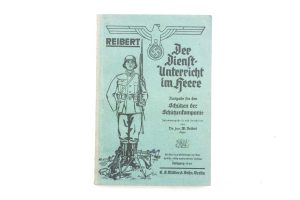
Heer issue Reibert manual; Der Dienstunterricht im Heere, Ausgabe für den Schützen der Schützenkompanie
NewHeer issue Reibert manual; Der Dienstunterricht im Heere, Ausgabe für den Schützen der Schützenkompanie. These manuals are very thorough and they talk over every single aspect the German soldier was taught in. The book contains German history, Drills, Mannerisms, squad formations, weapons handling, shooting and maintenance, airplane recognition, horse riding, ranks, how to behave/write/talk, heavy weapons and so on. These where brought out in different versions, this one being the variant for the “Schützen der Schützenkompanie” or simply riflemen. This example is the 1938-1939 print and is in overall very good, readable condition!
-
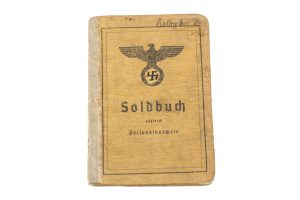
Heer Soldbuch to Helmut Rathgeber Grenadier Regiment 328, 509, 719
€175.00Nice original Soldbuch to Gefreiter Helmut Rathgeber. Wounded 22.3.45, 31b indicating shrapnel wounds. Nice unresearched Soldbuch with a load of entries.
-
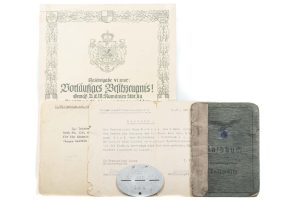
Soldbuch grouping of Johann Robens, 5. Fallschirmjäger Div, Ardennes
€625.00Soldbuch grouping of Heinz Schultz, Fallschirmjäger, Ardennes. Wachtmeister Heinz Schultz served with Fallschirm Artillerie Regiment 5 in the 5. Fallschirmjäger Division. He was first a part of several Luftwaffe Bau and Flak Abteilungen. In 1944 he was transferred to his field unit Fallschirmjäger Artillerie Regiment 5. This unit was part of the 5. Fallschirmjäger Division of which the brief unit history during this period until the end of the war is described;
In October 1944, Fallschirmjäger Regiment 15 was relocated from its assembly area near Oldenburg to the Netherlands for coastal defense. At this time, most of the division’s units were still stationed at training grounds in northern Germany. As a result, the assembly of the division could not begin before mid-November. Although the division was only partially combat-ready and still in the process of being organized, it was transferred to the Eifel region at the end of November 1944, after Fallschirmjäger Regiment 15 was reassigned to it, in preparation for the planned Ardennes Offensive. The units were stationed in the Bitburg – Oberweis – Sülm area.
Even during the march to its assembly area, the division suffered considerable losses due to low-flying Allied air attacks. Fallschirm-Panzerjäger-Abteilung 5 lost all of its vehicles, rendering it inoperable. During the Ardennes Offensive, the 5th Fallschirmjäger Division was tasked with advancing on the right flank of the 7th Army, as part of LXXXV Army Corps, from the area around Bitburg. After crossing the Our River near Vianden, it was to break through enemy positions at Wahlhausen, Putscheid, Nachtmanderscheid, and Walsdorf, and secure the line St. Hubert – Neufchâteau – Mellier – Attert, where it would establish a mobile defensive position to protect the southern flank of the 5th Panzer Army, which was advancing through Bastogne.
On the morning of December 16, after a short artillery preparation, the division crossed the Our River at Stolzembourg and Roth. By the evening of the first day, the advance elements of Fallschirmjäger Regiment 15 had reached the Diekirch – Hosingen road. The left neighbor, the 352nd Volksgrenadier Division, was making slow progress east of Fouhren, while the right neighbor, Panzer Lehr Division, was already engaged west of Hosingen. On December 17, Fallschirmjäger Regiment 15 secured the river crossings near Bourscheid, while Fallschirmjäger Regiment 14 attacked between Putscheid and Weiler. Fallschirmjäger Regiment 13 was fighting alongside the 352nd Volksgrenadier Division at Fouhren.
On December 18, elements of Fallschirmjäger Regiment 14 reached the western edge of Weiler, while Fallschirmjäger Regiment 15 secured the bridges at Bourscheid intact and linked up with Fallschirmjäger Regiment 14 at Weiler. Meanwhile, the division’s attached Fallschirm-Sturmgeschütz-Brigade XI was engaged in combat at Nachtmanderscheid and Walsdorf. Fallschirmjäger Regiment 13, still under the command of the 352nd Volksgrenadier Division, continued to fight at Fouhren. On December 19, Fallschirmjäger Regiment 15 advanced through the Sauer Valley without significant enemy resistance, while Fallschirmjäger Regiment 14 reached the Wiltz Valley near Kautenbach and Nocher by evening.
The division’s advance continued rapidly, with Fallschirmjäger Regiment 14 moving south of Doncols toward the Bastogne-Arlon road. Fallschirmjäger Regiment 15 and Fallschirm-Sturmgeschütz-Brigade XI pushed southwest beyond the division’s left boundary, toward Bigonville and Martelingen, to support the neighboring division, which was still engaged in heavy fighting near Ettelbruck. By the end of the day, the division’s lead elements had reached the general line: northern edge of Martelingen – Vaux-les-Rosières – Sibret. On the evening of December 21, Martelingen was captured by Sturmgeschütz-Brigade XI with support from elements of Fallschirmjäger Regiment 15.
Since the left neighboring division was still lagging behind, exposing the left flank of both the 5th Fallschirmjäger Division and the 5th Panzer Army (which had already advanced far west beyond Bastogne), the 5th Fallschirmjäger Division was ordered to assume flank protection. On December 22, the division reorganized its units, shifted from offensive to defensive operations, and established defensive positions against attacks from the southwest and south along the line: Vaux-les-Rosières – Martelingen – Bigonville – Arsdorf – Heiderscheid, covering a front of 40 km.
Between December 23 and 25, the division was forced to abandon several positions, including Vaux-les-Rosières, Hotte, Strainchamps, Martelingen, Titange, and Bigonville, due to heavy attacks from the U.S. 3rd Army from the southwest and south along the Bastogne road. On December 26, American forces continued their advance toward Bastogne. Between Fallschirmjäger Regiment 14, still holding out near Chaumont, and the 26th Volksgrenadier Division to the northwest, American units broke through northward. Fallschirmjäger Regiment 14 withdrew its right flank to Assenois, barely preventing an enemy advance on Losange and Villers-la-Bonne-Eau.
By December 27, the 5th Fallschirmjäger Division’s front stretched from Assenois to Lutrebois, Villers-la-Bonne-Eau, Harlange, and Bavigne. Following the successful American breakthrough at Bastogne, the division was threatened on its flank near Nothum. The American advance was halted only by deploying the last available reserves along the Harlange – Nothum – Buderscheid line. By December 29, 1944, the division, now under the command of LIII Army Corps, was still holding the line Lutrebois – Villers-la-Bonne-Eau – Harlange – Bavigne – Nothum against continued enemy attacks.
On January 2, 1945, following further American breakthroughs near its left neighbor, the division was at risk of encirclement in the Harlange and Bavigne area. It held its positions until January 7 but was then forced to withdraw northeast, abandoning Villers-la-Bonne-Eau, Harlange, and Bavigne. On January 9, American forces attacked the division at Bras, Doncols, and Nothum, encircling a large portion of its forces and taking many prisoners. The remaining elements of the division regrouped near Wiltz and were later transferred to the Düren area.
During their retreat, these remnants were diverted southeast and committed to counter an Allied breakthrough near Prüm. By the end of February, the remaining troops repelled Allied attacks near Wilwerath, Gondenbrett, and Olzheim. However, in early March, American forces bypassed the division’s defensive positions on both flanks, forcing it to retreat further northeast.
At the Nürburgring, the division was encircled west of the Rhine, with most of its remaining troops taken prisoner. Only small remnants managed to escape to the Wernigerode area in April 1945.
He was awarded the Ehrenzeichen Bulgarischen Infanterie IV Klasse, Rumanische Medaille “Kreuzzug gegen den Kommunismus” with document, and probably more awards which were not noted in his Soldbuch. The Grouping is complete with Erkennungsmarke. Hard to find grouping in excellent condition!
-
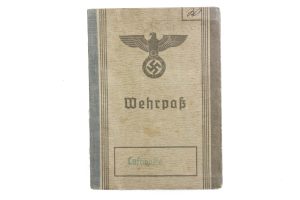
Wehrpass to Werner Weber, 1 Staffel, Jagdgeschwader 53 KIA 1941
€180.00Nice original Wehrpass with many entries for Werner Weber, Obergefreiter in 1. Staffel, Jagdgeschwader 53. This is a nice Wehrpass with many entries that would be nice for a further research. The cover is loose, otherwise in good condition.
-
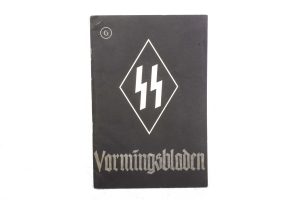
Dutch Germaansche SS-Vormingsbladen 1941 #6
€125.00Original Dutch Germaansche SS-Vormingsbladen in very good condition.
-
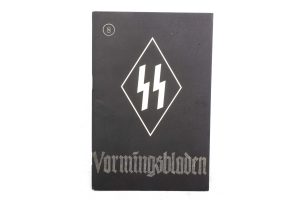
Dutch Germaansche SS-Vormingsbladen 1941 #8
€125.00Original Dutch Germaansche SS-Vormingsbladen in very good condition.
-
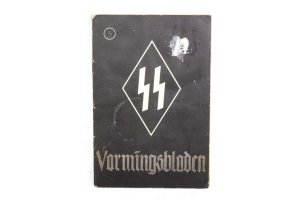
Dutch Germaansche SS-Vormingsbladen 1943 #5
€100.00Original Dutch Germaansche SS-Vormingsbladen in good condition.
-
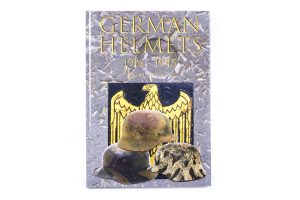
Reference book; German Helmets 1916 – 1945 by Jan Meland
€120.00One of the most recent additions to my personal library is German Helmets by my friend Jan Meland. This comprehensive book describes the German helmets as used in world war one and world war two in all its details. This book is a great reference for starting or advanced collectors; next to the basic helmet knowledge it dives deep into different decals, the differences between the makers and application. The helmets pictured are most if not all sourced by the author in Norway. The book is in new condition and has only been opened to photograph it. I have a limited amount of examples which are signed on the first page by the author, as long as they last. I have 10 pieces available, The book is a A4 sized hardcover in the English language with 234 pages and more then 1450 clear pictures surely to soothe the need of any novice or advanced collector looking to expand his or her library! This is a must have for any helmet collector!
-
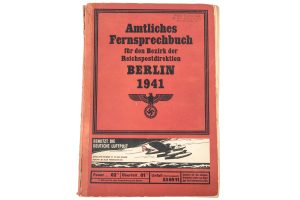
Amtliches Fernsprechbuch für den Bezirk der Reichspostdirektion Berlin 1941
€225.00Rare original 1941 dated phone book for Berlin reading Amtliches Fernsprechbuch für den Bezirk der Reichspostdirektion Berlin 1941. Rare original example, not to be confused with the 1980 reprint. Nice piece for any staff or office display!
-
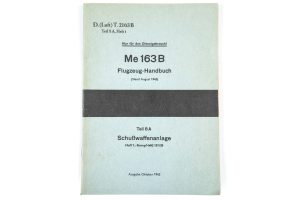
Rare Luftwaffe Jet Fighter Me 163B Komet Flugzeug Handbuch – Teil 8A Schußwaffenanlage
€800.00Rare Luftwaffe Jet Fighter Me 163B Flugzeug Handbuch – Teil 8A Schußwaffenanlage in excellent condition. This is a rare original manual for the infamous Luftwaffe ME 163 B fighter Jet. This manual compiles all the information about the weapon systems on board of teh ME 163B. It is a important manual for pilot as well as the the ground troups maintenancing the ME 163. It has multiple fold out pages. There is a digital version on this website. The manual is a very rare late war example in excellent condition. Unique opportunity to acquire this rare and high end manual for one of the first fighter jets in the world!
-
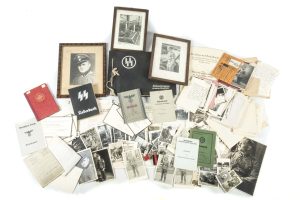
Rare grouping to SS-TV Unterscharführer Gustav Gaspary, Mauthausen and KIA St. Petersburg
€4,250.00Rare grouping to Unterscharführer Gustav Gaspary serving with the SS-Totenkopf Verbände. The grouping is the Nachlass from the family. Whilst most of the contents directly relate to Uscha Gaspary, there are some of his father pre and post war. The grouping has many historically significant photographs, documents and accoutrements.
Gaspary was a member of the Hitlerjugend before the war with HJ 14 III/253. His HJ Leistungsbuch is present.
In 1937 he joined the SS Totenkopf Verbände. He was awarded the Medaille zur Erinnerung an den 1. Oktober 1938.
He was a Reichsportabzeichen-Prüfer, meaning that he as a member of the SS decided who could and who could not be awarded the Reichssportabzeichen. Most notably, this is a SS Pass!
His Wehrpass notes he first joined with 10./4. SS Totenkopf Standarte. then joined 13./4. SS Totenkopf Standarte and lastly 14. SS Infanterie Regiment 4 (Motorisiert) Totenkopf.
He last served in the Panzerabwehr abteilungHe was put into action in the battles for the Netherlands, Generalgouvernement, Lithuania, Heimatskriegsgebiet and lastly was sent to the eastern front. He was killed in action on 11.9.41.
It seems that Gustav served some time as a Konzentrationslager guard in Mauthausen. His piped collar and numbered TK collar tab are a whitness to this. There are images of signs at the border of the KZ Mauthausen.
He served in the Netherlands with photos in Rotterdam, Haarlem and Den Haag. There are photographs with Sepp Dittrich, Blaskowitz and Seyss Inquart.
He was killed in action on 11 September 1941 at Wyriza, 50 kilometers south of St. Petersburg with a Panzerjäger abteilung. The photo album has some missing images which are loose but present.
The grouping has many interesting features including a album, songbook, wehrpass and way more. This grouping really is a great base for further research. I have priced it on the lower end calculating all the separate parts. I deem it is a very good price considering the history and base for research!
-
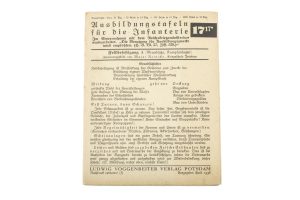
Voggenreiter Ausbildungstafeln für die Infanterie 17/ 17a about trench construction
€25.00Voggenreiter Ausbildungstafeln für die Infanterie 17/ 17a about trench construction.
-
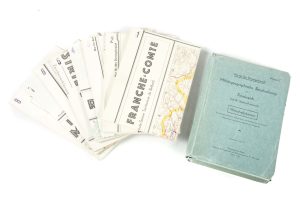
German army map set Militärgeographische Beschreibung Frankreich Teil III Südost-Frankreich
€200.00German map set Militärgeographische Beschreibung Frankreich Teil III Südost-Frankreich. Nice and rare to encounter complete set with all 8 maps.
-
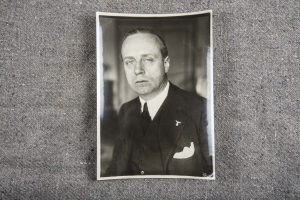
Press photo; Reichsaussenminister von Ribbentrop
€50.00Press photo; Reichsaussenminister von Ribbentrop.
-
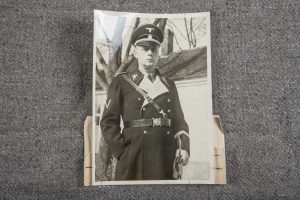
Press photo; Reichsaussenminister von Ribbentrop 45 jahre alt
€100.00Reichsaussenminister von Ribbentrop on his 45th birthday in 1943.
-

Period F.W. Assmann & Söhne sales catalogue
€400.00Rare original F.W. Assmann & Söhne sales catalogue. This catalogue showcases all the buckles, buttons and uniform accesories produced by Assmann during the war. It has many interesting features. Rare period catalogue that could be a ultimate collection list for the specialised collector!
-
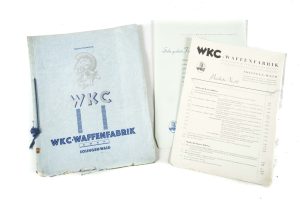
Period WKC Waffenfabrik sales catalogue
€275.00Rare original WKC Waffenfabrik sales catalogue. This catalogue showcases all the daggers, bayonets and swords produced by WKC during the war. It has many interesting features such as custom engravings etc. Rare period catalogue that could be a ultimate collection list for the specialised collector!
-
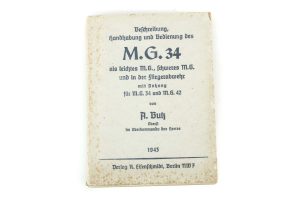
MG34 manual by Oberleutnant A. Butz, 1943
€250.00Rare original and complete army issue MG34 manual in very good condition. The manual is in very good condition and is for as far as I can see not missing any pages. Nice in depth manual about the MG34, its accessories, application, within vehicles Etc. Very hard to find issued manual!
-
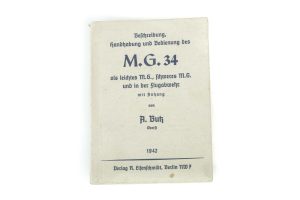
MG34 manual by Oberleutnant A. Butz, 1942
€250.00Rare original and complete army issue MG34 manual in very good condition. The manual is in very good condition and is for as far as I can see not missing any pages. Nice in depth manual about the MG34, its accessories, application, within vehicles Etc. Very hard to find issued manual!
-
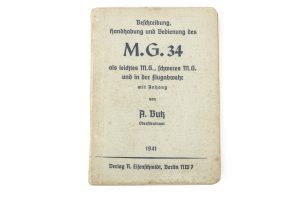
MG34 manual by Oberleutnant A. Butz, 1941
€250.00Rare original and complete army issue MG34 manual in very good condition. The manual is in very good condition and is for as far as I can see not missing any pages. Nice in depth manual about the MG34, its accessories, application, within vehicles Etc. Very hard to find issued manual!
-
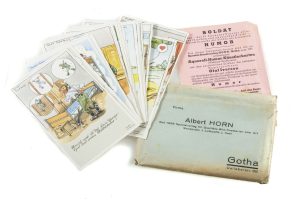
Set of German soldiers humoristic postcards
€65.00Set of German soldiers humoristic postcards in good condition. They are still in the original envelope. The postcards were designed and printed by Albert Horn from Gotha. As far as I can see there are 17 postcards. Nice piece of period pocket litter!
-
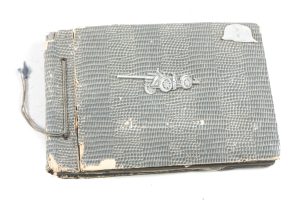
Waffen-SS Artillery and Flak photo album
€700.00Waffen-SS Artillery and Flak photo album in as found condition. The album has many interesting photos showing artillery pieces, officers and other uniforms. There are some missing photos but the album is a good base for further research!
-
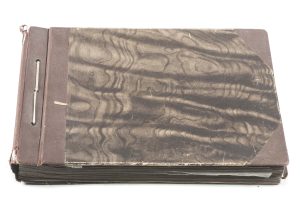
Impressive Luftwaffe Afrika photo album with Panzer, artillery and aircraft
€1,400.00Impressive Luftwaffe Afrika photo album with Panzer, artillery and aircraft in good condition. The album is well filled and has approximately 300 photos. The images show the Afrika campaign trough the eyes of a enlisted man serving with a Flak and Aircraft maintenance crewmember. It is mainly focussed on vehicles; be it tanks, trucks and aircraft. It seems that late in 1942 he was wounded and sent back to Germany to recover. This is probably also the reason he was not taken prisoner when the southern front fell. On the first page there is a Russian receipt for food in the Russian POW camp 147. It seems he was sent to the eastern front after healing from his wounds. The photoalbum is really impressive regarding the large number of vehicle and aircraft photos!
-

Grouping Schützen Otto Rohnen Inf Rgt 473
€55.00You have a comprehensive and chronological collection of German civilian, military, medical, and employment records belonging to Otto Rohnen. Otto Rohnen was born and raised in Monschau which was on the Belgian border. That is why he has a Belgian border crossing pass. He served with 8 Kompanie Infanterie Regiment 473. Otto lost 7 toes, most probably due to frostbite on 18.03.1942 and was awarded the black wound badge on 17.07.194 in Prague. He was discharged from service in December 1942.
-
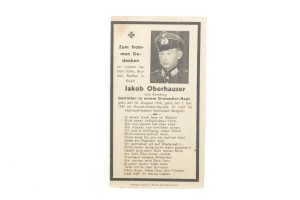
Deathcard Jakob Oberhauser KIA 07.01.45 Steinbach
€50.00Gefreiter Jakob Oberhauser served in a Grenadier Regiment. He died 07.01.1945 at a Hauptverbandplatz. He was first buried in Steinbach, Belgium but later at Bastogne, Recogne.
Jakob Oberhauser ruht auf der Kriegsgräberstätte in Recogne-Bastogne .
Endgrablage: Block 3 Reihe 4 Grab 154
-

Deathcard Stabsgefreiter Heinrich Hitz KIA 25.12.44 Belgium Leneville
€30.00Deathcard Stabsgefreiter Heinrich Hitz was killed in action 25.12.44 Belgium Leneville which is probably Luneville between Nancy and Strassbourg.
Heinrich Hitz ruht auf der Kriegsgräberstätte in Lommel .
Endgrablage: Block 2 Grab 177
-
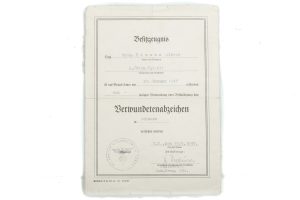
Wound badge document Grenadier Alfred Hamann Gren Regt 431
€40.00Wound badge document belgoning to Grenadier Alfred Hamann serving with 3. Kompanie Grenadier Regiment 431 on 30.0.1945. His uit at that point was fighting in Ostpreußen. Between 18 and 32 January the unit retreated from Elbing, Bischofsburg to Guttstadt.
-
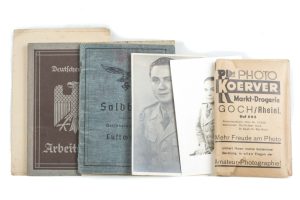
Soldbuch grouping
€500.00Soldbuch to Unteroffizier Paul Walter, serving with I./ Flak-Regiment 53 (mot.) trop., a motorized tropical unit of the 19. Flak-Division that saw heavy action on the Eastern Front before being destroyed in the final stages of the North Africa campaign.
The Soldbuch belongs to Paul Walter born on 11.6.1917 in Hamborn. Before the war, he was a trained Kaufmann (clerk) and Buchhalter in the Spedition industry in Goch. His military career began with Flakabteilung 37, where he served during the Battle of France in 1940; a surviving Ansichtskarte (postcard) from 18.6.1940 describes his unit deployed in open fields to provide Panzerschutz and Fliegerschutz along the French Chausseen.
He was promoted to Gefreiter and eventually Unteroffizier. As a specialist in the Nachrichtenzug (signals platoon), he was trained in field communications, with numerous photos showing him and his squad climbing Telegrafenmasten and posing in front of Funkwagen to establish vital communication lines.
His unit, I./53, was a specialized tropical designated outfit. A Marschbefehl (march order) dated 18.1.1943 details his final deployment: he was ordered to travel from Caserta, Italy, via Neapel, Reggio, and Trapani to arrive in Tunis to deliver critical equipment . He reported to the front on 20.1.1943, just as the Axis pocket in Tunisia was tightening.
He was awarded several awards:
– 1.9.1941: Flak-Erdkampfabzeichen
– 16.10.1941: Rumänische Tapferkeitsmedaille
– 20.11.1941: Verwundetenabzeichen in Schwarz
– 10.1.1942: Funk trüppführer (?) Abzeichen
– 30.01.1942: Schützenschnur Für besonder Auszeichnungen
– 20.05.1942: Ostmedaille zur Erinnering an den Ostfeldzug
– 16.5.1942: Eisernes Kreuz II Klasse
– 10.01.1943: Dienstauszeichnung der Wehrmacht 4. Klasse– 10.05.1943: Ärmelstreifen „Afrika“ (Afrika Cuff Title), awarded for his service with the Afrikakorps forces.His unit, I./ Flak-Regiment 53 (mot.) trop., was part of the 19. Flak-Division. The division provided the primary anti-aircraft and anti-tank umbrella for the German and Italian forces in North Africa. After the retreat from El Alamein, the unit fought desperate rearguard actions across Libya and into the Tunis bridgehead. Following the collapse of the Axis lines, the unit surrendered en masse to Allied troops in May 1943.
Paul Walter survived his time as a Kriegsgefangener (POW), eventually returning to Krefeld. In March 1956, he had these documents officially certified by the local Fernmeldebauamt (telecommunications office), likely to secure a post-war pension or civil service position.
A complete grouping including the Soldbuch, Arbeitsbuch, Marschbefehl, and a collection of Fotos showing his transition from a clerk in Goch to a veteran of the Eastern Front and the North African desert!
-
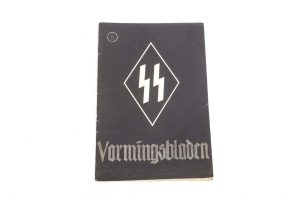
Dutch Germaansche SS-Vormingsbladen 1943 #8
€125.00Original Dutch Germaansche SS-Vormingsbladen in very good condition.
-
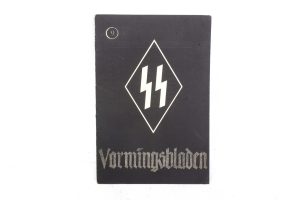
Dutch Germaansche SS-Vormingsbladen 1943 #9
€125.00Original Dutch Germaansche SS-Vormingsbladen in very good condition.
-
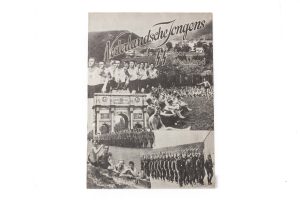
Dutch SS-Standarte Westland recruitment leaflet
€275.00Dutch SS-Standarte Westland recruitment flyer in very good condition. Hard to find example.
-
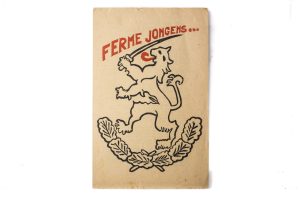
Dutch 34. SS-Freiwilligen Grenadier Division Landstorm Nederland recruitment leaflet
€300.00Rare Dutch 34. SS-Freiwilligen Grenadier Division Landstorm Nederland recruitment flyer. This is a rare smaller sized flyer printed later in the war.
-
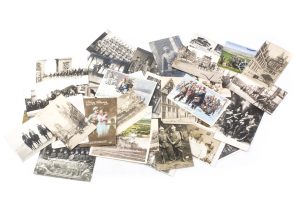
Imperial post card lot
€75.00Interesting lot of first world war post cards with interesting stories on the back.
-
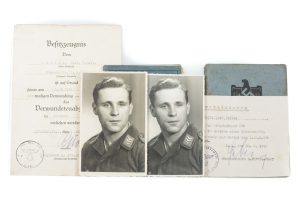
Soldbuch grouping of Kurt Helbig, Art Regt 276, 276 VGD, MP44, Ardennes
€550.00Soldbuch grouping of Unteroffizier Kurt Helbig, serving with Artillerie Regiment 276 under the 276 Volksgrenadier Division during the Ardennes offensive. He was first serving with several Luftwaffe search light units such as Flakscheinwerfer-Abteilung 238 and on 16.10.44 drafted in 276 VGD. The first page on his Soldbuch notes the fact that he was not issued a Heer Soldbuch but was part of the army. He participated during the Ardennes offensive and must have whitnessed a large portion of the combat in the area of the 276 VGD as described below. He was issued a MP44 for the Ardennes Offensive which he later had to turn in in March 1945. He was wounded 13.2.45 near Prüm.
-

Press Photo; Market Garden dropzone
€35.00Press Photo; Market Garden dropzone
-
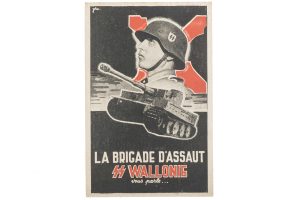
Postcard SS-Wallonie; La Brigade D’Assaut SS Wallonie
€200.00Rare postcard SS-Wallonie; La Brigade D’Assaut SS Wallonie. This is a rare original coloured postcard of the Wallonie volunteer brigade. Hard to find original example, not a reprint!
-
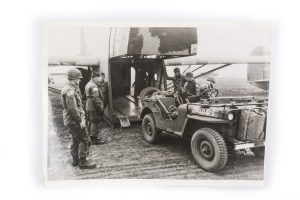
US Press photo market garden 82nd or 101st Airborne 15x21cm
€100.00Nice original press photo in good condition. US Press photo market garden 82nd or 101st Airborne 15x21cm
-

US Photograph: Operation Market Garden 101st Airborne
€300.00US Photograph: Operation Market Garden 101st Airborne. Great clear photograph of a 101st Airborne Jeep moving towards Son or Veghel. Hard to find, large format photograph.
-
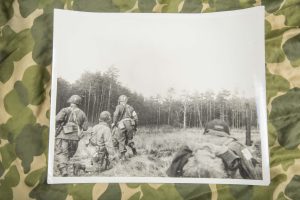
US Photograph: Operation Varsity
€150.00US Photograph: Operation Varsity. Beautiful highly detailed and large(!) photograph.
-
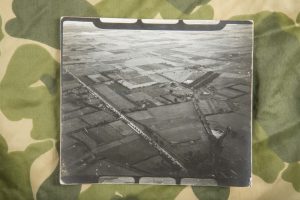
US Photograph: Glider landing zone W during operation Market Garden
€125.00US Photograph: Towing Waco gliders during operation Market Garden. Landing zone W was used by the 101st Airborne Division.
-
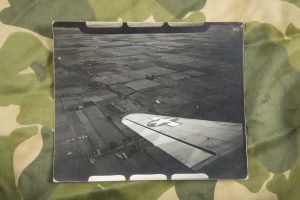
US Photograph: Glider landing zone W during operation Market Garden
€125.00US Photograph: Towing Waco gliders during operation Market Garden. Landing zone W was used by the 101st Airborne Division.
-
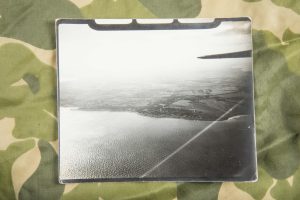
US Photograph: Waco glider towing during operation Market Garden
€100.00US Photograph: Towing Waco gliders during operation Market Garden towards Landing zone W wich was used by the 101st Airborne Division.
-
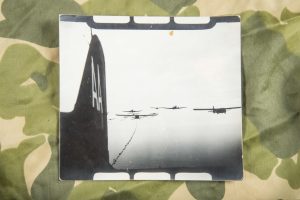
US Photograph: Towing Waco gliders during operation Market Garden
€125.00US Photograph: Towing Waco gliders during operation Market Garden. Landing zone W was used by the 101st Airborne Division.
-

US Photograph: Waco glider landing on landing zone W during operation Market Garden
€150.00US Photograph: Waco glider landing on landing zone W during operation Market Garden. Landing zone W was used by the 101st Airborne Division.
-
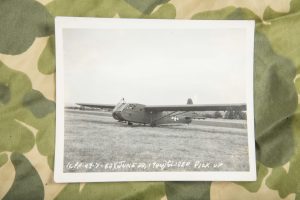
US Photograph: Waco glider
€65.00US Photograph: Waco. Considering the absence of D-Day and Market Garden invasion stripes this photo must have been taken prior to Operation Varsity.
Showing 1–60 of 303 results