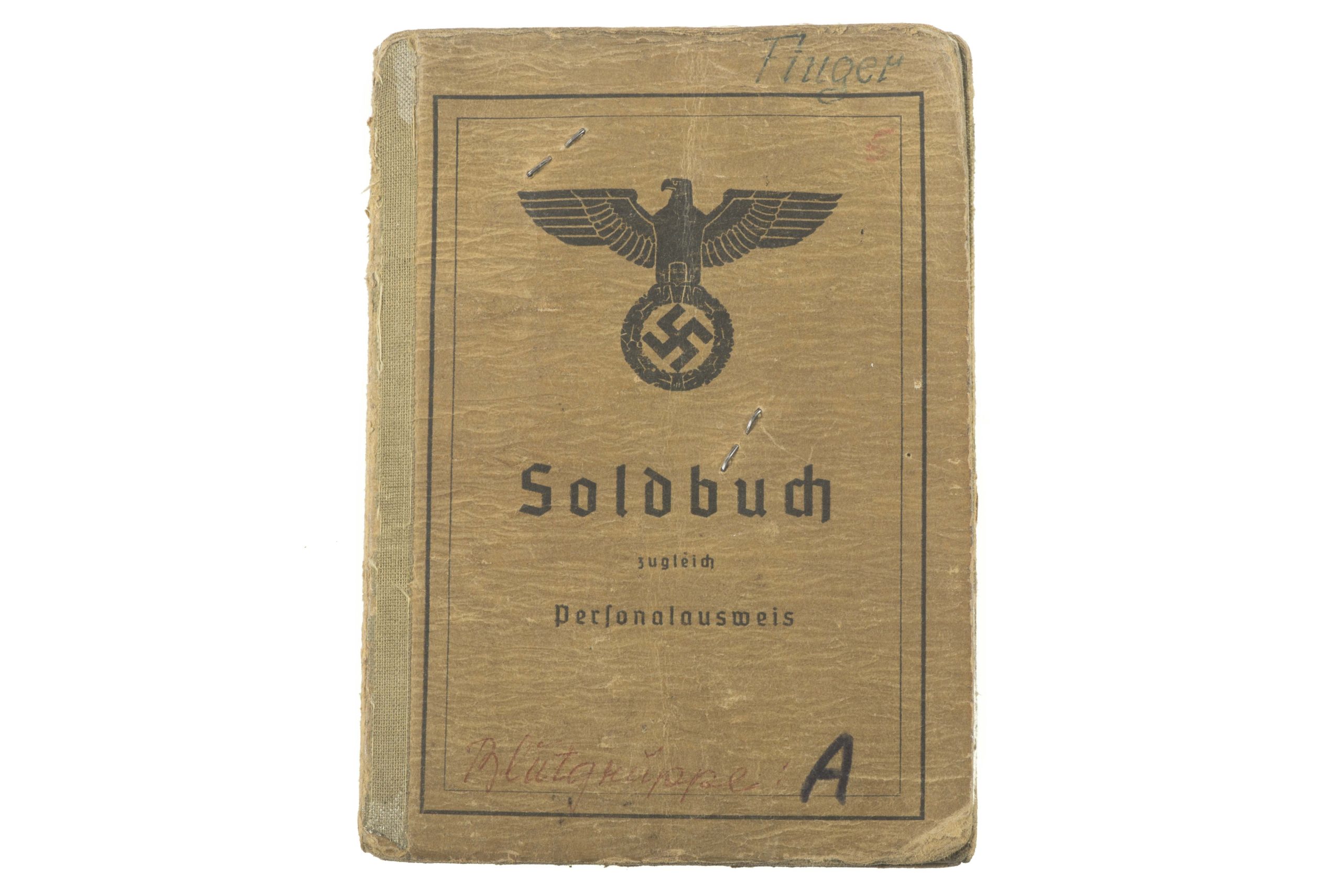
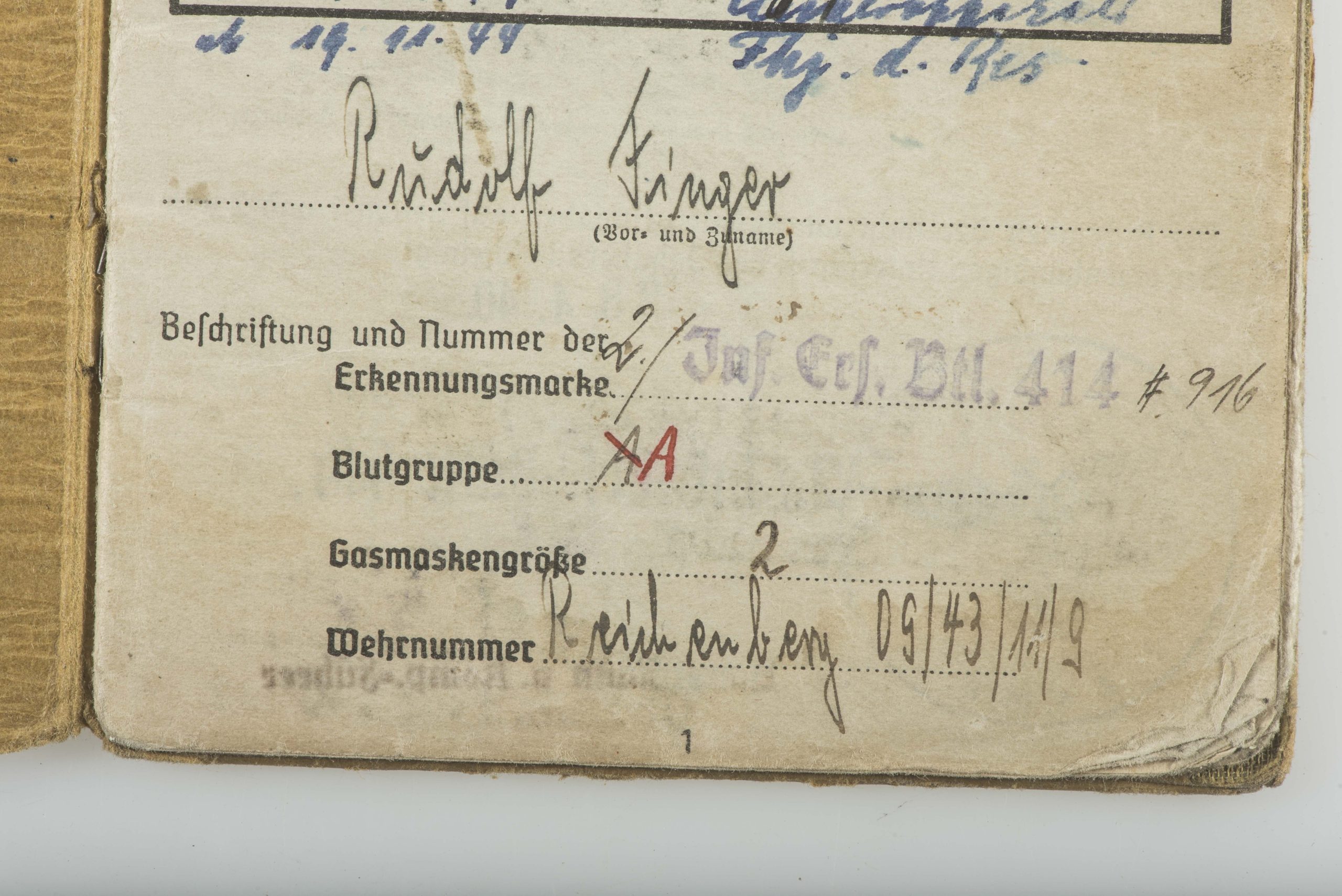
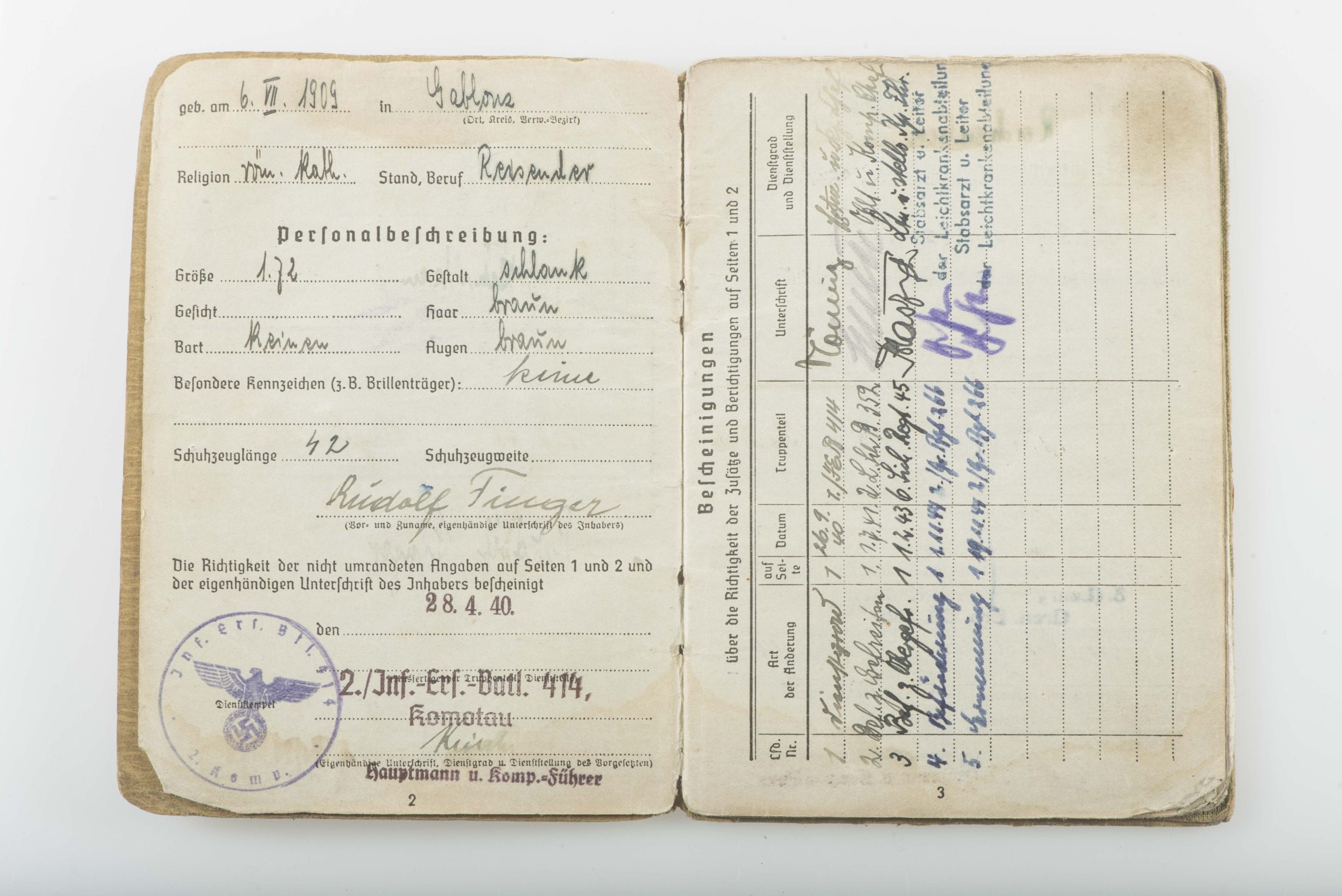
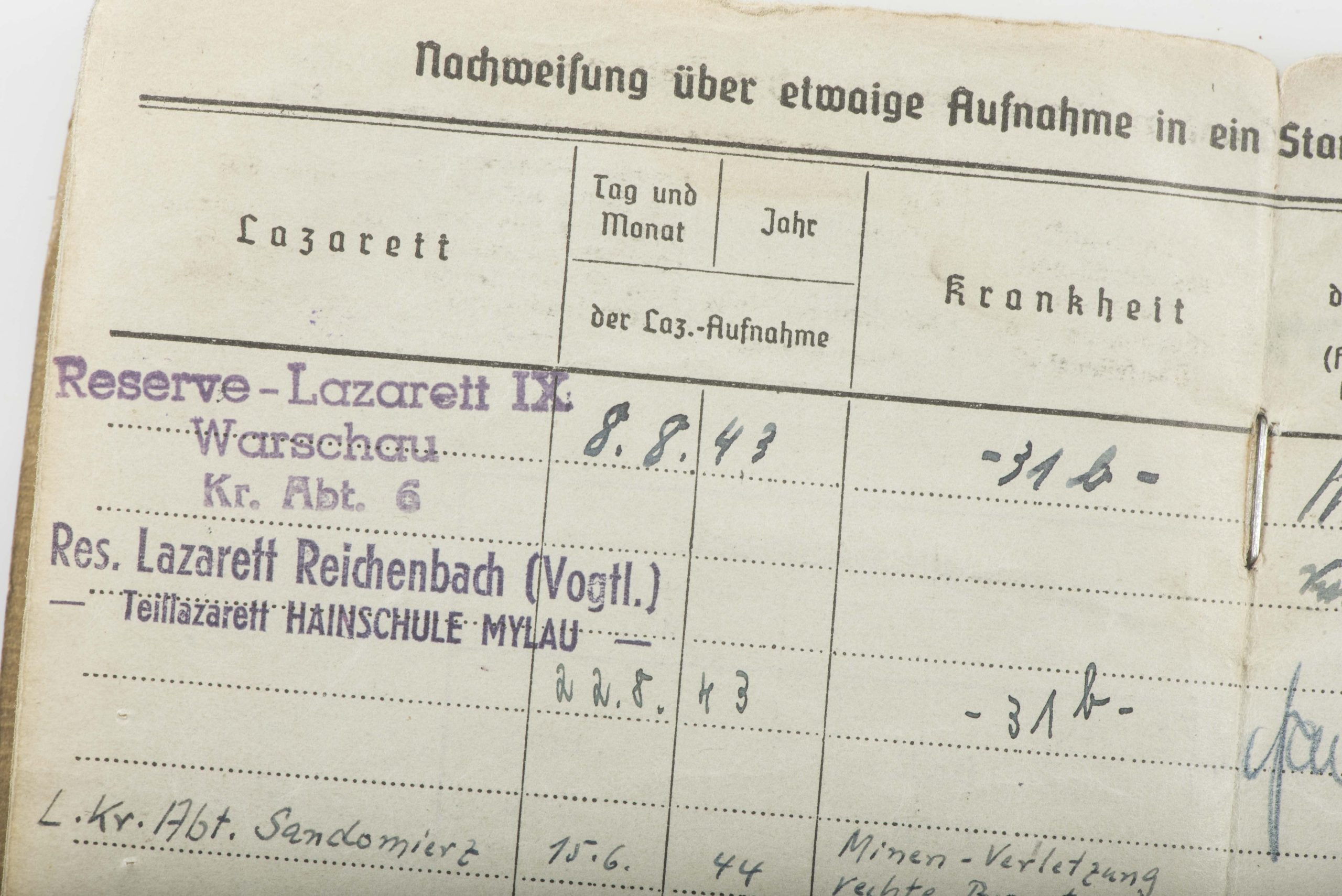
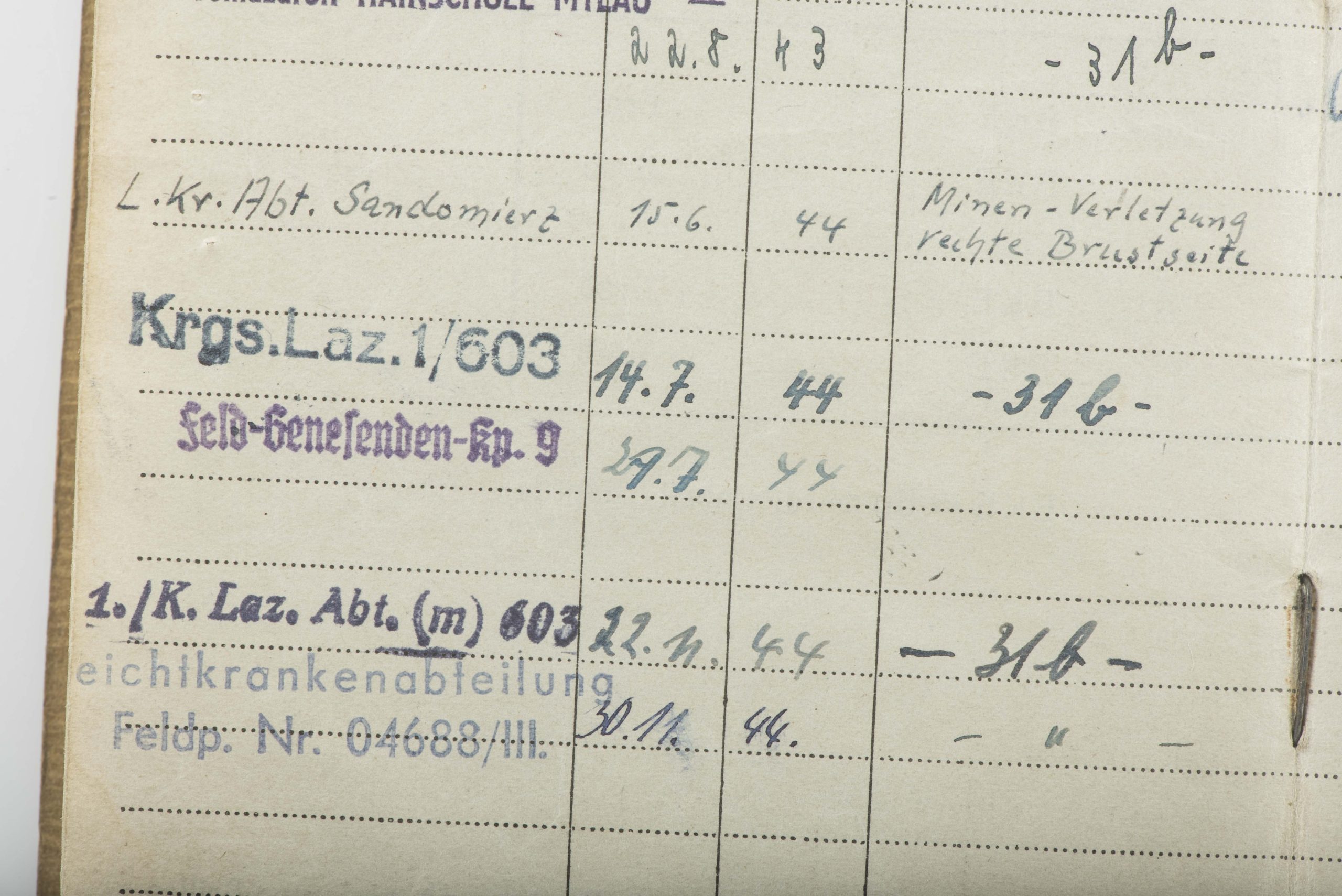
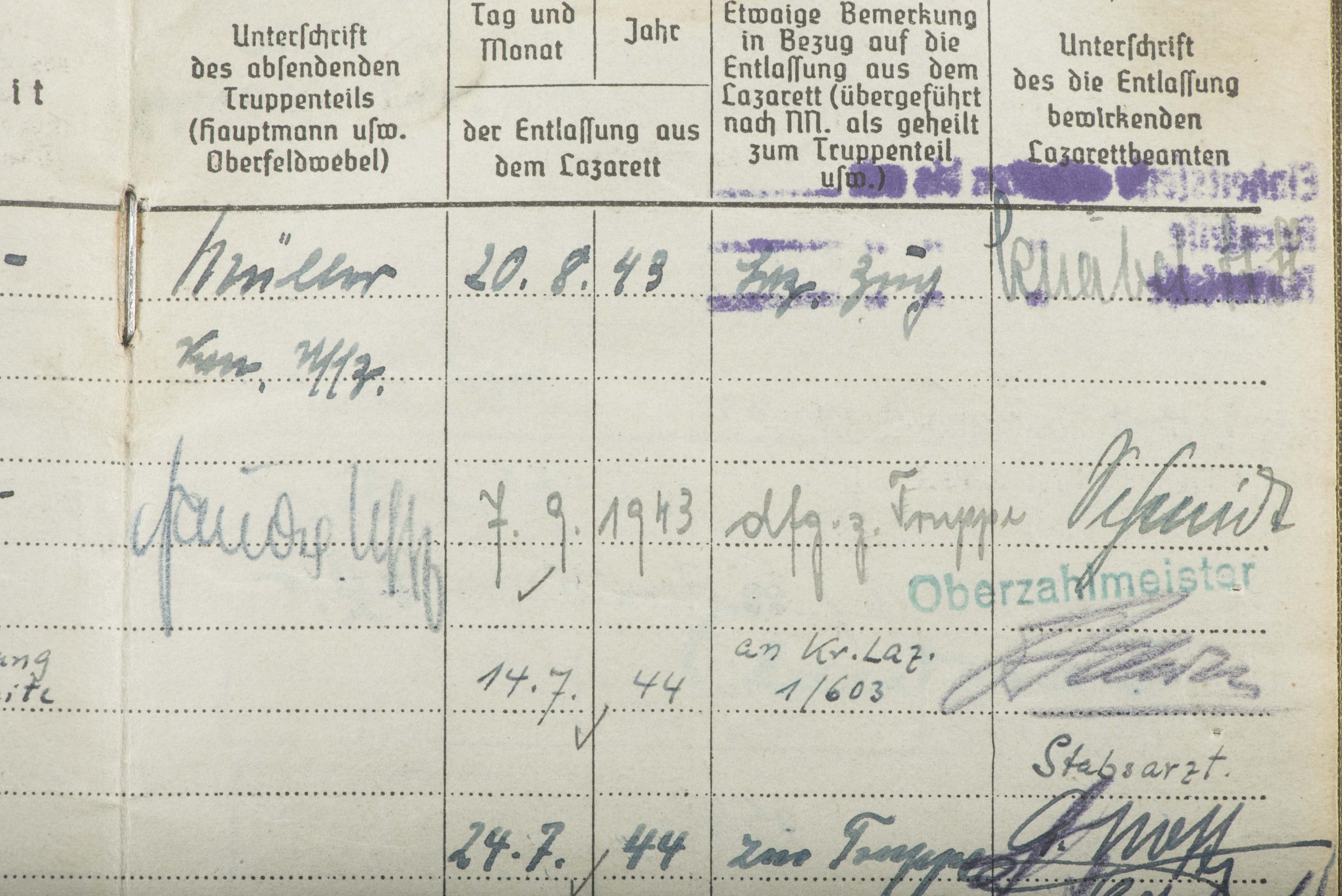
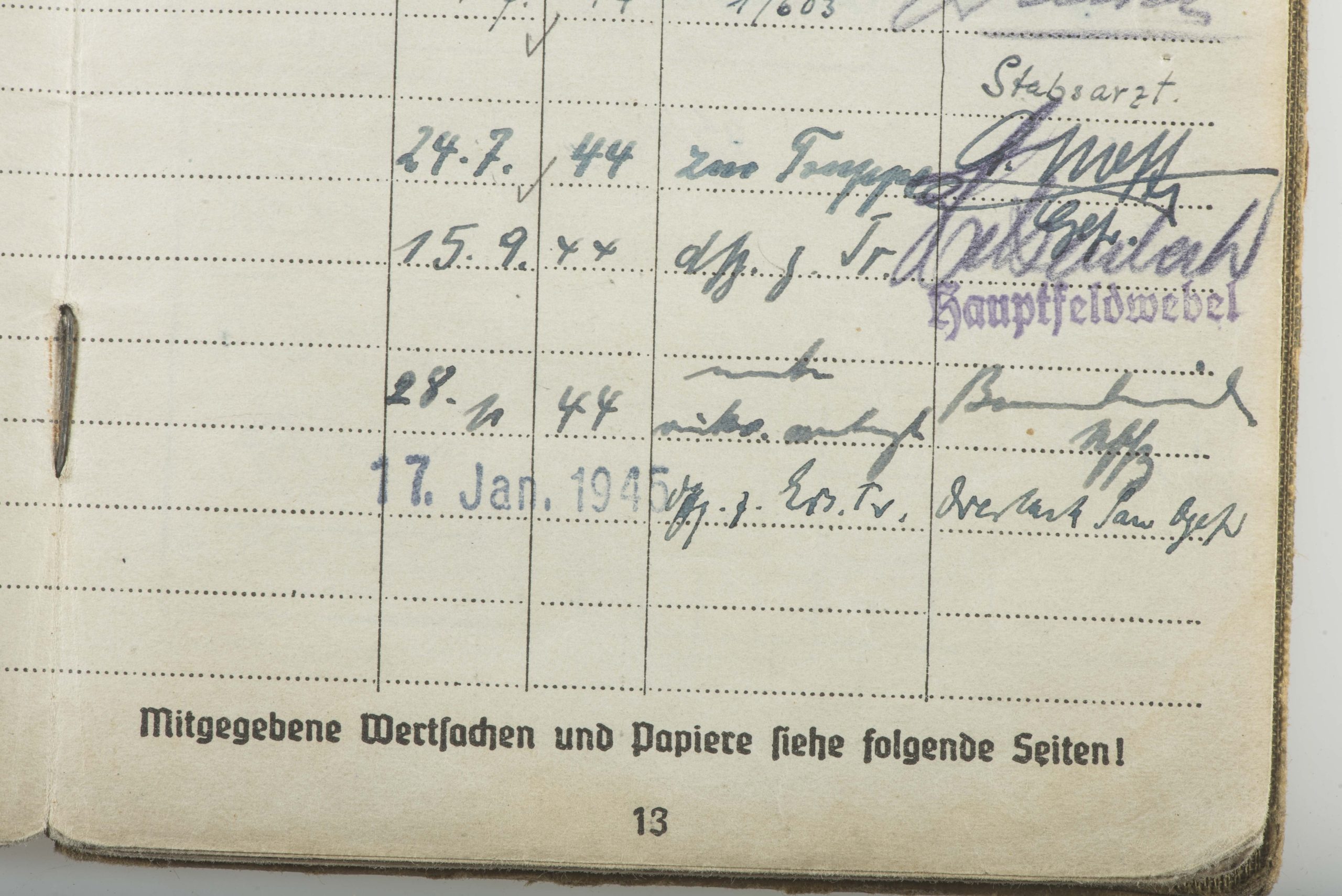
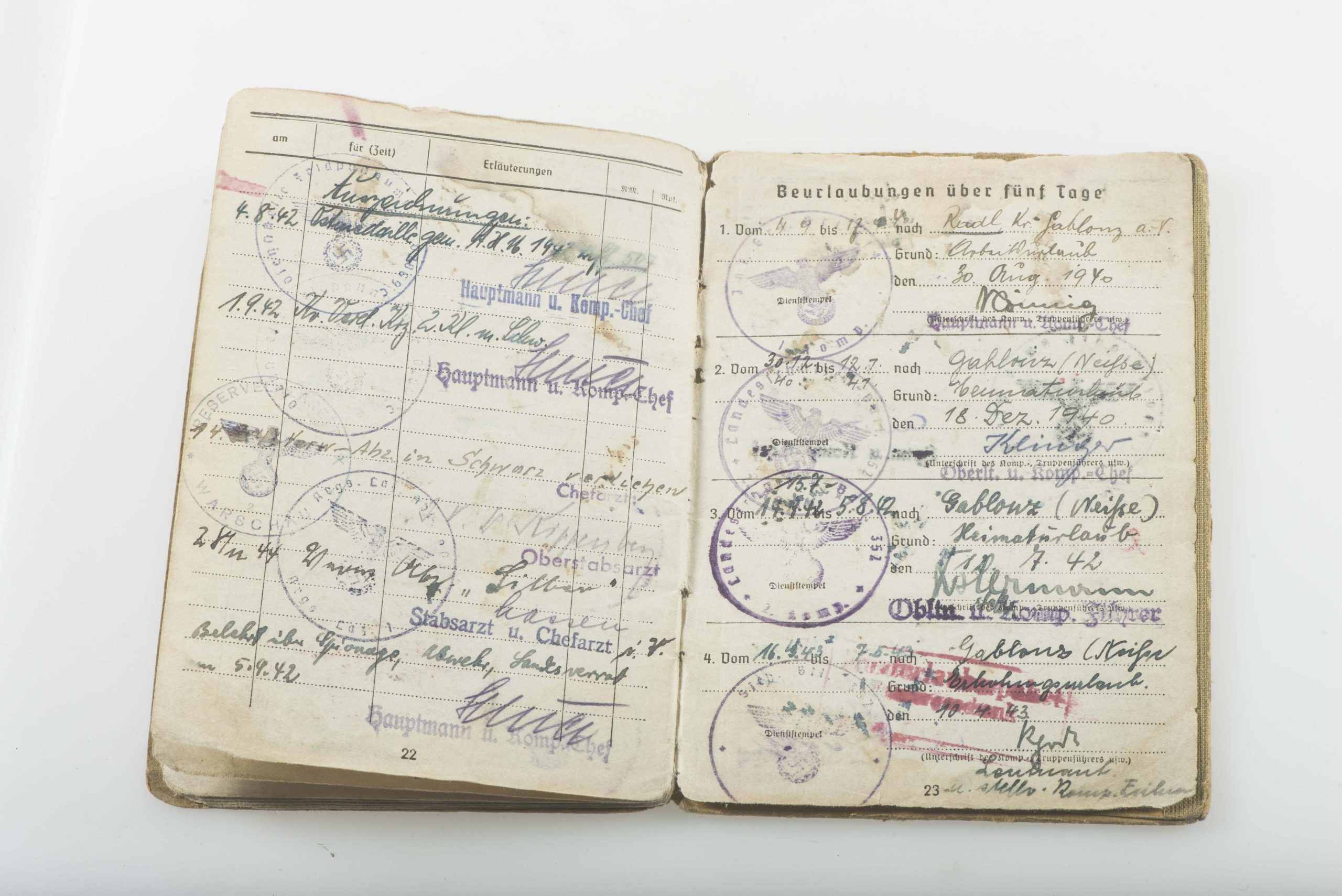
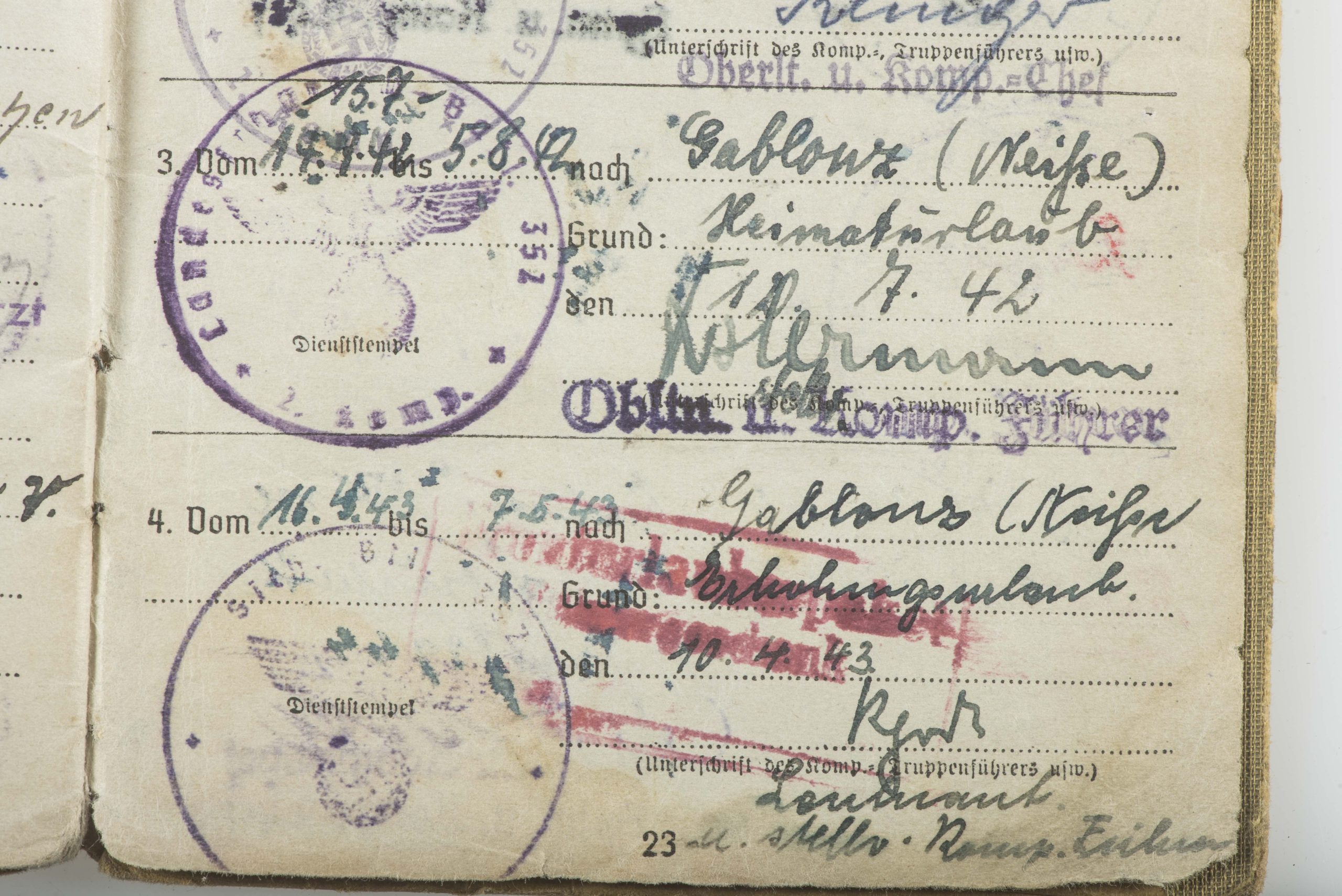
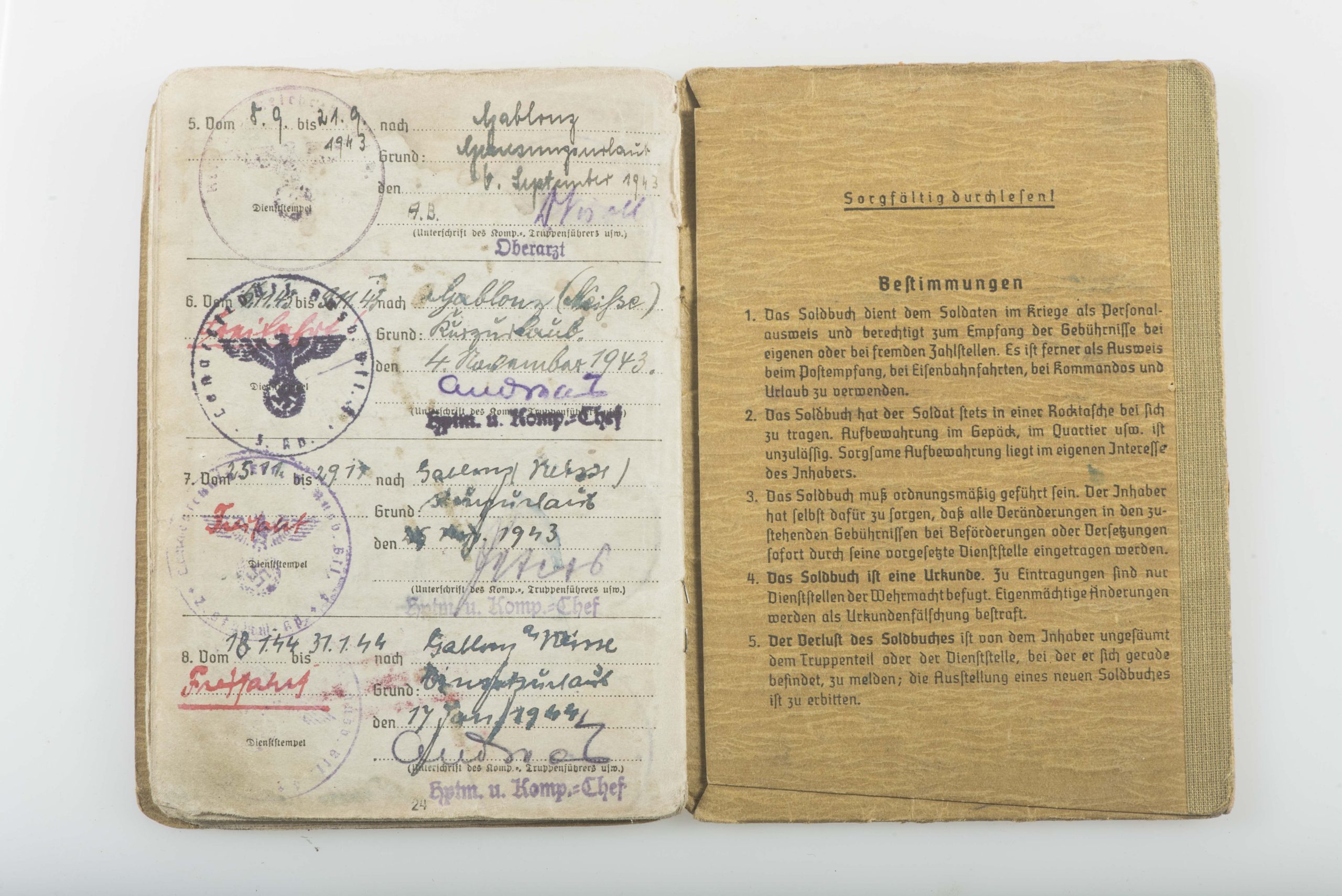
Soldbuch to Rudolf Finger – Grenadier Regiment 226 – 212 VGD
€400.00
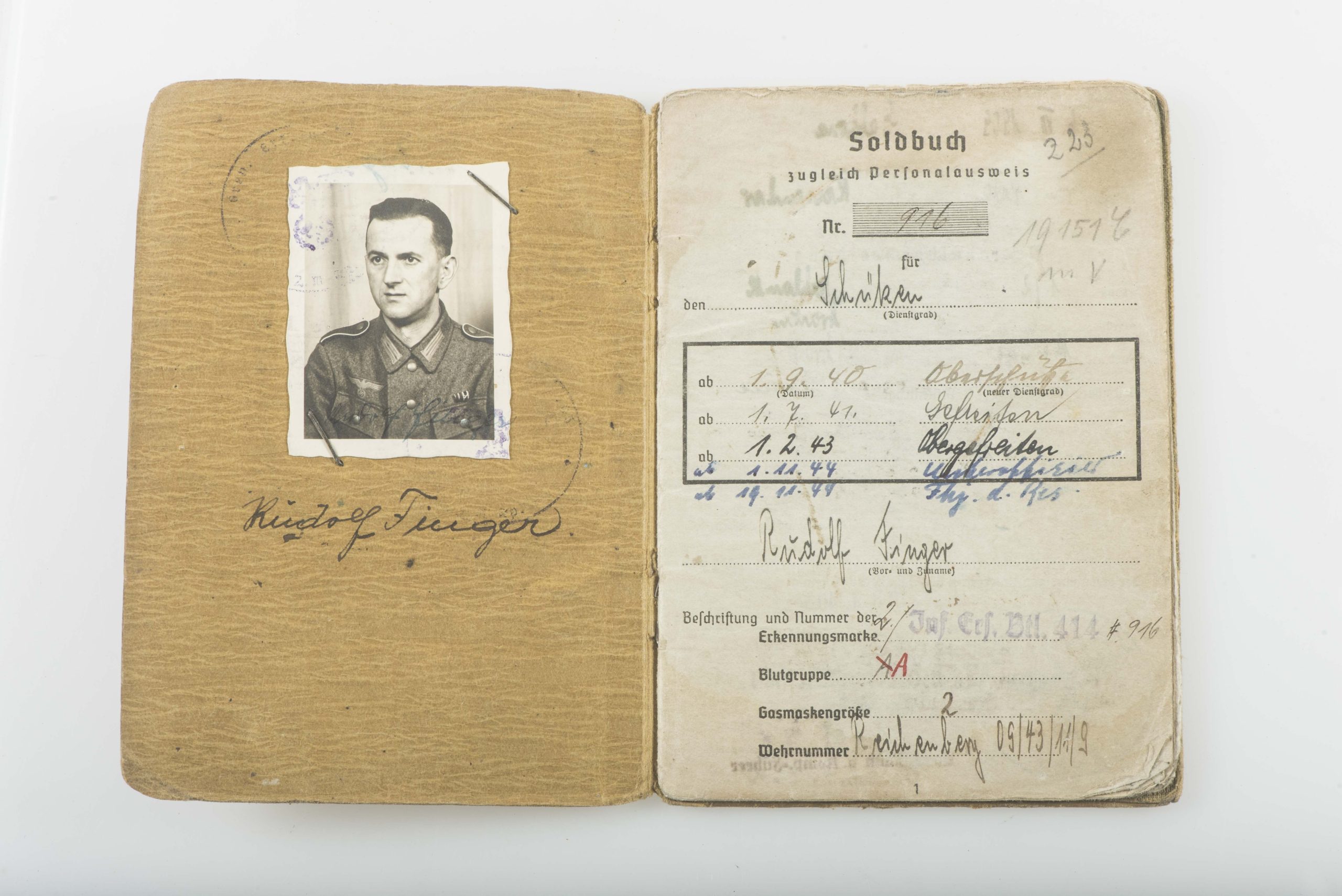
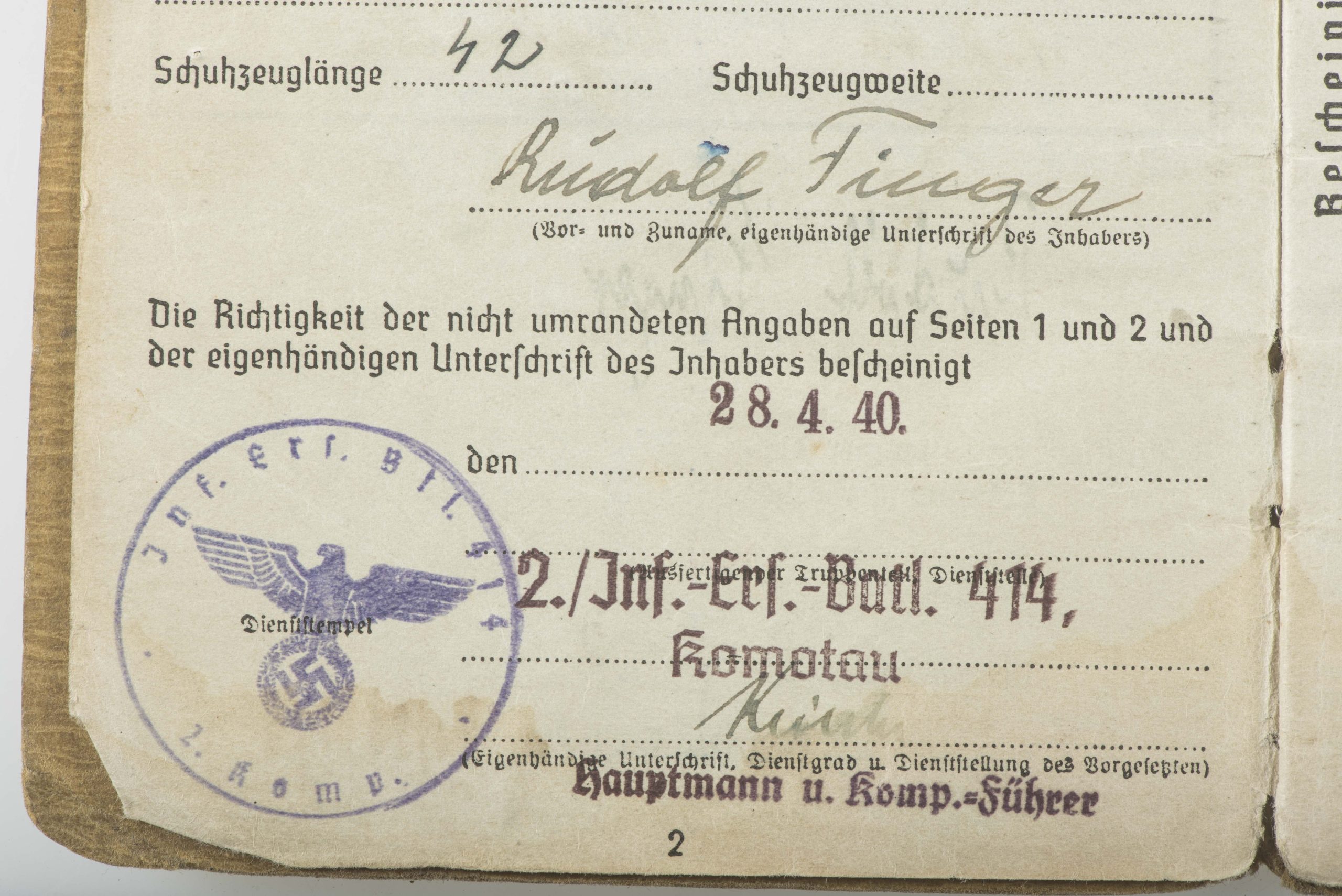
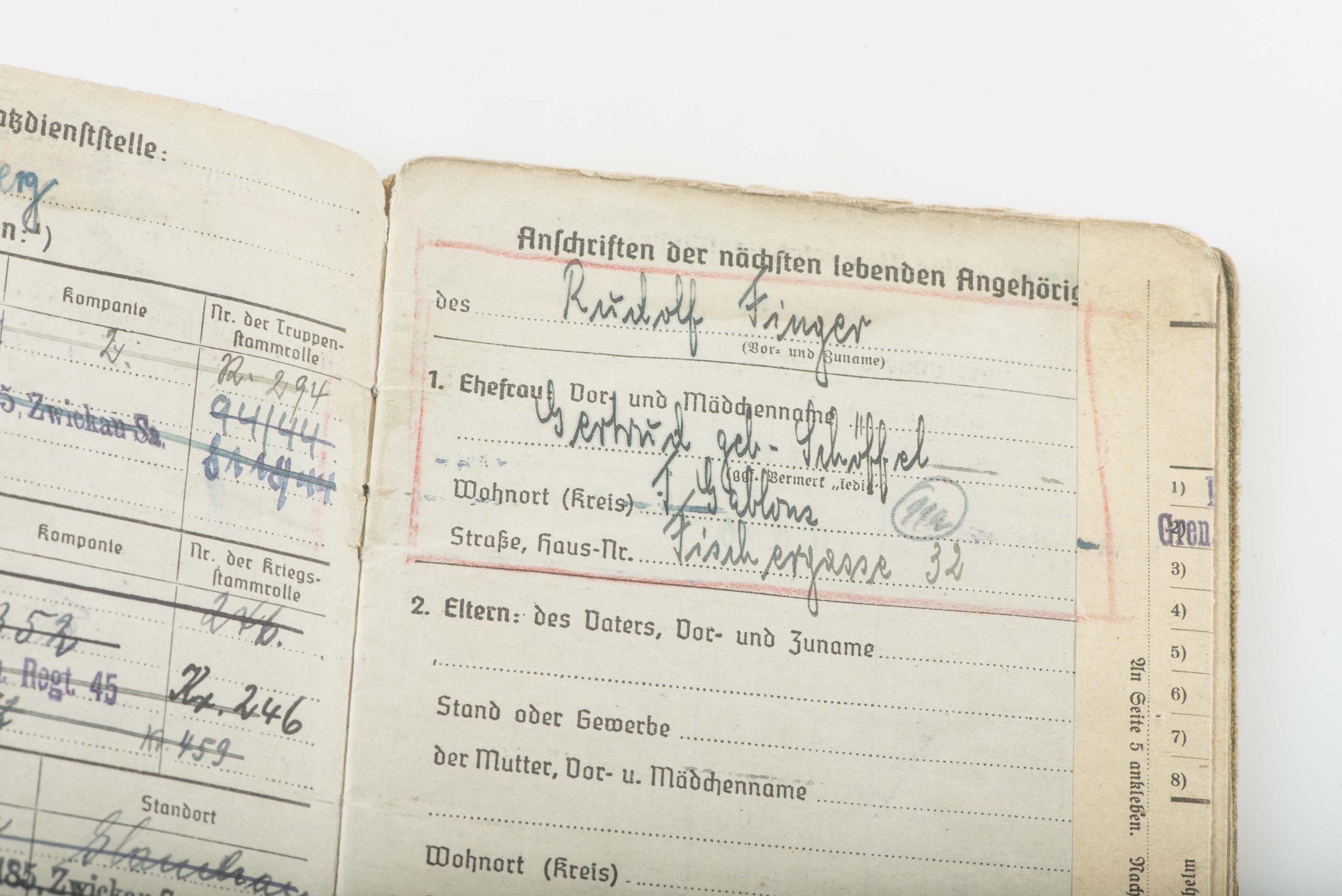
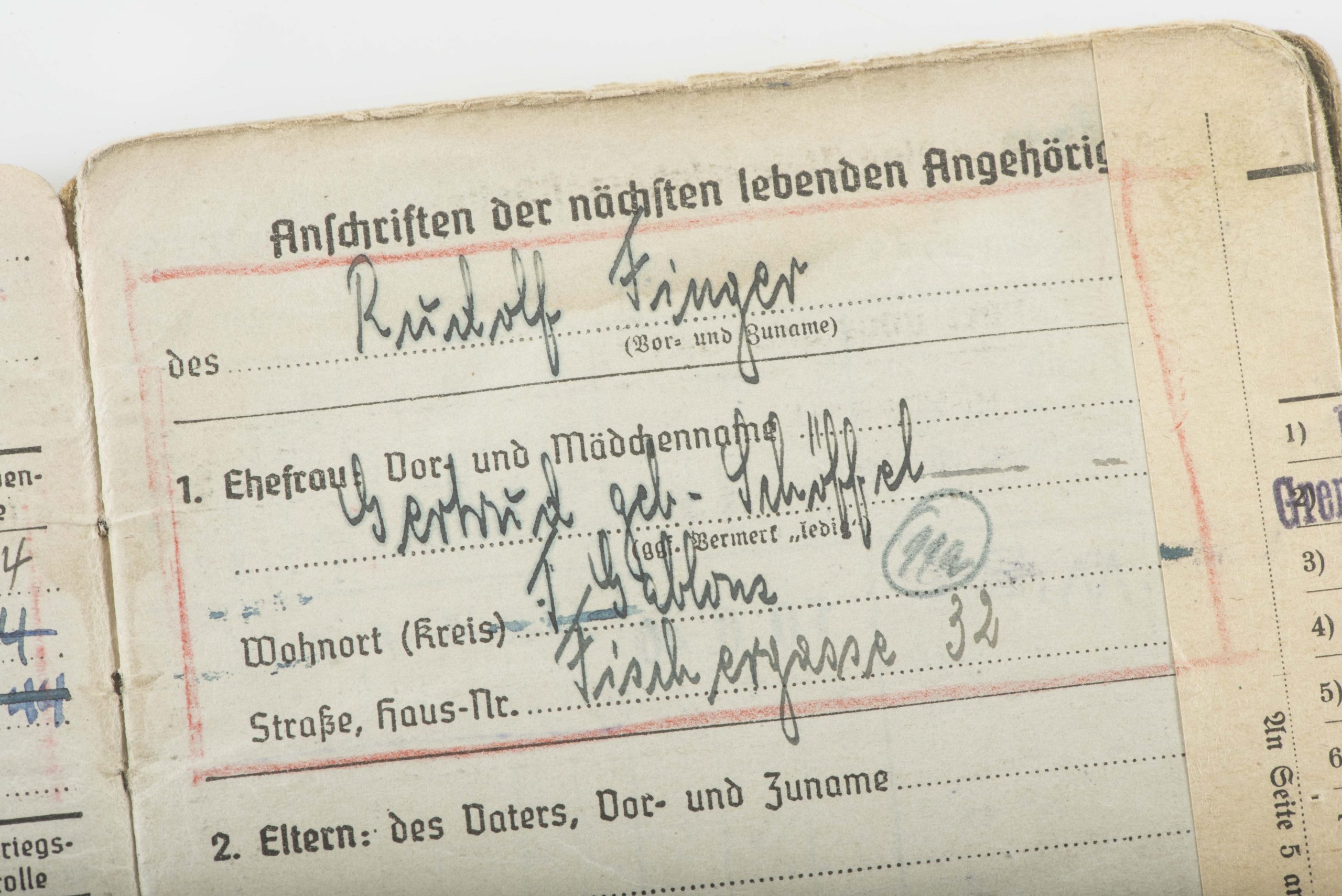
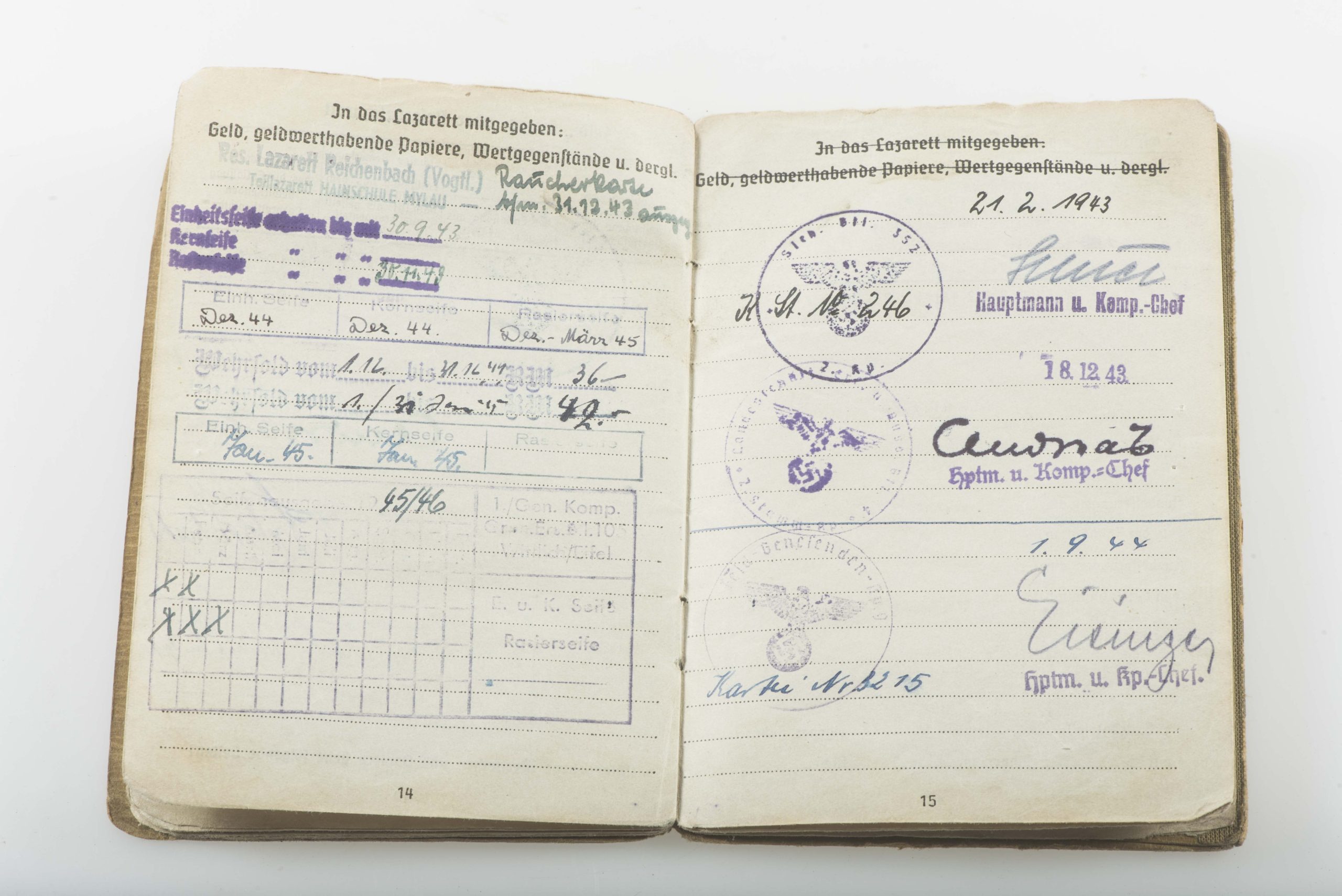
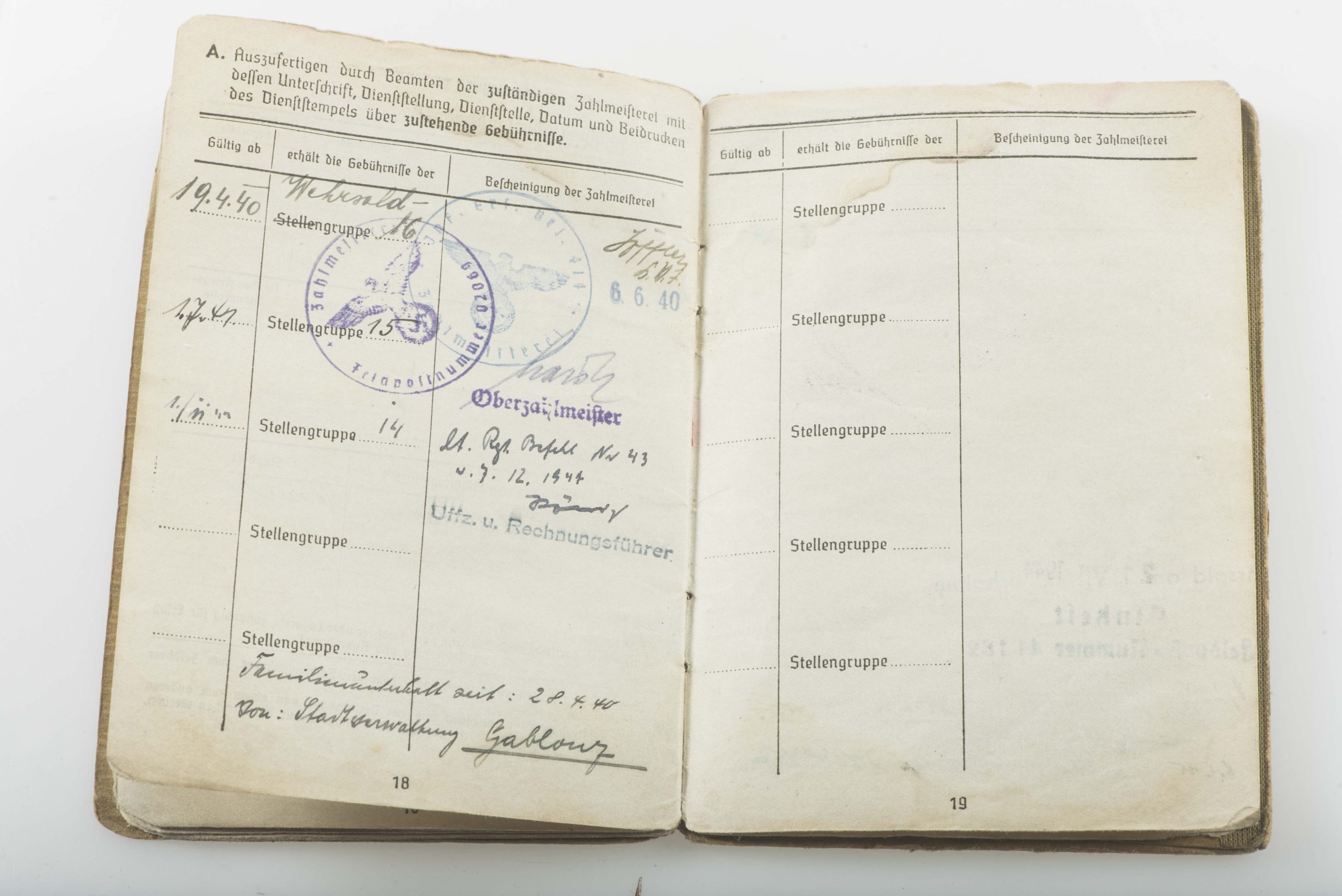
Soldbuch to Rudolf Finger, born 6.7.1909 in Gablonz. He first enlisted 28.4.1940
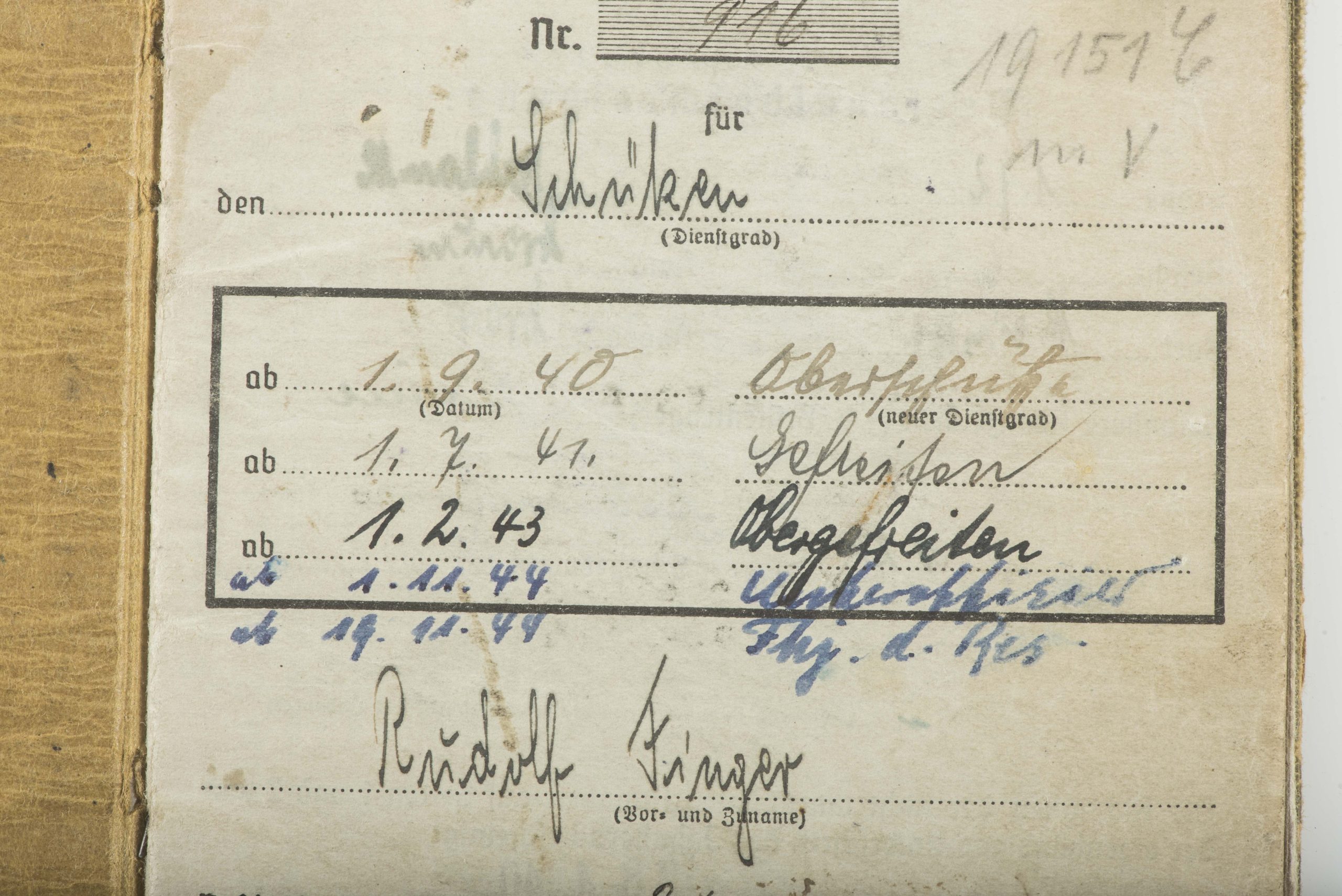
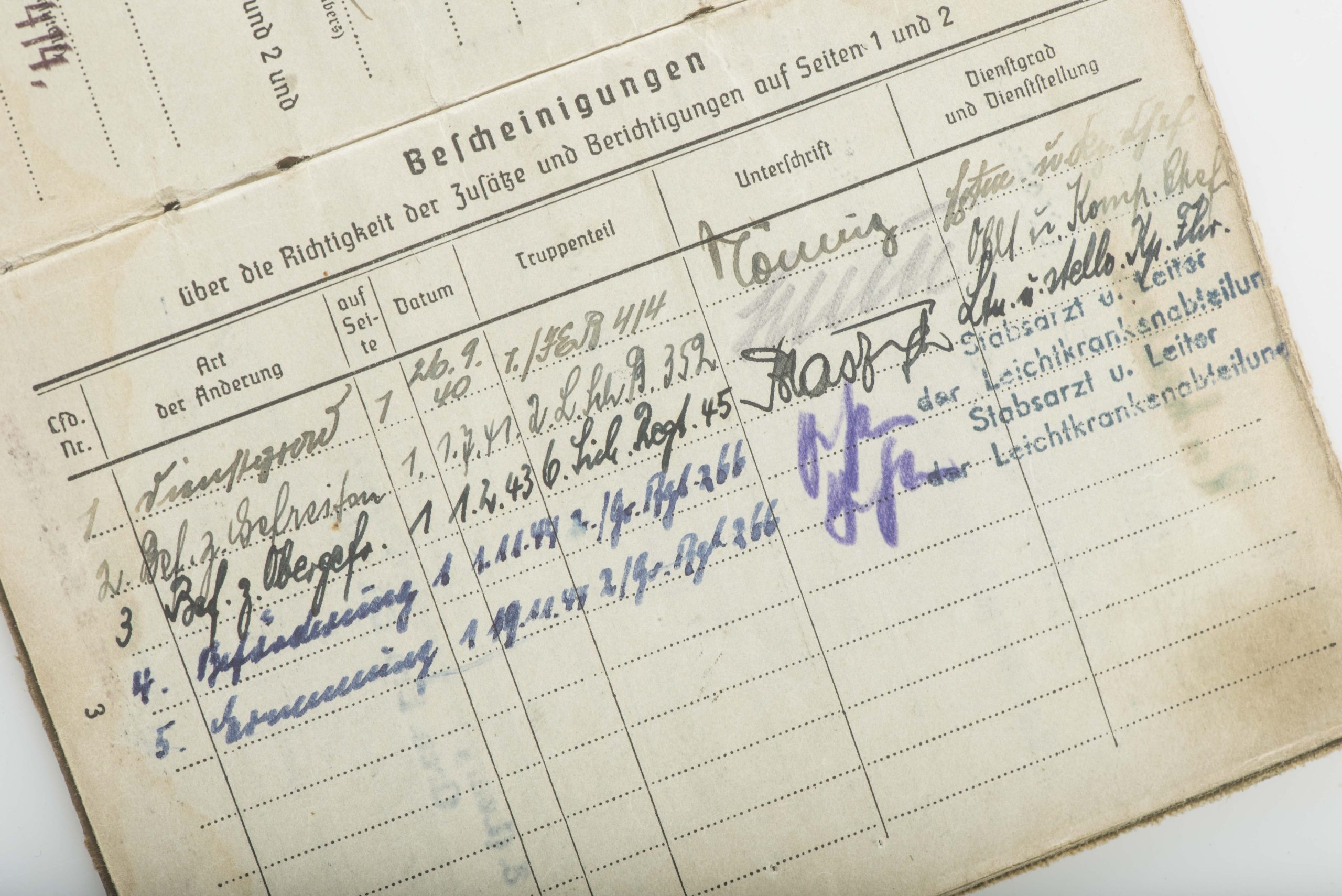
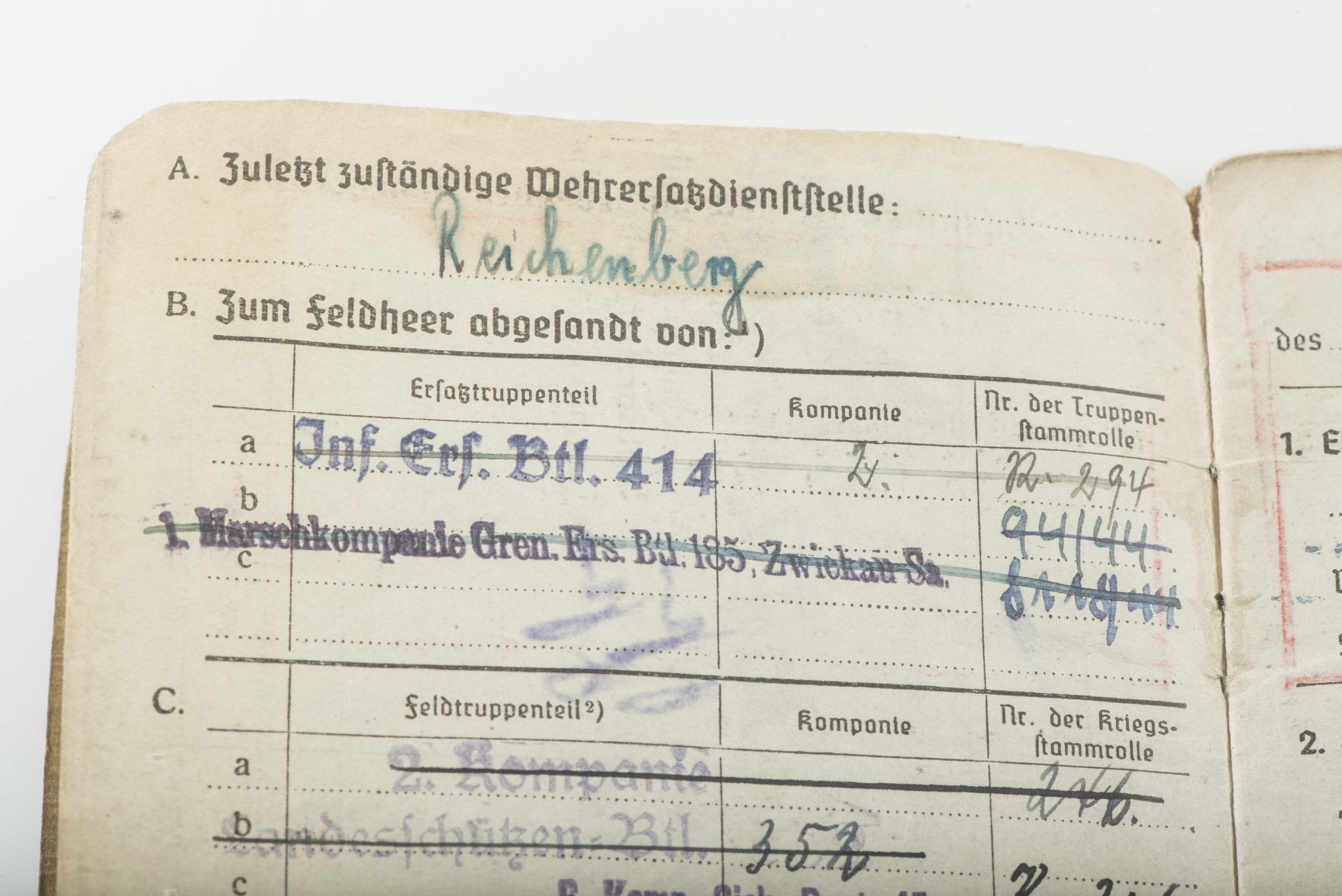
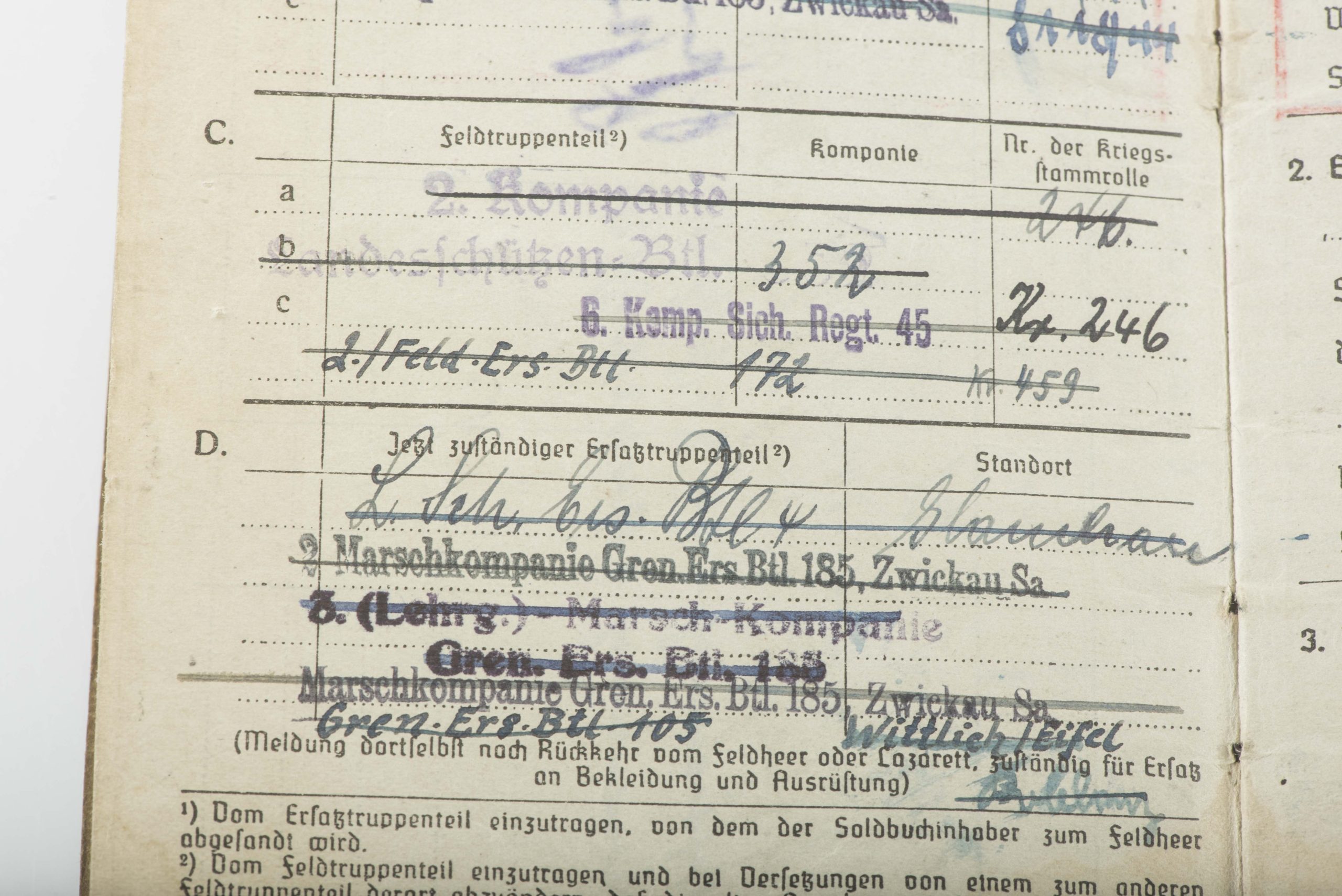
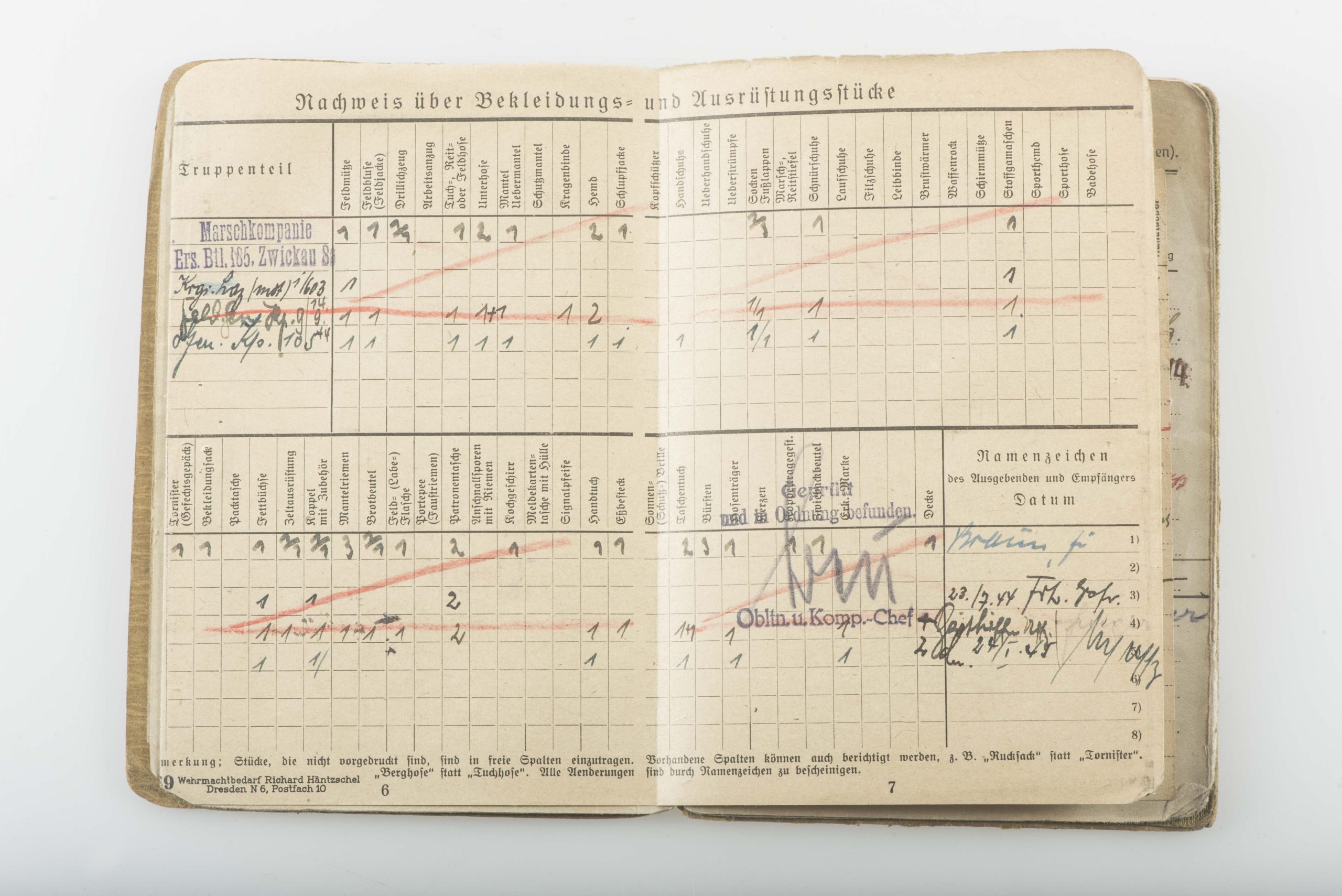
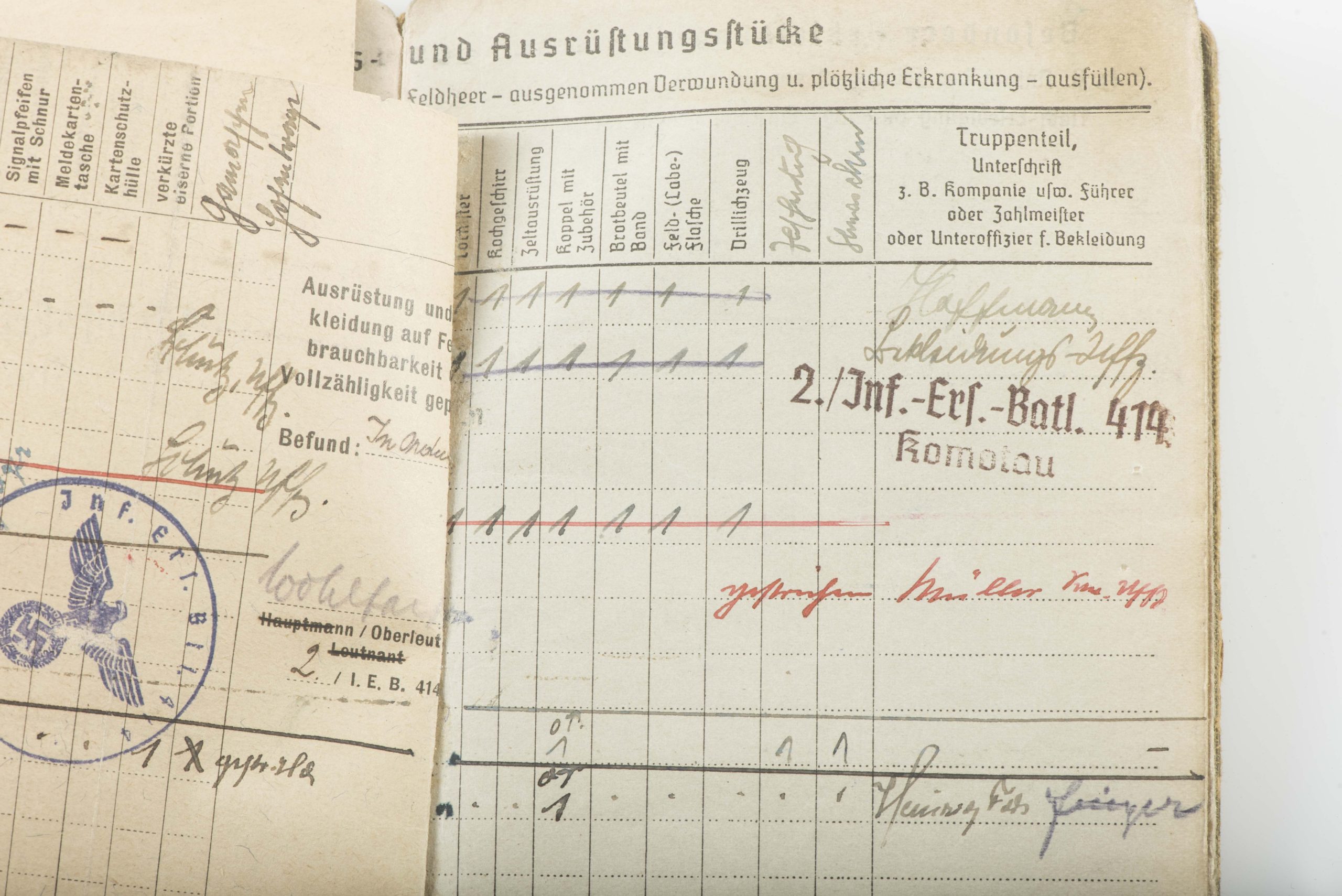
He was promoted to Oberschütze 1.9.1940, Gefreiter 1.5.1941, Obergefreiter 1.2.1943, Unteroffizier 1.11.1944 and Feldwebel 19.11.1944. His Erkennungsmarke read 2./Inf. Ers. Btl. 414.
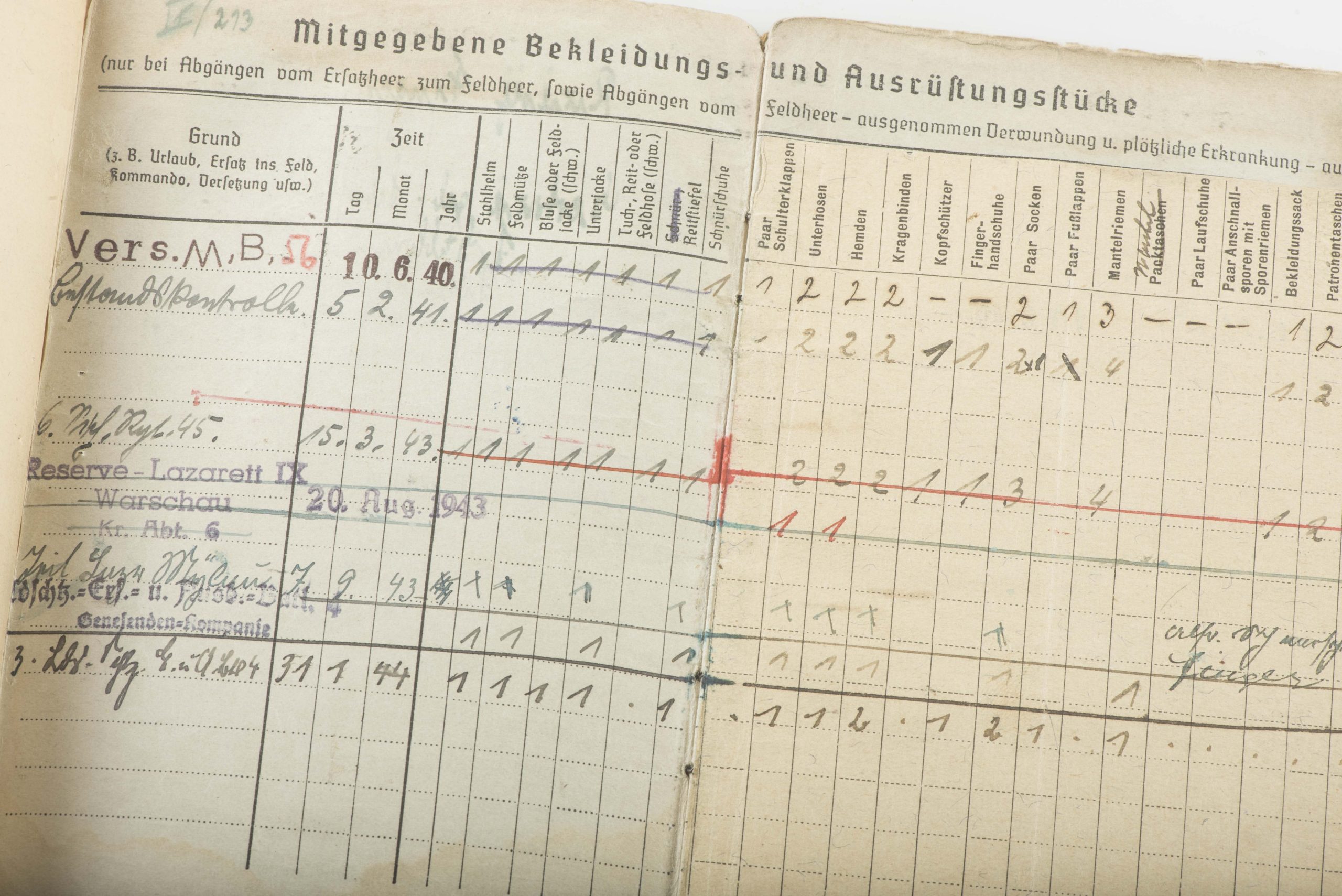
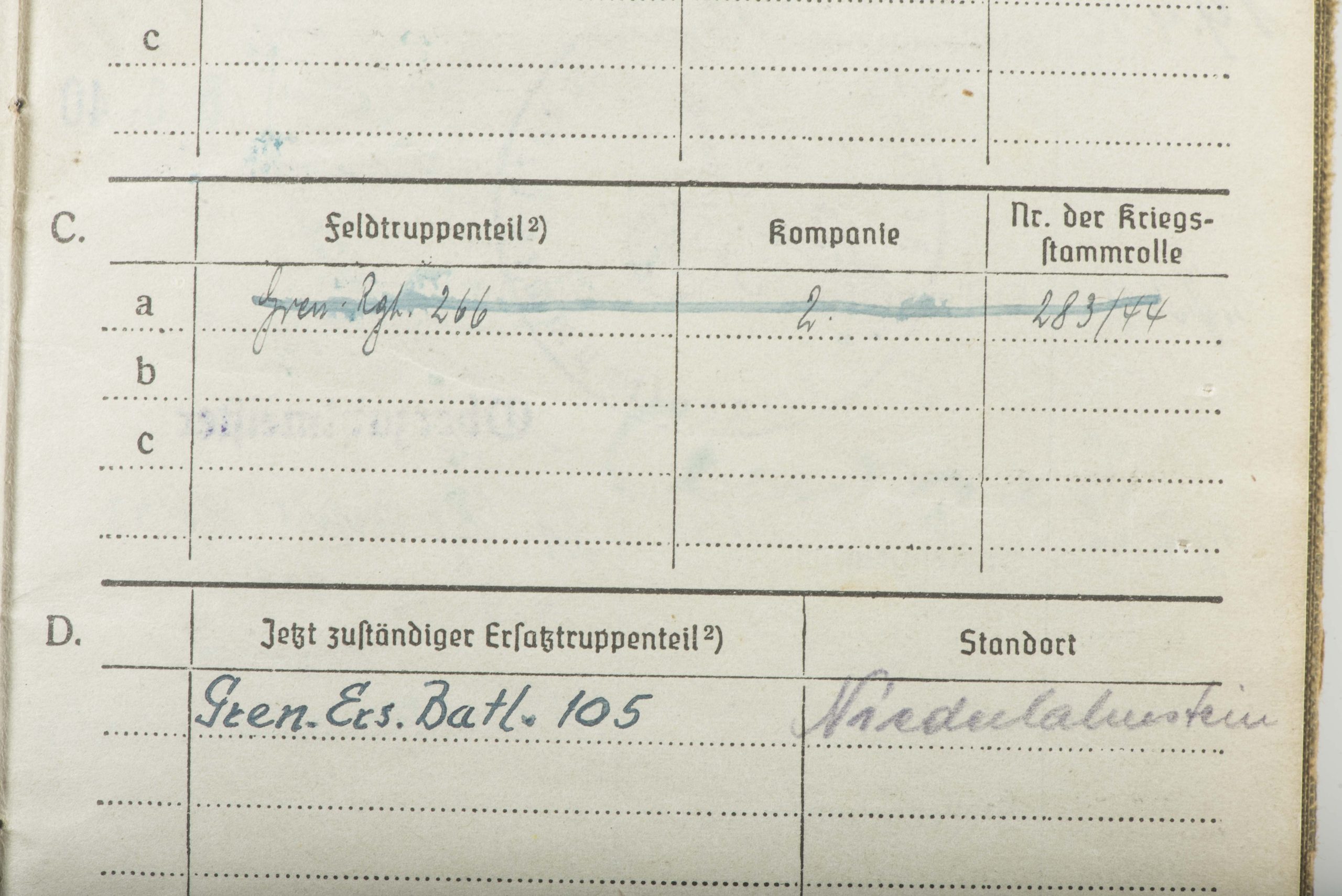
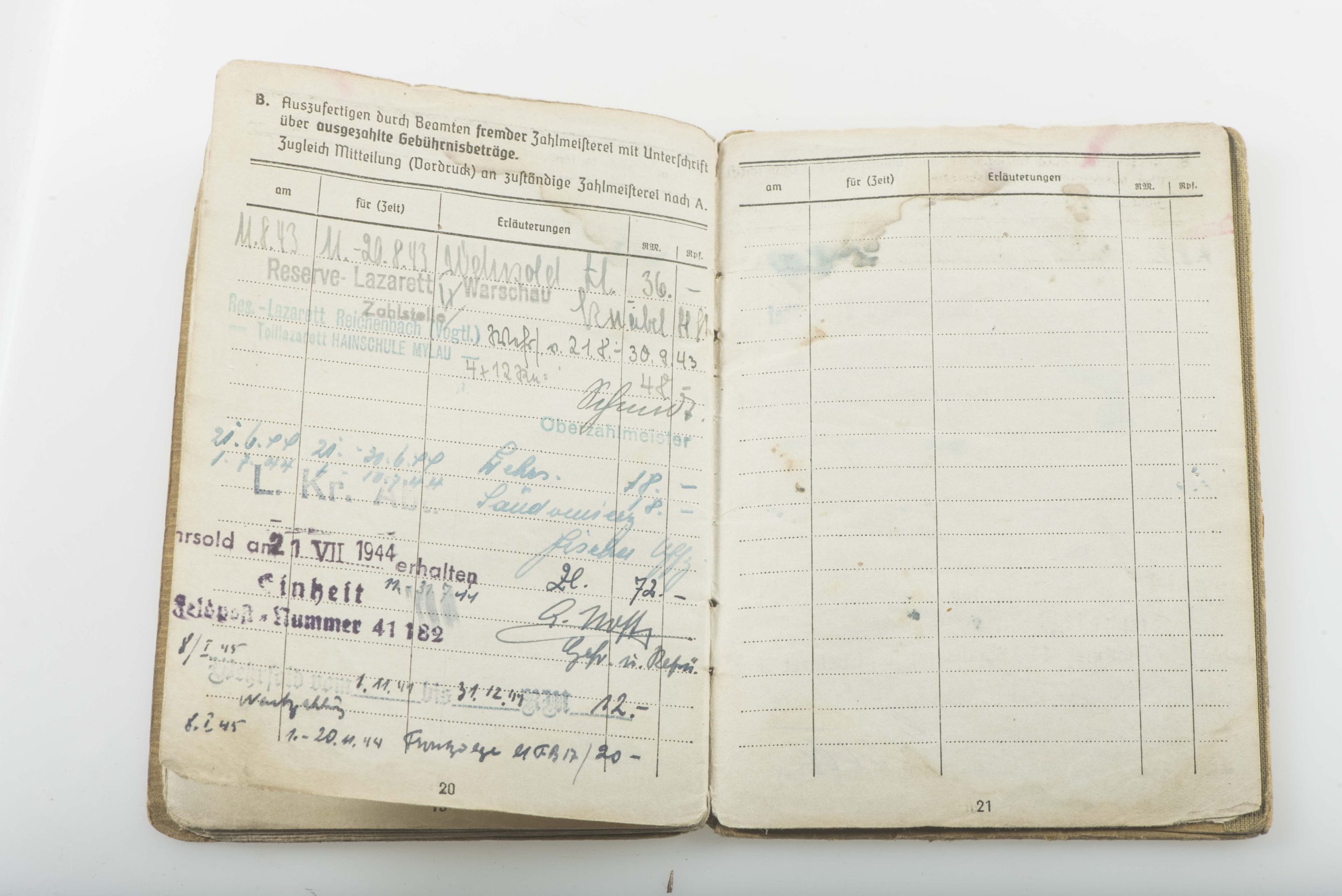
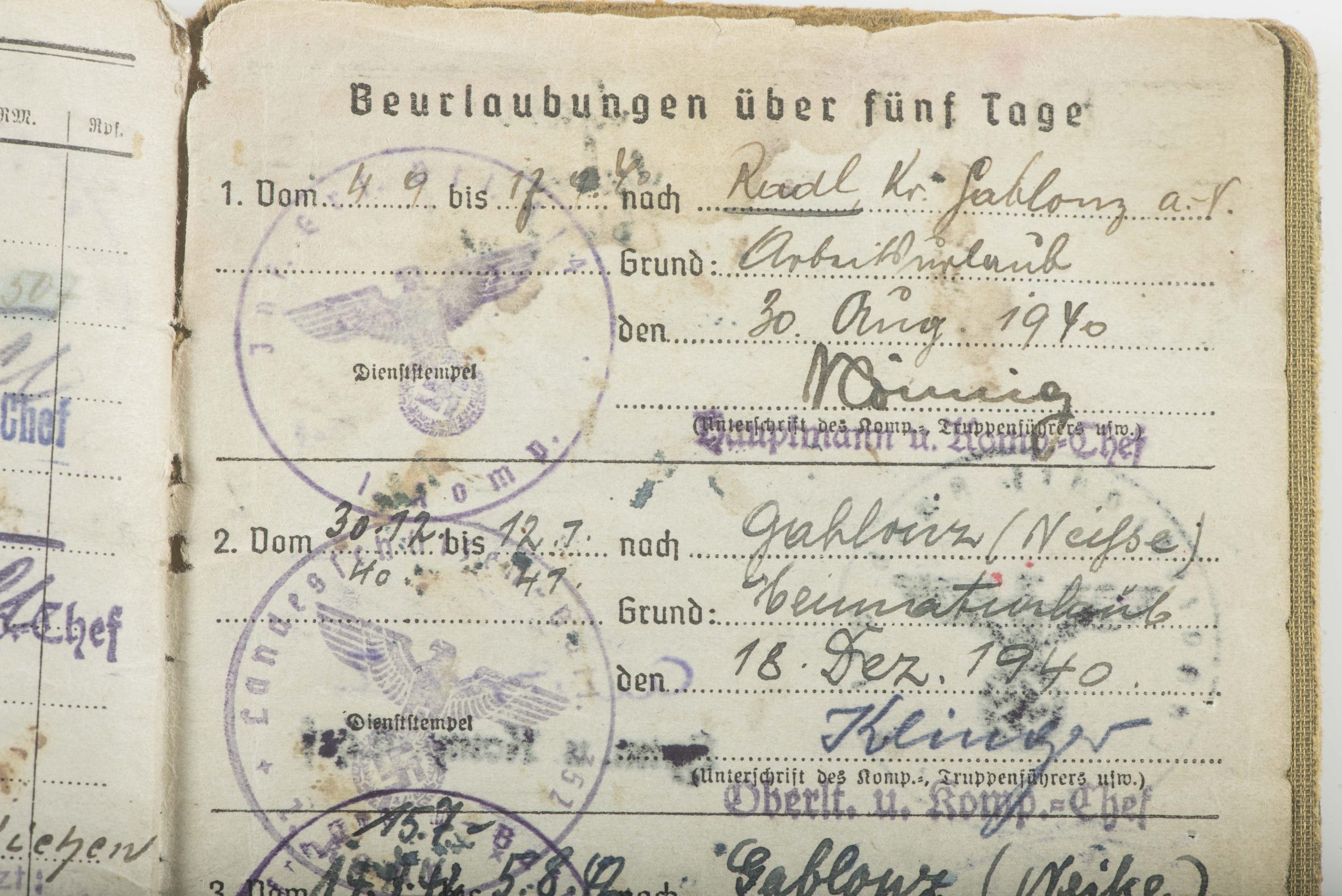
He served with Landesschützen Bataillon 352, 6. Kompanie Sicherungs Regiment 45, Feld Ersatz Bataillon 172 and 2 Kompanie Grenadier Regiment 226. The first Bataillon contained 2. Kompanie Grenadier Regiment 226 was merged with the 212 Volksgrenadier Divison on October 1944. The 212. Volksgrenadier-Division was formed on 17 September 1944 from the remnants of the 212. Infanterie-Division and the 578. Volksgrenadier-Division. Transferred to the Western Front in November 1944, it occupied positions along the Moselle before participating in the Ardennes Offensive on 16 December 1944.
Operating on the southern flank of the German offensive, the division attacked American positions around Echternach, Berdorf, Consdorf and surrounding villages in Luxembourg. Its objective was to secure the southern flank of the German Seventh Army and prevent American reinforcements from moving north. The initial assault achieved surprise, with German troops crossing the Sauer River and penetrating American defensive positions. On 19 December, the division captured Echternach, but determined resistance from the US 4th Infantry Division and reinforcements from the 10th Armored Division prevented further advances.
Heavy fighting continued around Consdorf, Scheidgen, Osweiler and Dickweiler. Sustained American counterattacks and severe casualties forced the division onto the defensive. Grenadier-Regiment 316 was reportedly reduced to approximately 200 men. By 27 December, the division withdrew towards the Westwall, ending its participation in the Ardennes Offensive.
During January and February 1945, the division defended positions around Bollendorf, Echternach and the Ferschweiler Plateau. Following the American breakthrough, it retreated through the Trier and Kyll sectors before its remnants were largely destroyed near Lauterecken in March. Reconstituted later that month, the division fought around Würzburg and Niederstetten before being reduced to a Kampfgruppe and effectively destroyed in late April 1945.
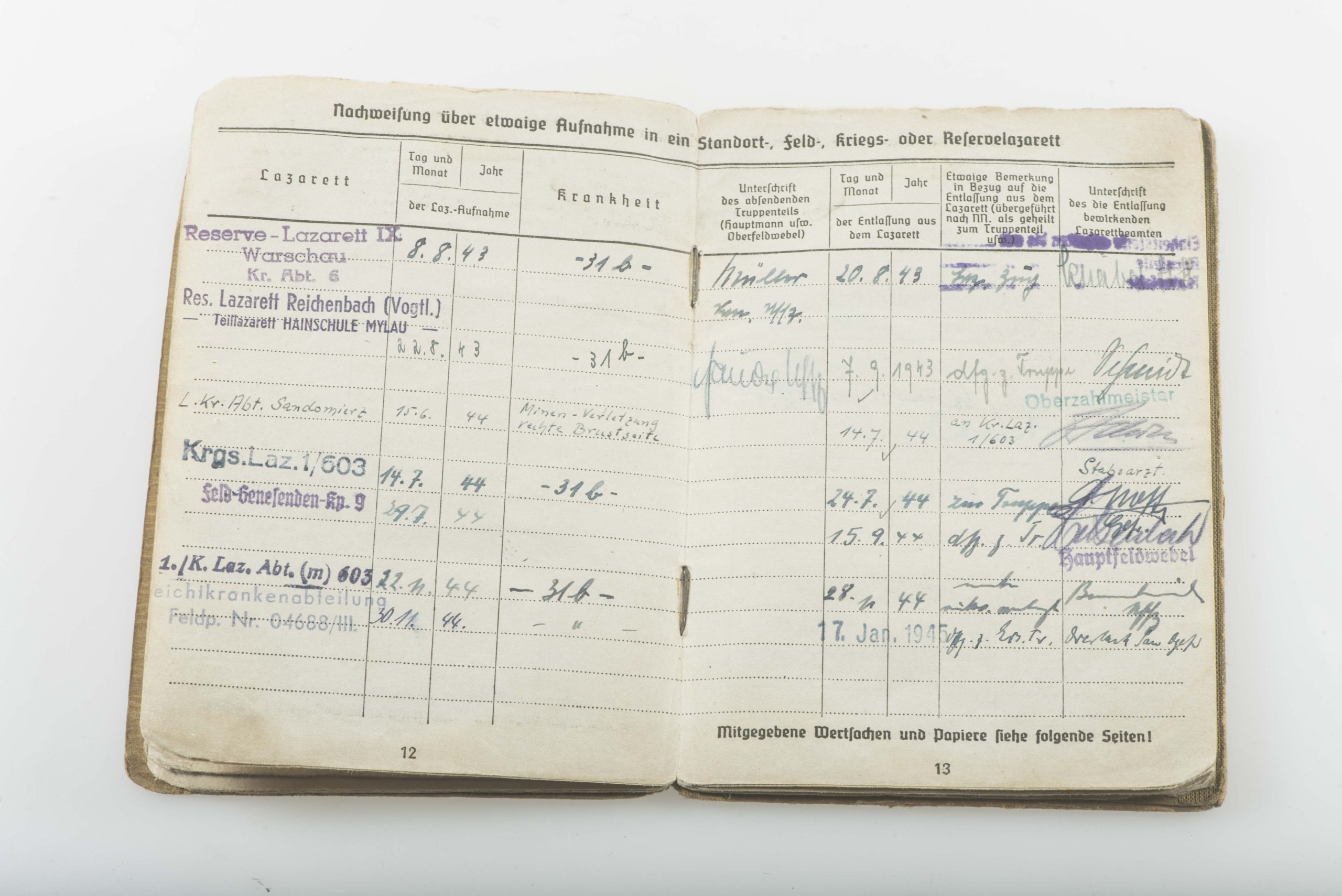
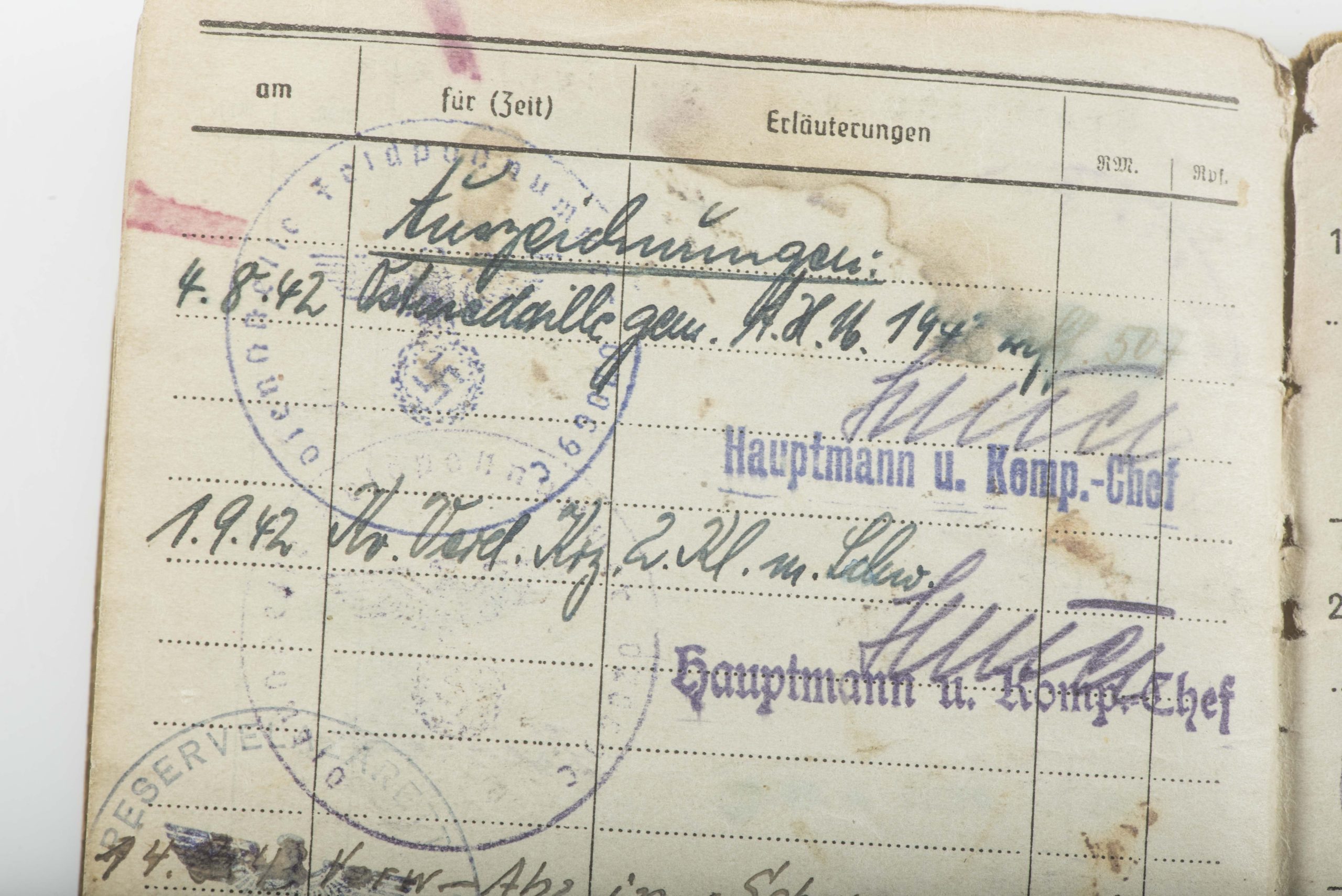
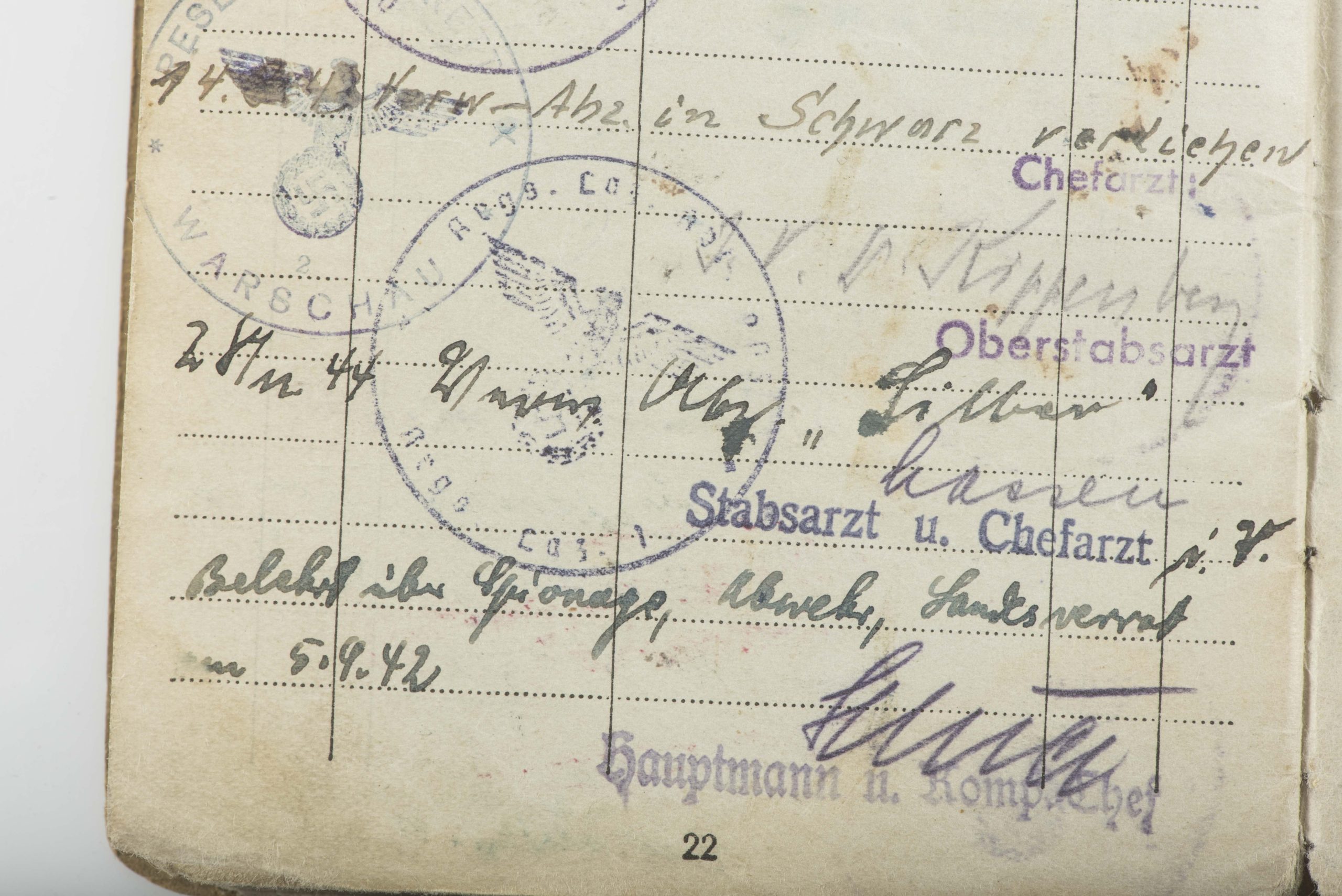
He was awarded the eastern front medal 4.8.1942, war merit cross second class with swords 1.9.1942, the black wound badge 14.7 1943, the wound badge in silver 28.4.1944
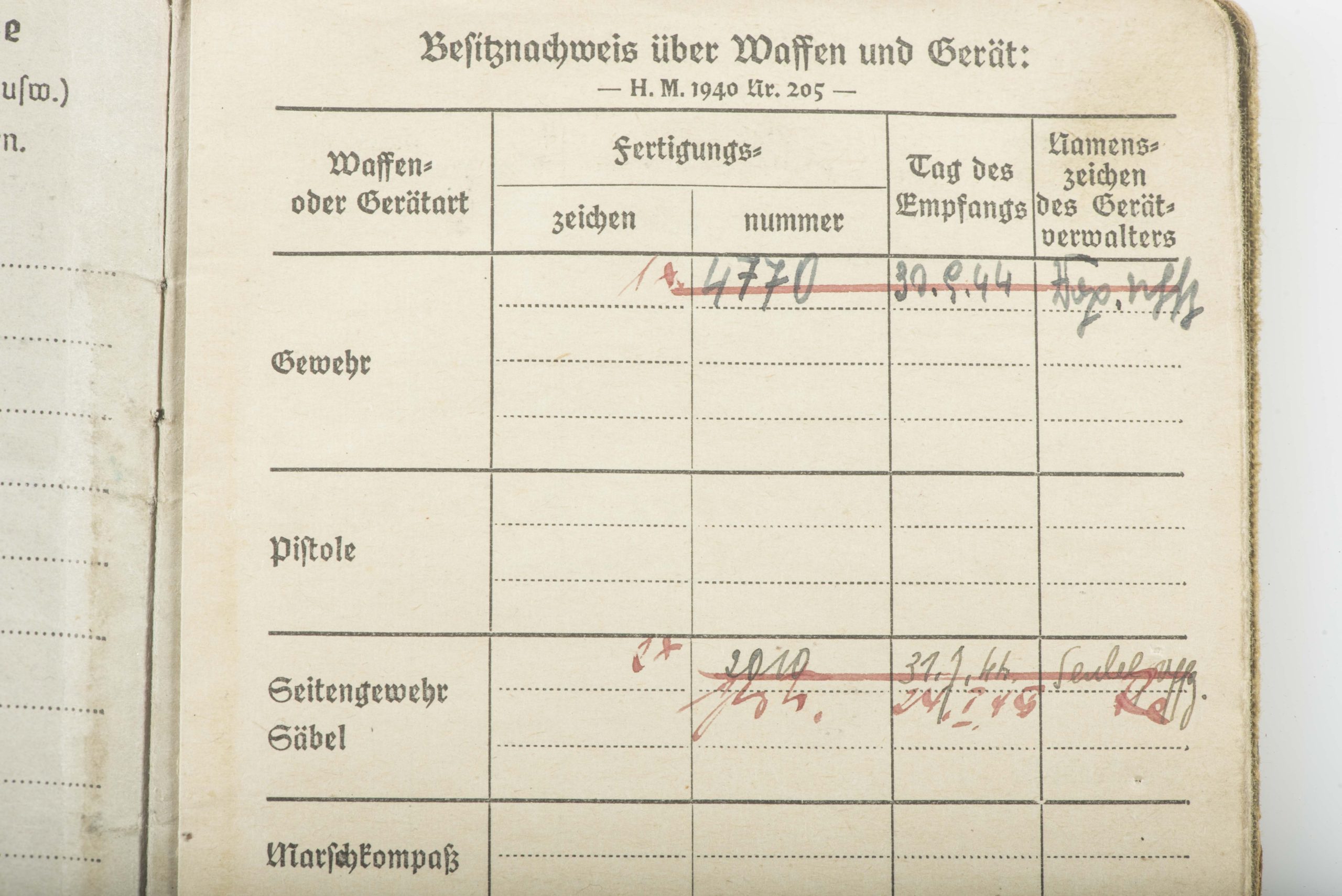
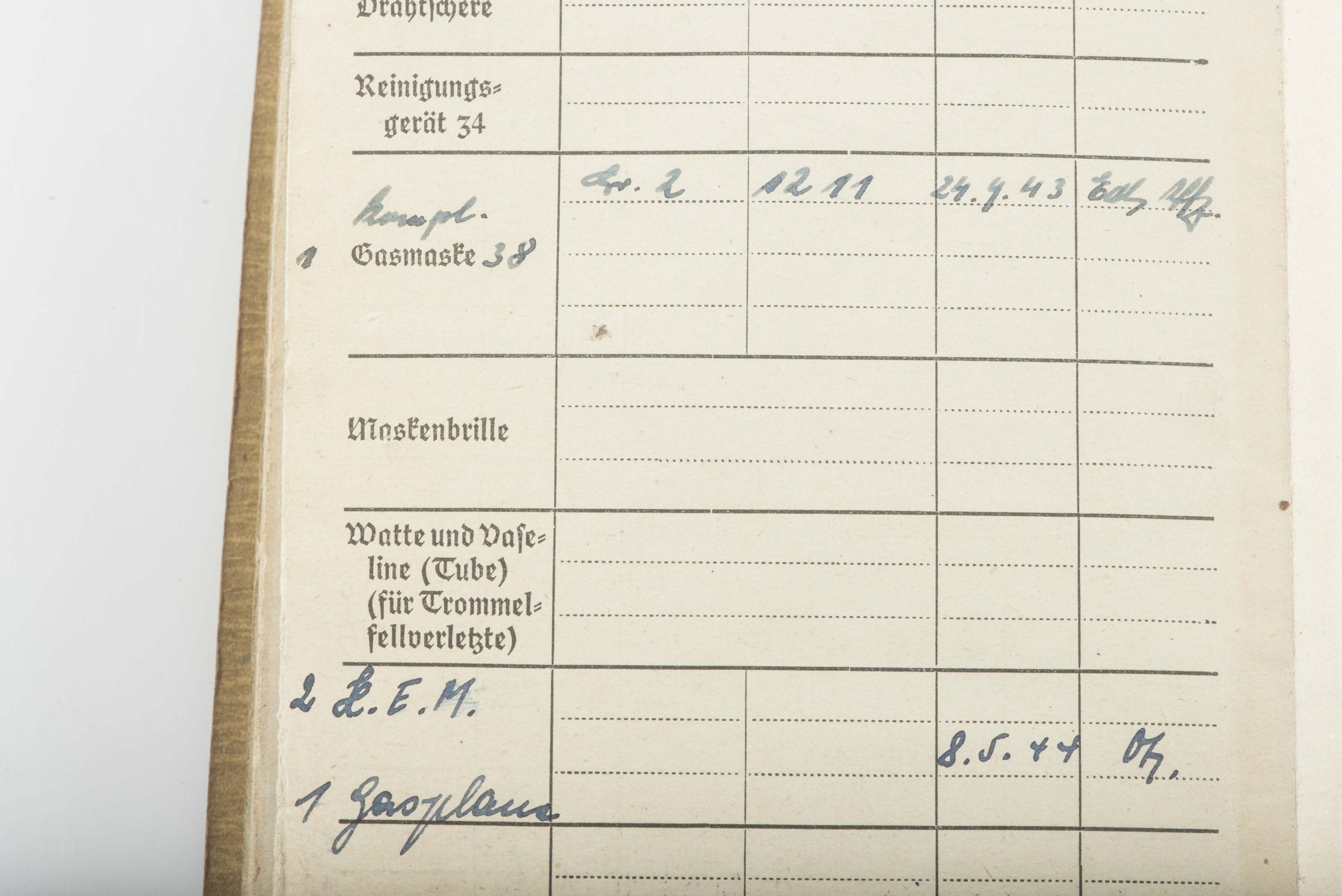
He was treated for shrapnel and mine wounds numerous times troughout the war. He carried a rifle and bayonet.
In stock