ww2

Showing 13621–13680 of 17230 results

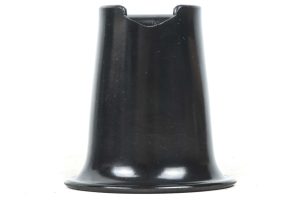
  • Rare Waffenmeister screw driver marked RK 1936

    80.00

    Rare Waffenmeister screw driver in good used condition. Nicely maker marked and dated. These screwdrivers were issued and a central component on the Waffenmeister tool case in the role for the maintenance of the light infantry weapons. These are often if not always missing from these tool kits. Rare opportunity to acquire a rare piece to complete a Waffenmeister tool case!

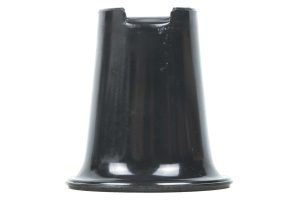
  • Rare Waffenmeister screw driver marked RK 1936

    80.00

    Rare Waffenmeister screw driver in good used condition. Nicely maker marked and dated. These screwdrivers were issued and a central component on the Waffenmeister tool case in the role for the maintenance of the light infantry weapons. These are often if not always missing from these tool kits. Rare opportunity to acquire a rare piece to complete a Waffenmeister tool case!

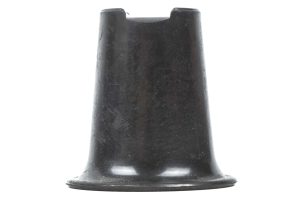
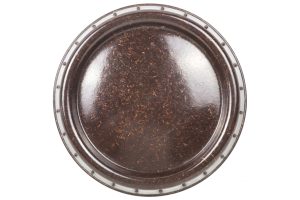
  • Rare Waffenmeister screw driver marked RK 1936

    80.00

    Rare Waffenmeister screw driver in good used condition. Nicely maker marked and dated. These screwdrivers were issued and a central component on the Waffenmeister tool case in the role for the maintenance of the light infantry weapons. These are often if not always missing from these tool kits. Rare opportunity to acquire a rare piece to complete a Waffenmeister tool case!

  • K98 sling Haltestück

    75.00

    Original K98 rifle carrying sling end piece or Haltestück in good used condition. This part is often missing from the sling and finding a spare is really hard. Very rare original spare part for the K98 sling!

  • Rare Reinigungsgerät fuhr Panzerbuchse 39

    400.00

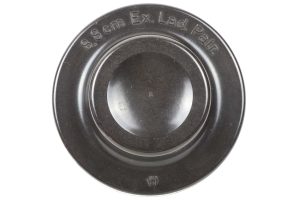
    Rare Reinigungsgerät fuhr Panzerbuchse 39 in very good condition with its original contents. Hard to find!

  • US USAAF Clip-on Sunglasses with F.G.Co 1945 marked case

    75.00

    US USAAF Clip-on Sunglasses with F.G.Co 1945 marked case in excellent condition.

  • US USAAF AN6531 Aviator sunglasses

    160.00

    US USAAF AN6531 Aviator sunglasses in good condition. This pattern was made by several manufacturers. This is a unmarked example in very good condition!

  • US USAAF AN6531 Aviator sunglasses

    175.00

    US USAAF AN6531 Aviator sunglasses in good condition. This pattern was made by several manufacturers. This is a unmarked example in very good condition!

  • Rare Green US Lucky strike cigarettes – 1942

    New
    180.00

    Rare Green US Lucky strike cigarettes in as found condition. Hard to find pre 1943 green pack in good condition. Series 112 indicating 1942 production.

  • US Camel cigarettes – 1942

    150.00

    US Camel cigarettes in unopened condition. Series 112 with Dewitt / Clinton tax stamp indicating 1942 production.

  • Rare late war printed Heer breast eagle

    250.00

    Rare late war printed Heer breast eagle in very good, tunic removed condition. Hard to find printed example!

  • Rare first pattern Waffen-SS Charkov parka

    2,950.00

    Rare first pattern Waffen-SS Charkov parka in good condition. The first pattern with the high cut collar opening and  fully lined in sheepskin, without lower pockets. The garment is a medium, which sounds small but considering the size of these garments it will easily fit most modern mannequins. First pattern Charkov parka with original neck lace that would be hard to upgrade!

  • Rare Luftwaffe Berghose

    750.00

    Rare Luftwaffe Berghose in used condition. These trousers were painted at one point but have been cleaned. Hard to find trousers in used condition.

  • Textbook A-frame marked fuq 1943

    950.00

    Textbook A-frame in excellent condition. The A-frame still retains the original affixed two leather straps. The loose messkit strap is missing. All parts are fully functional. The A-frame is nicely marked fuq 43 which indicates production by Curt Vogel, Cottbuss in 1943. Textbook example!

  • US Women’s Army Corps or M1941 jacket size 12 dated 1943

    350.00

    US Women’s Army Corps or M1941 jacket size 12 dated 1943 in good used condition. Some buttons missing on the front but those should be easy to replace. The zipper is in good working condition. Much harder to find then the male variant!

  • US HBT jacket

    175.00

    US HBT jacket in excellent condition. One button missing on sleeve. Size probably medium.

  • US Women’s Army Corps or WAC M1943 jacket – size 10R dated 1944

    250.00

    US Women’s Army Corps or WAC M1943 jacket – size 10R dated 1944 in good condition.

  • US Women’s Army Corps or WAC skirt – size 10 W28 1/2 / 27″

    240.00

    US Women’s Army Corps or WAC skirt – size 10 W28 1/2 / 27″ in excellent condition with working zipper, hooks and a good size.

  • US Women’s Army Corps or WAC jacket, wool liner – size 12R dated 1943

    250.00

    US Women’s Army Corps or WAC jacket, wool liner in the size 12R dated 1943 in very good condition. Hard to find!

  • Rare Flak 8,8 cm ZF20 optics marked ESU

    1,350.00

    Rare Flak 8,8 cm ZF20 optics marked ESU indicating production by Steinheill & Sohne, Munich with original rubber eye caps and headrest. The optics are clear with working contrast filters. The optics are adjustable and are probably working. Hard to find in this condition!

  • Rare Flak 8,8 cm ZF20 optics marked bek

    1,000.00

    Rare Flak 8,8 cm ZF20 optics marked bek indicating production by Hensoldt. The optics are clear with working contrast filters. The optics are adjustable and are probably working. Hard to find in this condition!

  • ET62 M40 double decal Polizei helmet

    2,850.00

    A very nice double decal M40 Polizei helmet. The helmet is nicely marked ET62 indicating production by Eisenhüttenwerke Thale. The helmet retains its original liner that is original to the helmet. The original early borderless Polizei decals still retain up to 99%. A very nice M35 Polizei helmet that would be a very nice addition to any helmet collection!

  • Luftwaffe 12 year loyal service award

    New
    225.00

    Very nice Wehrmacht 18 year loyal service award with the Luftwaffe miniature. Interestingly the ribbon is stitched together to go on a medal bar but this construction shows a piece of a Waffen-SS cuff title which is very unusual! Very nice and interesting example!

  • Wehrmacht 12 year loyal service award medal bar

    New
    110.00

    Very nice single medal bar which features the golden coloured Wehrmacht 12 year service award. The single medal bar is in good condition, sadly the bar is not functional as is. Nice example!

  • Luftwaffe embroidered officers breast eagle

    70.00

    Textbook Luftwaffe embroidered officers breast eagle in very good, tunic removed condition.

  • Soldbuch grouping to Unteroffizier Adolf Rotsch, Fallschirmjäger Regiment 13, Ardennes

    875.00

    Soldbuch grouping to Unteroffizier Adolf Rotsch who served with Fallschirmjäger Regiment 13 during the Ardennes offensive.

    A Soldbuch belonging to a Feldwebel who began his military career in December 1941 with the Flieger-Ausbildungs-Regiment 42, based in Frankfurt an der Oder. After completing his basic training, he was assigned to the Fliegerhorst Kompanie (e) 3/1, which was stationed in Brjansk, Russia, from 1941 until 1943. In 1943, he was awarded both the EK 2 and EK 1, an unusual achievement for a member of a Fliegerhorst Kompanie.

    In April 1944, his unit was renamed Fliegerhorstkommandatur (e) 257 III. By October 1944, he was drafted into the Fallschirmjäger Ersatz und Ausbildungs Regiment 2. After a few weeks, he was sent to the 15./Fallschirmjäger Regiment 13, which was part of the 5th Fallschirmjäger Division. This division, rebuilt in Holland, was preparing for the “Wacht am Rhein” offensive, better known as the Battle of the Bulge.

    On December 16, 1944, during the fighting in Luxembourg, between Stolzembourg and Vianden, the division was ordered to break through the lines near Vianden and Bette. Following an artillery bombardment in the early morning, the Fallschirm Pionier Battalion 5 constructed bridges over the Our River, allowing the 15th and 13th Fallschirmjäger Regiments to cross successfully. The town of Vianden itself was captured by the 4th company of the 5th Fallschirm Pionier Battalion under the command of Leutnant Hans Prigge, who later fell near Livarchamps, Belgium. Elements of the 14th Fallschirmjäger Regiment and the 11th Fallschirm Sturmgeschutz Brigade also crossed the Our River, reaching their objectives. The division achieved its goal of establishing a defensive line south of Bastogne.

    However, by the end of December 1944, the U.S. Third Army, commanded by General Patton, broke through the division’s lines. In January 1945, the division was forced to retreat through Luxembourg and reached the village of Dasburg on the German side of the border by the end of the month.

    On January 12, 1945, the Feldwebel was hospitalized at the Reserve Lazarett Jugenheim III for frostbite (wound code 33). After 1.5 months of recovery, he was promoted to Feldwebel. Shortly thereafter, he rejoined his unit, which continued to retreat towards the Harz region. The remnants of the 5th Fallschirmjäger Division were eventually captured by American forces. During the final battles, he was wounded by a bullet (wound code 31).

    The Soldbuch is in good condition with no missing pages, though an award page seems to have been removed. It comes with a portrait photo showing his EK 1 award. His known awards include the Kriegsverdienstkreuz 2nd class with Swords, Wound Badge in Black, EK 2, and EK 1. It is likely that he received other awards, such as the Erdkampfabzeichen, but these cannot be confirmed.

    Very hard to find original Fallschirmjäger Soldbuch with Ardennes references!

  • Soldbuch grouping of Johann Robens, 5. Fallschirmjäger Div, Ardennes

    650.00

    Soldbuch grouping of Heinz Schultz, Fallschirmjäger, Ardennes. Wachtmeister Heinz Schultz served with Fallschirm Artillerie Regiment 5 in the 5. Fallschirmjäger Division. He was first a part of several Luftwaffe Bau and Flak Abteilungen. In 1944 he was transferred to his field unit Fallschirmjäger Artillerie Regiment 5. This unit was part of the 5. Fallschirmjäger Division of which the brief unit history during this period until the end of the war is described;

    In October 1944, Fallschirmjäger Regiment 15 was relocated from its assembly area near Oldenburg to the Netherlands for coastal defense. At this time, most of the division’s units were still stationed at training grounds in northern Germany. As a result, the assembly of the division could not begin before mid-November. Although the division was only partially combat-ready and still in the process of being organized, it was transferred to the Eifel region at the end of November 1944, after Fallschirmjäger Regiment 15 was reassigned to it, in preparation for the planned Ardennes Offensive. The units were stationed in the Bitburg – Oberweis – Sülm area.

    Even during the march to its assembly area, the division suffered considerable losses due to low-flying Allied air attacks. Fallschirm-Panzerjäger-Abteilung 5 lost all of its vehicles, rendering it inoperable. During the Ardennes Offensive, the 5th Fallschirmjäger Division was tasked with advancing on the right flank of the 7th Army, as part of LXXXV Army Corps, from the area around Bitburg. After crossing the Our River near Vianden, it was to break through enemy positions at Wahlhausen, Putscheid, Nachtmanderscheid, and Walsdorf, and secure the line St. Hubert – Neufchâteau – Mellier – Attert, where it would establish a mobile defensive position to protect the southern flank of the 5th Panzer Army, which was advancing through Bastogne.

    On the morning of December 16, after a short artillery preparation, the division crossed the Our River at Stolzembourg and Roth. By the evening of the first day, the advance elements of Fallschirmjäger Regiment 15 had reached the Diekirch – Hosingen road. The left neighbor, the 352nd Volksgrenadier Division, was making slow progress east of Fouhren, while the right neighbor, Panzer Lehr Division, was already engaged west of Hosingen. On December 17, Fallschirmjäger Regiment 15 secured the river crossings near Bourscheid, while Fallschirmjäger Regiment 14 attacked between Putscheid and Weiler. Fallschirmjäger Regiment 13 was fighting alongside the 352nd Volksgrenadier Division at Fouhren.

    On December 18, elements of Fallschirmjäger Regiment 14 reached the western edge of Weiler, while Fallschirmjäger Regiment 15 secured the bridges at Bourscheid intact and linked up with Fallschirmjäger Regiment 14 at Weiler. Meanwhile, the division’s attached Fallschirm-Sturmgeschütz-Brigade XI was engaged in combat at Nachtmanderscheid and Walsdorf. Fallschirmjäger Regiment 13, still under the command of the 352nd Volksgrenadier Division, continued to fight at Fouhren. On December 19, Fallschirmjäger Regiment 15 advanced through the Sauer Valley without significant enemy resistance, while Fallschirmjäger Regiment 14 reached the Wiltz Valley near Kautenbach and Nocher by evening.

    The division’s advance continued rapidly, with Fallschirmjäger Regiment 14 moving south of Doncols toward the Bastogne-Arlon road. Fallschirmjäger Regiment 15 and Fallschirm-Sturmgeschütz-Brigade XI pushed southwest beyond the division’s left boundary, toward Bigonville and Martelingen, to support the neighboring division, which was still engaged in heavy fighting near Ettelbruck. By the end of the day, the division’s lead elements had reached the general line: northern edge of Martelingen – Vaux-les-Rosières – Sibret. On the evening of December 21, Martelingen was captured by Sturmgeschütz-Brigade XI with support from elements of Fallschirmjäger Regiment 15.

    Since the left neighboring division was still lagging behind, exposing the left flank of both the 5th Fallschirmjäger Division and the 5th Panzer Army (which had already advanced far west beyond Bastogne), the 5th Fallschirmjäger Division was ordered to assume flank protection. On December 22, the division reorganized its units, shifted from offensive to defensive operations, and established defensive positions against attacks from the southwest and south along the line: Vaux-les-Rosières – Martelingen – Bigonville – Arsdorf – Heiderscheid, covering a front of 40 km.

    Between December 23 and 25, the division was forced to abandon several positions, including Vaux-les-Rosières, Hotte, Strainchamps, Martelingen, Titange, and Bigonville, due to heavy attacks from the U.S. 3rd Army from the southwest and south along the Bastogne road. On December 26, American forces continued their advance toward Bastogne. Between Fallschirmjäger Regiment 14, still holding out near Chaumont, and the 26th Volksgrenadier Division to the northwest, American units broke through northward. Fallschirmjäger Regiment 14 withdrew its right flank to Assenois, barely preventing an enemy advance on Losange and Villers-la-Bonne-Eau.

    By December 27, the 5th Fallschirmjäger Division’s front stretched from Assenois to Lutrebois, Villers-la-Bonne-Eau, Harlange, and Bavigne. Following the successful American breakthrough at Bastogne, the division was threatened on its flank near Nothum. The American advance was halted only by deploying the last available reserves along the Harlange – Nothum – Buderscheid line. By December 29, 1944, the division, now under the command of LIII Army Corps, was still holding the line Lutrebois – Villers-la-Bonne-Eau – Harlange – Bavigne – Nothum against continued enemy attacks.

    On January 2, 1945, following further American breakthroughs near its left neighbor, the division was at risk of encirclement in the Harlange and Bavigne area. It held its positions until January 7 but was then forced to withdraw northeast, abandoning Villers-la-Bonne-Eau, Harlange, and Bavigne. On January 9, American forces attacked the division at Bras, Doncols, and Nothum, encircling a large portion of its forces and taking many prisoners. The remaining elements of the division regrouped near Wiltz and were later transferred to the Düren area.

    During their retreat, these remnants were diverted southeast and committed to counter an Allied breakthrough near Prüm. By the end of February, the remaining troops repelled Allied attacks near Wilwerath, Gondenbrett, and Olzheim. However, in early March, American forces bypassed the division’s defensive positions on both flanks, forcing it to retreat further northeast.

    At the Nürburgring, the division was encircled west of the Rhine, with most of its remaining troops taken prisoner. Only small remnants managed to escape to the Wernigerode area in April 1945.

    He was awarded the Ehrenzeichen Bulgarischen Infanterie IV Klasse, Rumanische Medaille “Kreuzzug gegen den Kommunismus” with document, and probably more awards which were not noted in his Soldbuch. The Grouping is complete with Erkennungsmarke. Hard to find grouping in excellent condition!


  • Denazified miniature DRL sport badge in silver pin

    20.00

    Very nice denazified miniature DRL sport badge in silver pin. The pin is in excellent condition.

  • German sympathiser stickpin

    50.00

    German sympathiser stickpin in good condition.

  • Hitlerjugend member badge

    35.00

    Hitlerjugend member badge in as found condition.

  • Heer EM/NCO BeVo Panzer cap cocade

    70.00

    Heer EM/NCO BeVo Panzer cap cocade in cap removed condition. Hard to find Panzer cokade!

  • Heer EM/NCO BeVo Panzer cap eagle

    150.00

    Heer EM/NCO BeVo Panzer cap eagle in cap removed condition. Hard to find eagle!

  • Schuma Sicherheitspolizei Bevo cap badge

    60.00

    Textbook Schuma Sicherheitspolizei BeVo woven cap badge in unissued condition

  • Rare Flemish NSKK and Zwarte Brigade sleeve shield

    400.00

    Rare Flemish NSKK and Zwarte Brigade sleeve shield in excellent unissued condition. These shields depict a Wolfsangel stitched onto its cardboard backed yellow cloth. These were worn on the sleeves for Belgian NSKK volunteers, Fabriekswacht, Dietsche Militie or the Zwarte Brigade. Hard to find example in unissued condition!

  • Rare Flemish NSKK and Zwarte Brigade sleeve shield

    400.00

    Rare Flemish NSKK and Zwarte Brigade sleeve shield in excellent unissued condition. These shields depict a Wolfsangel stitched onto its cardboard backed yellow cloth. These were worn on the sleeves for Belgian NSKK volunteers, Fabriekswacht, Dietsche Militie or the Zwarte Brigade. Hard to find example in unissued condition!

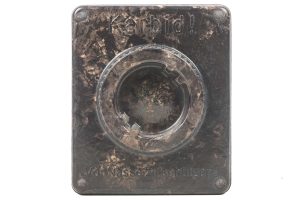
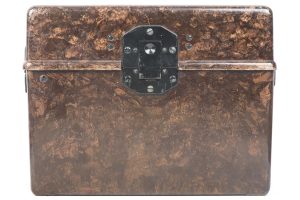
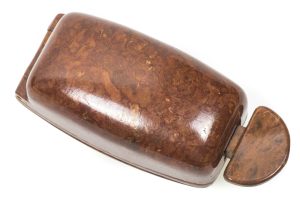
  • Late war tan carbid lantern or Einheitslaterne aus Stahl

    325.00

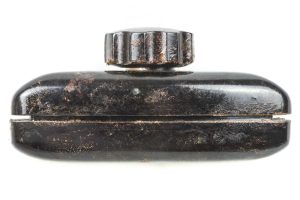
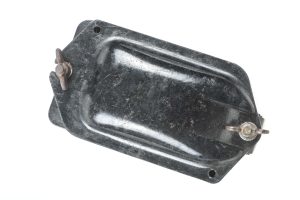
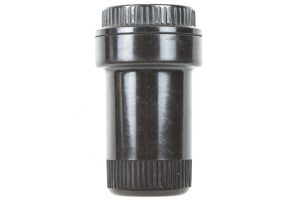
    Original late war tan field/bunker lantern or Einheitslanterne 42 in very nice condition with a lot of the original factory applied paint still remaining. This is the late war model introduced in 1942 which would replace the bakelite version (Einheitslanterne 37).. Excellent example in untouched condition which would look perfect in any late war display!

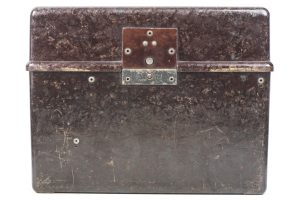
  • Late war tan carbid lantern or Einheitslaterne aus Stahl

    275.00

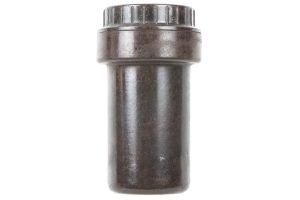
    Original late war tan field/bunker lantern or Einheitslanterne 42 in very nice condition with a lot of the original factory applied paint still remaining. This is the late war model introduced in 1942 which would replace the bakelite version (Einheitslanterne 37).. Excellent example in untouched condition which would look perfect in any late war display!

  • Waffen-SS BeVo flatwire sleeve eagle

    1,100.00

    Waffen-SS BeVo flatwire sleeve eagle in excellent uniform removed condition. This is a very hard to find variant in flatwire!

  • Rare Spanish volunteer sleeve shield

    750.00

    Textbook BeVo woven Spanish volunteer sleeve shield. The shield is in unissued perfect condition. This Spanish example is one of the rarest and most desirable volunteers sleeve shield!

  • Soldbuch grouping of Kurt Helbig, Art Regt 276, 276 VGD, MP44, Ardennes

    550.00

    Soldbuch grouping of Unteroffizier Kurt Helbig, serving with Artillerie Regiment 276 under the 276 Volksgrenadier Division during the Ardennes offensive. He was first serving with several Luftwaffe search light units such as Flakscheinwerfer-Abteilung 238 and on 16.10.44 drafted in 276 VGD. The first page on his Soldbuch notes the fact that he was not issued a Heer Soldbuch but was part of the army. He participated during the Ardennes offensive and must have whitnessed a large portion of the combat in the area of the 276 VGD as described below. He was issued a MP44  for the Ardennes Offensive which he later had to turn in in March 1945. He was wounded 13.2.45 near Prüm.

    ber 1944 at the Truppenübungsplatz Gruppe in West Prussia from the 580. Volksgrenadier-Division, which was in the process of being raised there. In early November 1944, it was transferred to the Western Front and positioned in the Mehring–Bernkastel area along the Mosel River as an OKW reserve for Heeresgruppe B. On 5 December 1944, the division was placed under the command of OB West as a reserve and redeployed to the area south of Holstum–Irrel–Schleidweiler.

    By 15 December, the division was subordinated to the LXXX. Armeekorps as part of the 7. Armee. Although the division was considered fully reinforced, it was poorly trained. Beginning on 16 December, it took part in the Ardennen-Offensive from the Wallendorf area. The division’s axis of advance was aimed toward Luxembourg City. By 19 December, it had advanced as far as Christnach and still maintained a bridgehead on the western heights of the Sauer River near Dillingen. The division suffered heavy losses during these days.

    On 24 December 1944, the division was struck by the beginning of the American counteroffensive. As a result, it withdrew to the Westwall. The evacuation of the Dillingen bridgehead proved extremely difficult, as the only bridge over the Sauer was under enemy artillery fire. By 28 December, the division had returned to its original positions from 16 December.

    On 2 January 1945, the division received orders to redeploy to the Vianden area under the LIII. Armeekorps to support the 5. Fallschirmjäger-Division. Together with the Führer-Begleit-Brigade, it became engaged in heavy fighting in its new area of operations, where it suffered severe losses. By 8 January 1945, the combat strength of the three Grenadier-Regimenter had dwindled to about 300 men.

    On 21 January 1945, the division was positioned along the Drauffelt–Weidingen–Kautenbach line in Luxembourg. At the beginning of February 1945, its combat strength was still around 2,300 men. On 4 February 1945, it received orders to move to the Trier area for refitting. It was to be replaced by the 79. Volksgrenadier-Division. However, the redeployment to Trier and the planned refitting were canceled after American forces broke through near Brandscheid and advanced on Prüm. The division was redeployed to counter this penetration along the Westwall and managed to hold its positions at Brandscheid.

    Losses during this action were so severe that the remnants of Grenadier-Regiment 751 and Grenadier-Regiment 752 of the 326. Volksgrenadier-Division had to be combined into a Kampfgruppe and subordinated to the division. Its own Grenadier-Regimenter were also dissolved due to heavy casualties. On the night of 13 February 1945, the remnants of the division withdrew to the so-called Prüm-Stellung.

    Only two days later, the division was ordered to relieve the elements of the 340. Infanterie-Division deployed in the Sevenig–Dahnen sector of the Westwall. On 22 and 23 February 1945, American troops attacked the division’s positions from Binscheid and Daleiden. Only weak elements were able to withdraw across the Prüm River. There, the remnants of the 276. Volksgrenadier-Division were combined with remnants of the 340. Infanterie-Division and other alarm units into Kampfgruppe 988. The divisional staff was pulled out of the front line, initially across the Kyll River and then, in early March, to the Mosel River area. There, the staff received orders to reorganize the remaining elements of the division.

    By the end of February, the division’s combat strength had declined to about 20–25% of its original numbers. These remnants were redeployed in early March 1945 to the area northwest of Boppard on the Rhine. On 14 March, an American attack crossed the Mosel River near Winningen and Treis, hitting the weakened positions of the 276. Volksgrenadier-Division. As a result, the remaining elements of the division withdrew on 16 and 17 March 1945 across the Rhine at Brey and Boppard. Afterward, the remnants were deployed in the Koblenz area.

    By this time, the division’s infantry strength had been reduced to between 300 and 400 men. On 23 March 1945, U.S. forces managed to cross the Rhine near Braubach and Osterspai within the division’s sector. In the following days, the 276. Volksgrenadier-Division was destroyed in the subsequent fighting.

    A interesting Ardennes Offensive related Soldbuch which would be a great base for further research!

  • Soldbuch of Heinz Schultz, 5. Fallschirmjäger Div, Ardennes

    650.00

    Soldbuch grouping of Heinz Schultz, Fallschirmjäger, Ardennes. Wachtmeister Heinz Schultz served with Fallschirm Artillerie Regiment 5 in the 5. Fallschirmjäger Division. He entered service in 1939 with Flakabteilung 83. He was transferred to Flak Regiment 12 which saw action in Tunesia and was subsequently destroyed. After this he was transferred to 4. Kompanie Fallschirmjäger Artillerie Ersatz und Ausbildungs Abteilung. 28.10.1944 he was transferred to his field unit Fallschirmjäger Artillerie Regiment 5. This unit was part of the 5. Fallschirmjäger Division of which the brief unit history during this period until the end of the war is described;

    In October 1944, Fallschirmjäger Regiment 15 was relocated from its assembly area near Oldenburg to the Netherlands for coastal defense. At this time, most of the division’s units were still stationed at training grounds in northern Germany. As a result, the assembly of the division could not begin before mid-November. Although the division was only partially combat-ready and still in the process of being organized, it was transferred to the Eifel region at the end of November 1944, after Fallschirmjäger Regiment 15 was reassigned to it, in preparation for the planned Ardennes Offensive. The units were stationed in the Bitburg – Oberweis – Sülm area.

    Even during the march to its assembly area, the division suffered considerable losses due to low-flying Allied air attacks. Fallschirm-Panzerjäger-Abteilung 5 lost all of its vehicles, rendering it inoperable. During the Ardennes Offensive, the 5th Fallschirmjäger Division was tasked with advancing on the right flank of the 7th Army, as part of LXXXV Army Corps, from the area around Bitburg. After crossing the Our River near Vianden, it was to break through enemy positions at Wahlhausen, Putscheid, Nachtmanderscheid, and Walsdorf, and secure the line St. Hubert – Neufchâteau – Mellier – Attert, where it would establish a mobile defensive position to protect the southern flank of the 5th Panzer Army, which was advancing through Bastogne.

    On the morning of December 16, after a short artillery preparation, the division crossed the Our River at Stolzembourg and Roth. By the evening of the first day, the advance elements of Fallschirmjäger Regiment 15 had reached the Diekirch – Hosingen road. The left neighbor, the 352nd Volksgrenadier Division, was making slow progress east of Fouhren, while the right neighbor, Panzer Lehr Division, was already engaged west of Hosingen. On December 17, Fallschirmjäger Regiment 15 secured the river crossings near Bourscheid, while Fallschirmjäger Regiment 14 attacked between Putscheid and Weiler. Fallschirmjäger Regiment 13 was fighting alongside the 352nd Volksgrenadier Division at Fouhren.

    On December 18, elements of Fallschirmjäger Regiment 14 reached the western edge of Weiler, while Fallschirmjäger Regiment 15 secured the bridges at Bourscheid intact and linked up with Fallschirmjäger Regiment 14 at Weiler. Meanwhile, the division’s attached Fallschirm-Sturmgeschütz-Brigade XI was engaged in combat at Nachtmanderscheid and Walsdorf. Fallschirmjäger Regiment 13, still under the command of the 352nd Volksgrenadier Division, continued to fight at Fouhren. On December 19, Fallschirmjäger Regiment 15 advanced through the Sauer Valley without significant enemy resistance, while Fallschirmjäger Regiment 14 reached the Wiltz Valley near Kautenbach and Nocher by evening.

    The division’s advance continued rapidly, with Fallschirmjäger Regiment 14 moving south of Doncols toward the Bastogne-Arlon road. Fallschirmjäger Regiment 15 and Fallschirm-Sturmgeschütz-Brigade XI pushed southwest beyond the division’s left boundary, toward Bigonville and Martelingen, to support the neighboring division, which was still engaged in heavy fighting near Ettelbruck. By the end of the day, the division’s lead elements had reached the general line: northern edge of Martelingen – Vaux-les-Rosières – Sibret. On the evening of December 21, Martelingen was captured by Sturmgeschütz-Brigade XI with support from elements of Fallschirmjäger Regiment 15.

    Since the left neighboring division was still lagging behind, exposing the left flank of both the 5th Fallschirmjäger Division and the 5th Panzer Army (which had already advanced far west beyond Bastogne), the 5th Fallschirmjäger Division was ordered to assume flank protection. On December 22, the division reorganized its units, shifted from offensive to defensive operations, and established defensive positions against attacks from the southwest and south along the line: Vaux-les-Rosières – Martelingen – Bigonville – Arsdorf – Heiderscheid, covering a front of 40 km.

    Between December 23 and 25, the division was forced to abandon several positions, including Vaux-les-Rosières, Hotte, Strainchamps, Martelingen, Titange, and Bigonville, due to heavy attacks from the U.S. 3rd Army from the southwest and south along the Bastogne road. On December 26, American forces continued their advance toward Bastogne. Between Fallschirmjäger Regiment 14, still holding out near Chaumont, and the 26th Volksgrenadier Division to the northwest, American units broke through northward. Fallschirmjäger Regiment 14 withdrew its right flank to Assenois, barely preventing an enemy advance on Losange and Villers-la-Bonne-Eau.

    By December 27, the 5th Fallschirmjäger Division’s front stretched from Assenois to Lutrebois, Villers-la-Bonne-Eau, Harlange, and Bavigne. Following the successful American breakthrough at Bastogne, the division was threatened on its flank near Nothum. The American advance was halted only by deploying the last available reserves along the Harlange – Nothum – Buderscheid line. By December 29, 1944, the division, now under the command of LIII Army Corps, was still holding the line Lutrebois – Villers-la-Bonne-Eau – Harlange – Bavigne – Nothum against continued enemy attacks.

    On January 2, 1945, following further American breakthroughs near its left neighbor, the division was at risk of encirclement in the Harlange and Bavigne area. It held its positions until January 7 but was then forced to withdraw northeast, abandoning Villers-la-Bonne-Eau, Harlange, and Bavigne. On January 9, American forces attacked the division at Bras, Doncols, and Nothum, encircling a large portion of its forces and taking many prisoners. The remaining elements of the division regrouped near Wiltz and were later transferred to the Düren area.

    During their retreat, these remnants were diverted southeast and committed to counter an Allied breakthrough near Prüm. By the end of February, the remaining troops repelled Allied attacks near Wilwerath, Gondenbrett, and Olzheim. However, in early March, American forces bypassed the division’s defensive positions on both flanks, forcing it to retreat further northeast.

    At the Nürburgring, the division was encircled west of the Rhine, with most of its remaining troops taken prisoner. Only small remnants managed to escape to the Wernigerode area in April 1945.

    He was awarded the Flakkampfabzeichen, Erdkampfabzeichen, Eisernes Kreuz II Klasse, Ostmedaille, Schützenschnür, Dienstauszeichnung 4. Klasse, Erinnerungsmedaille 1.10.38 and possibly one I forgot. This is a great soldbuch with many entries, interesting units, awards and a nice portrait in tropical uniform. A great soldbuch for further research of a Fallschirmjäger who took part of the Ardennes Offensive!

  • Rare Belgian Made Waffen-SS skull

    900.00

    Rare Belgian Made Waffen-SS skull in good used condition. The skull is a rare ‘closed’ nose variant. The skull retains both of its original prongs but one has separated. Hard to find variant!

  • US Taylor wrist compass – liquid filled

    190.00

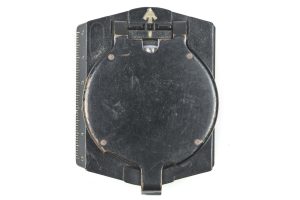
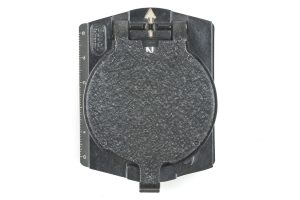
    US Taylor wrist compass – liquid filled in good used condition.

  • Luftwaffe Gefreiter insignia on wool base

    25.00

    Luftwaffe Gefreiter insignia on wool base in good used condition.

  • Erkennungsmarke marked 51616 – 10. (Ergänzungs) Kampf-Geschwader 3

    150.00

    Textbook zinc Erkennungsmarke marked 51616 indicating 10. (Ergänzungs) Kampf-Geschwader 3. This unit was stationed in Fliegerhorst Venlo and Gilze Rijen. In August 1944 the ground personnell was disbanded to a Fallschirmjäger division.

  • Cleaning wire brush for bakelite and steel lantern

    45.00

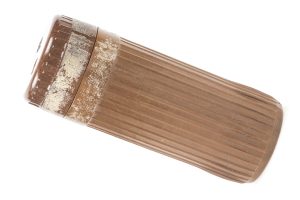
    Rare original cleaning wire brush which was part of the spare parts case for the bakelite and steel lanterns. The brushes are virtually always missing and are extremely hard to find as a spare. Excellent example to complete any spare parts case!

  • Early short gasmask canister strap with leather reinforcement

    85.00

    Early short gasmask canister strap with leather reinforcement in very good condition. Perfect spare!

  • De Ondergang van een Imperium, Robert Briffault, marked vormingsambt Nederlandsche SS

    65.00

    De Ondergang van een Imperium, Robert Briffault, marked vormingsambt Nederlandsche SS in good condition. The book is stamped inside Vormingsambt Afd. VII-A Nederlandsche SS indicating the part VII A Vormingsambt. Hard to find with these markings!

  • Pocket agenda; Jahrbuch für den Deutschen soldaten im Norden – 1944

    100.00

    Pocket agenda; Jahrbuch für den Deutschen soldaten im Norden – 1944 in good condition. The agenda is named Carl Eduard Thode from Wesermünde. He seems to have been badly burned in January 1944 with most notes hospital entries. This is a typical 1944 pocket agenda for German soldiers serving on the northern front. This is a nice piece to research further.


  • Rare Gefechtstaktik des verstärckten Bataillons, Major Kühlwein – with pre war Dutch intelligence service markings(!)

    80.00

    Rare Gefechtstaktik des verstärckten Bataillons, Major Kühlwein – with pre war Dutch intelligence service markings(!). This pre war German tactical combat manual was printed in 1936. On the first page one can see the ink markings Generale Staf, III e afdeeling, RB. D, No. Alg. 279 – indicating it would have been a part of the pre war Dutch intelligence service of the General Staff of the Dutch army. This section of the General Staff existed only bewteen 1914 and 1940. Besides a interesting pre war tactical manual this is a nice historical piece!

  • Der Kompaniechef, Soldatliches Führertum, Von einem Kompaniechef Hauptmann Hans Ellenbeck

    25.00

    Der Kompaniechef, Soldatliches Führertum beruht auf Verantwortungsfreude, überlegenem Können und unermüdliche Fürsorge – Von einem Kompaniechef Hauptmann Hans Ellenbeck

  • Kompanie-Ausbildung im Feldheer, Oberleutnant Ernst Adolf Busold 1942

    35.00

    Kompanie-Ausbildung im Feldheer, Oberleutnant Ernst Adolf Busold 1942 in good condition.

  • Grundaufgaben für die Gefechtsausbildung im Infanterie-Batalion von Major Haymann, 1942

    40.00

    Grundaufgaben für die Gefechtsausbildung im Infanterie-Batalion von Major Haymann, 1942

  • H. Dv. 130/2b, Ausbildungsvorschrift für die Infanterie, Heft 2, die Schützenkompanie

    30.00

    H. Dv. 130/2b, Ausbildungsvorschrift für die Infanterie, Heft 2, die Schützenkompanie

  • Das Kommandobuch, Band 1 Die Schützenkompanie Karl Siwinna, October 1941.

    40.00

    Das Kommandobuch, Band 1 Die Schützenkompanie Karl Siwinna, October 1941.

  • Merkblatt 40/14 Schiessausbildung im Ersatzheer für Gewehr, Le. MG, S. MG

    40.00

    Merkblatt 40/14 Schiessausbildung im Ersatzheer für Gewehr, Le. MG, S. MG in good condition.

  • Rare US plastic canteen flask marked Mack Molding Co. 1943

    275.00

    Rare US plastic canteen flask marked Mack Molding Co. 1943 in very good condition.

  • US canteen flask dated 1943 with 1942 dated cover with flatcap

    110.00

    US canteen flask dated 1943 with 1942 dated cover with flatcap in good condition. The cap has a crack. Nevertheless a rare variant!

  • US canteen flask dated 1918 with 1942 dated cover named Graham 2749

    90.00

    US Canteen flask dated 1918 with 1942 dated cover named Graham 2749 in good condition.

  • US Navy (USN) hemostatic forceps case

    250.00

    Original US Navy (USN) hemostatic forceps case marked M.D.-U.S.N. for Medical Department – US Navy. A nice set to complete a corpsman’s equipment or a display!

Showing 13621–13680 of 17230 results