Manuals & Paper items
Showing 1–60 of 279 results
-
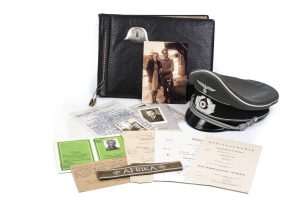
Rare Heer Afrikakorps grouping with cufftitle, album and more
€2,325.00A fantastic Set that came out of the Son of the Veteran, last October (2022), The Veteran s name was Lothar Schauer, member of the 164.Leichte AFRIKA Division. Lothar apparently Died around 2005. I borrowed the text from the consignor who, in my opinion, did a great job at describing the set.
The set Includes a Lothar’s
– Fantastic Erel Schirmmütze marked “Offizier Kleiderkasse Berlin Erel Sonderklasse Extra” with photo proof of Lothar Schauer wearing it
– Afrika Cufftitle Uniform removed with photo proof of him it
– Original Afrika CT Award Document
– Photo Album of Lothar with circa 220 very nice Photos including his RAD Armband glued in the Album and also Photo proofed of him wearing it
– Lothar’s Grundschein
– Lothar’s Letter from his Captain in 1941 about the Greek Campaign and congratulating him about the job done there also attacking the Metaxas line.
– Lothat’s Russian POW Letter to the Family from Moscow – Lothar’s father Kennkarte – Lothar s Brother GOTTFRIED Driving License
– Letter about Lothar’s Brother GOTTFRIED Death in December 1944 and photo of Gottfried.
– Feldpost Letter From Lothar to his Brother 4 Days after He died.
– Two copies of photos with his wife as the son apparently decided to keep the originals; Photos of Lothar and his Wife where the Schirm and the Afrika Cufftitle of this Estate are worn
– Copy of his Wound Badge in Black Award Document
– Copy of his Westwall Award Document. Lothar Joined the Rad in late 1939 until early 1940, After the RAD,Around December 1940 and January 1941 He was then sent to the Infanterie Regiment 382 of the 164.Infanterie Division. He Participated in the 1941 Greek Campaign Where the 164.I.D. Attacked from the North east of Greece while attached to the XXX.Army Corps. The Album shows all the Locations in Romania, Bulgaria, Greece and from January to July 1942 in KRETA (where the 164.Infanterie Division was Briefly renamed FESTUNGS DIVISION KRETA before Being finally renamed again into 164.Leichte AFRIKA Division) and Then was sent to North Afrika. He was wounded in North Afrika and then I think he was Promoted to Leutnant Between October and December 1942 basing myself on the Dates of the photos in the Album. After The Afrika Campaign He was sent to the Grenadier Ersatz und Ausbildungs Bataillon 104 first and then with Grenadier-Ausbildungs-Bataillon 414 based in Plauen which is beside Where he was from in Oelsnitz. As He was in Eastern Germany he likely was sent with his units to the front facing the Red Army towards the end of the war and Was taken POW by the Russians as confirmed from the Russian POW Letter. His Brother Gottfried was part of the Grenadier Regiment 1084 of the 544.Volksgrenadier Division and Died on 16 December 1944 in southern Poland near Debica. There s a Letter that Lothar wrote to his Brother on 20 December 1944 not knowing that his brother was already dead 4 days before he wrote the letter.A spectacular group that would be hard to upgrade!
-
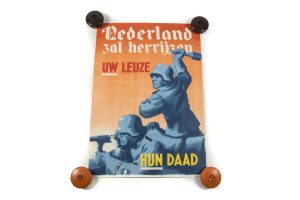
Dutch Waffen-SS volunteer poster size 81,5×57,5 cm
€2,250.00Rare original Dutch Waffen-SS volunteer poster size 81,5×57,5 cm. The poster reads; Nederland zal herrijzen, uw leuze, hun daad. This poster was printed in 1943 and is in very good condition. I photographed it with some butterdishes on top to lay it out flat as it has always been rolled up. The artwork of the poster was done by Lou Manché. On the bottom it is marked Goedgekeurd door het departement van volksvoorlichting en kunsten Nr. 116. Uithangtermijn van 15 Juli tot 15 Augustus 1943, Very rare to find poster!
-
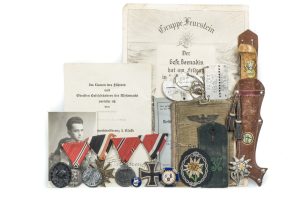
Impressive(!) grouping GBJR 137 Obergefreiter Peter Bernardin
€1,950.00Impressive Soldbuch and award grouping of Obergefreiter Peter Bernardin, 16. Panzerjäger Kompanie, Gebirgsjäger Regiment 137 where he enlisted 26.8.1939. He was issued the G.33/40 Gebirgsjäger Carbine and a pair of skis. His unit served in Poland in 1938 and after that it was sent into Norway in 1940. The unit was stationed in Lappland, Finland between 1941 and 1944. In the end of the war it was moved to the area Saarpfalz near the French border where it saw heavy action until the end of the war.
He was awarded the Medaille zum Errinnerung von 13. März 1938 on 4.5.1940, the Kriegsverdienstkreuz II klasse on 21.11.1941, the Winterschlacht im Osten on 14.12.42, the Verwundetenabzeichen im Schwarz on 17.8.43 and the Eisernez Kreuz II Klasse on 19.10.1944.
These awards are all in good condition and all have the triangular Austrian ribbon style which seems to be typical for Gebirgsjäger. The Iron Cross II class is marked 55 indicating production by J.E. Hammer & Söhne which is a rare maker as is. The wound badge is a unmarked example. The Ostmedaille is marked 6 indicating production by Fritz Zimmermann.There is a rare large document commemorating the Norway campaign in 1940 for members of Gruppe Feurstein which was named after Generalleutnant Valentin Feurstein the divisional commander of the 2. Gebirgsdivision. This document was awarded to the men who marched from Fauske to Narvik to rescue the isolated Gebirgsjäger Regiment 139. This document is named to then Gefreiter Peter Bernardin. This is a rare document!
The award document for the Kriegsverdienstkreuz II Klasse is signed by Generalmajor Ernst Schlemmer which by then was the commander of the 2. Gebirgsdivision.
Next to these official awards there is the Finnish/German Nordfront cross made by Hopeatakomo o.y. and the Petsamo Rovaniemi badge by the same maker. Both bades are in very good condition retaining most if not all of its enamel and gold coloured finish. There is also the 1943-1944 Eismeerfront capbadge with all prongs intact in the back. There is a Gebirgsjäger Edelweiss capbadge marked F&B most probably indicating production by Förster & Barth. There is a Lappland shield with this group but those are always debatable as such but I will keep it with the group. There is a traditional Finnish Puukko knife which carries the decal of the 1940 Finnish olympic games which never happened until 1952. This as such is a interesting collectible! There is a single early pointed style shoulderstrap to Gebirgsjäger Regiment 137 and a early dark green backed Edelweiss, both in uniform removed condition. His Erkennungsmarke with its original string, matching to that noted in the Soldbuch and additionally a French prisoner of war itentity tag indicating he was captured on the Western front.
This extensive grouping is exceptional. All of its individual components of a great quality and included some rare variants. The completeness of this grouping clearly deserves a separate display case and a in depth research study as such. I am sure the combined value of all the pieces individually easily increases the value of the group a lot but I refuse to break it up as a historical artifact!
-
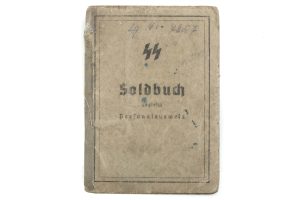
Waffen-SS Soldbuch SS-Unterscharführer Gerhard Schmitz, Panzergrenadier Regiment 2 LSSAH
€1,600.00Soldbuch to SS-Unterscharführer Gerhard Schmitz from Hildesheim. His dogtag is marked 6.SS-Pi.St. indicating 6. SS Pionier Sturmbann. This indicates he was already in service in 1940 or earlier. It seems he lost his Soldbuch or it wasn’t readable any more at some point because most notes are later in the war. He served with SS-Panzergrenadier Regiment which fell under the 1. SS Panzerdivision Leibstandarte Adolf Hitler. He had a set of cartridge pouches and a bayonet frog indicating he was most probably armed with a K98.
He was wounded numerous times by shrapnel in 1940, 1941, 1942 and 1945. On 12 Mai 1945 he was entered at Kriegslazarett 930 which was located in Mattighofen in Austria.
He was awarded the Verwundetenabzeichen in Schwarz, Infanterie Sturmabzeichen in Silber and the KVK II Klasse with swords. Considering his line of service he must have had whitnessed most of the important battles of the Division including the Ardennes offensive and the end of the war in Austria. A nice soldbuch which could be a nice base for further research!
-
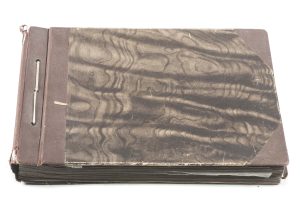
Impressive Luftwaffe Afrika photo album with Panzer, artillery and aircraft
€1,400.00Impressive Luftwaffe Afrika photo album with Panzer, artillery and aircraft in good condition. The album is well filled and has approximately 300 photos. The images show the Afrika campaign trough the eyes of a enlisted man serving with a Flak and Aircraft maintenance crewmember. It is mainly focussed on vehicles; be it tanks, trucks and aircraft. It seems that late in 1942 he was wounded and sent back to Germany to recover. This is probably also the reason he was not taken prisoner when the southern front fell. On the first page there is a Russian receipt for food in the Russian POW camp 147. It seems he was sent to the eastern front after healing from his wounds. The photoalbum is really impressive regarding the large number of vehicle and aircraft photos!
-
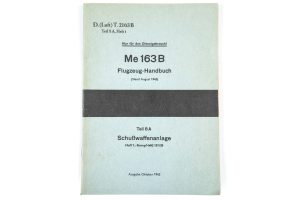
Rare Luftwaffe Jet Fighter Me 163B Komet Flugzeug Handbuch – Teil 8A Schußwaffenanlage
€800.00Rare Luftwaffe Jet Fighter Me 163B Flugzeug Handbuch – Teil 8A Schußwaffenanlage in excellent condition. This is a rare original manual for the infamous Luftwaffe ME 163 B fighter Jet. This manual compiles all the information about the weapon systems on board of teh ME 163B. It is a important manual for pilot as well as the the ground troups maintenancing the ME 163. It has multiple fold out pages. There is a digital version on this website. The manual is a very rare late war example in excellent condition. Unique opportunity to acquire this rare and high end manual for one of the first fighter jets in the world!
-
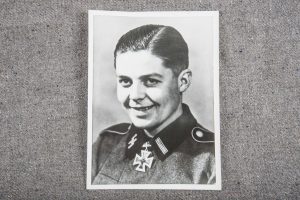
Rare Press Photo; Gerardus Mooyman
€750.00Rare Press Photo; Gerardus Mooyman with his knights cross. Hard to find photograph without headdress. Large photo approximately 18×24 cm.
This is a part of my personal collection of Knights Cross Holder Gerardus Mooyman photographs which I have collected trough the last 5 years. I am listing all Mooyman photographs together in one update. This is a very rare opportunity to acquire a genuine Mooyman photograph.
-
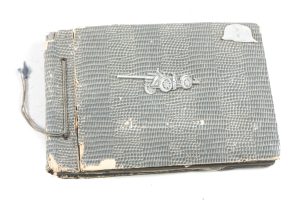
Waffen-SS Artillery and Flak photo album
€700.00Waffen-SS Artillery and Flak photo album in as found condition. The album has many interesting photos showing artillery pieces, officers and other uniforms. There are some missing photos but the album is a good base for further research!
-

Rare Press Photo; Gerardus Mooyman
€700.00Rare Press Photo; Gerardus Mooyman with his knights cross. Hard to find photograph without headdress. Large photo approximately 18×24 cm.
This is a part of my personal collection of Knights Cross Holder Gerardus Mooyman photographs which I have collected trough the last 5 years. I am listing all Mooyman photographs together in one update. This is a very rare opportunity to acquire a genuine Mooyman photograph.
-
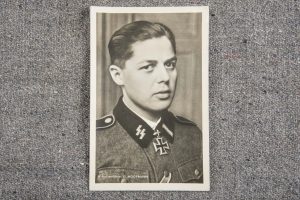
Rare Portrait Photo; Gerardus Mooyman
€550.00Rare Portrait Photo postcard; Gerardus Mooyman by Hoffmann, München. Size 9x14cm
This is a part of my personal collection of Knights Cross Holder Gerardus Mooyman photographs which I have collected trough the last 5 years. I am listing all Mooyman photographs together in one update. This is a very rare opportunity to acquire a genuine Mooyman photograph.
-
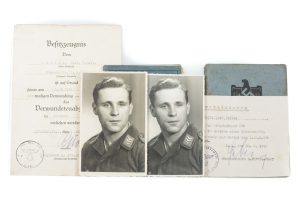
Soldbuch grouping of Kurt Helbig, Art Regt 276, 276 VGD, MP44, Ardennes
€550.00Soldbuch grouping of Unteroffizier Kurt Helbig, serving with Artillerie Regiment 276 under the 276 Volksgrenadier Division during the Ardennes offensive. He was first serving with several Luftwaffe search light units such as Flakscheinwerfer-Abteilung 238 and on 16.10.44 drafted in 276 VGD. The first page on his Soldbuch notes the fact that he was not issued a Heer Soldbuch but was part of the army. He participated during the Ardennes offensive and must have whitnessed a large portion of the combat in the area of the 276 VGD as described below. He was issued a MP44 for the Ardennes Offensive which he later had to turn in in March 1945. He was wounded 13.2.45 near Prüm.
-
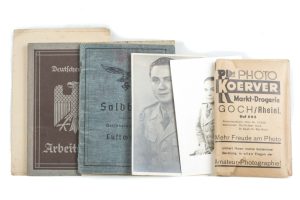
Soldbuch grouping
€500.00Soldbuch to Unteroffizier Paul Walter, serving with I./ Flak-Regiment 53 (mot.) trop., a motorized tropical unit of the 19. Flak-Division that saw heavy action on the Eastern Front before being destroyed in the final stages of the North Africa campaign.
The Soldbuch belongs to Paul Walter born on 11.6.1917 in Hamborn. Before the war, he was a trained Kaufmann (clerk) and Buchhalter in the Spedition industry in Goch. His military career began with Flakabteilung 37, where he served during the Battle of France in 1940; a surviving Ansichtskarte (postcard) from 18.6.1940 describes his unit deployed in open fields to provide Panzerschutz and Fliegerschutz along the French Chausseen.
He was promoted to Gefreiter and eventually Unteroffizier. As a specialist in the Nachrichtenzug (signals platoon), he was trained in field communications, with numerous photos showing him and his squad climbing Telegrafenmasten and posing in front of Funkwagen to establish vital communication lines.
His unit, I./53, was a specialized tropical designated outfit. A Marschbefehl (march order) dated 18.1.1943 details his final deployment: he was ordered to travel from Caserta, Italy, via Neapel, Reggio, and Trapani to arrive in Tunis to deliver critical equipment . He reported to the front on 20.1.1943, just as the Axis pocket in Tunisia was tightening.
He was awarded several awards:
– 1.9.1941: Flak-Erdkampfabzeichen
– 16.10.1941: Rumänische Tapferkeitsmedaille
– 20.11.1941: Verwundetenabzeichen in Schwarz
– 10.1.1942: Funk trüppführer (?) Abzeichen
– 30.01.1942: Schützenschnur Für besonder Auszeichnungen
– 20.05.1942: Ostmedaille zur Erinnering an den Ostfeldzug
– 16.5.1942: Eisernes Kreuz II Klasse
– 10.01.1943: Dienstauszeichnung der Wehrmacht 4. Klasse– 10.05.1943: Ärmelstreifen „Afrika“ (Afrika Cuff Title), awarded for his service with the Afrikakorps forces.His unit, I./ Flak-Regiment 53 (mot.) trop., was part of the 19. Flak-Division. The division provided the primary anti-aircraft and anti-tank umbrella for the German and Italian forces in North Africa. After the retreat from El Alamein, the unit fought desperate rearguard actions across Libya and into the Tunis bridgehead. Following the collapse of the Axis lines, the unit surrendered en masse to Allied troops in May 1943.
Paul Walter survived his time as a Kriegsgefangener (POW), eventually returning to Krefeld. In March 1956, he had these documents officially certified by the local Fernmeldebauamt (telecommunications office), likely to secure a post-war pension or civil service position.
A complete grouping including the Soldbuch, Arbeitsbuch, Marschbefehl, and a collection of Fotos showing his transition from a clerk in Goch to a veteran of the Eastern Front and the North African desert!
-
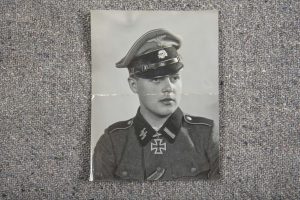
Rare Portrait Photo; Gerardus Mooyman
€500.00Rare Portrait Photo; Gerardus Mooyman with visor and knights cross. The photo is size 8×11 cm. Hard to find original portrait!
This is a part of my personal collection of Knights Cross Holder Gerardus Mooyman photographs which I have collected trough the last 5 years. I am listing all Mooyman photographs together in one update. This is a very rare opportunity to acquire a genuine Mooyman photograph.
-
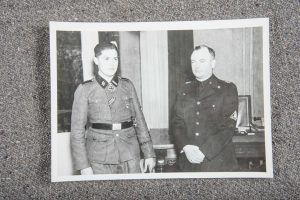
Rare Press Photo; Gerardus Mooyman
€500.00Rare Press Photo; Gerardus Mooyman meeting with Anton Mussert at the Headquarters of the NSB.
This is a part of my personal collection of Knights Cross Holder Gerardus Mooyman photographs which I have collected trough the last 5 years. I am listing all Mooyman photographs together in one update. This is a very rare opportunity to acquire a genuine Mooyman photograph.
-

Rare Press Photo; Gerardus Mooyman with Zondervan and Mussert
€500.00Rare Press Photo; Gerardus Mooyman with Zondervan and Mussert at the NSB headquarters.
This is a part of my personal collection of Knights Cross Holder Gerardus Mooyman photographs which I have collected trough the last 5 years. I am listing all Mooyman photographs together in one update. This is a very rare opportunity to acquire a genuine Mooyman photograph.
-
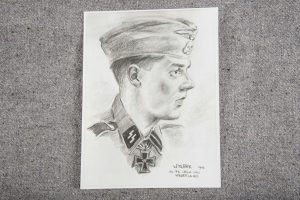
Rare Press Photo; Drawing of Gerardus Mooyman
€500.00Rare Press Photo considering a photo of a kriegsberichter drawing of Gerardus Mooyman in the size 10×6 cm. Hard to find!
This is a part of my personal collection of Knights Cross Holder Gerardus Mooyman photographs which I have collected trough the last 5 years. I am listing all Mooyman photographs together in one update. This is a very rare opportunity to acquire a genuine Mooyman photograph.
-
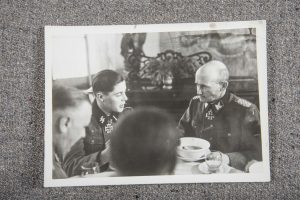
Rare Press Photo; Gerardus Mooyman
€450.00Rare Press Photo; Gerardus Mooyman meeting with Generalmajor der Waffen-SS Schölz.
This is a part of my personal collection of Knights Cross Holder Gerardus Mooyman photographs which I have collected trough the last 5 years. I am listing all Mooyman photographs together in one update. This is a very rare opportunity to acquire a genuine Mooyman photograph.
-
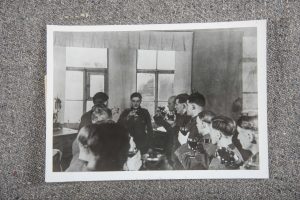
Rare Press Photo; Gerardus Mooyman
€450.00Rare Press Photo; Gerardus Mooyman drinking schnaps with his men after being awarded the Ritterkreuz. Hard to find original photograph!
This is a part of my personal collection of Knights Cross Holder Gerardus Mooyman photographs which I have collected trough the last 5 years. I am listing all Mooyman photographs together in one update. This is a very rare opportunity to acquire a genuine Mooyman photograph.
-
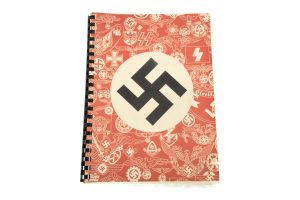
Period F.W. Assmann & Söhne sales catalogue
€400.00Rare original F.W. Assmann & Söhne sales catalogue. This catalogue showcases all the buckles, buttons and uniform accesories produced by Assmann during the war. It has many interesting features. Rare period catalogue that could be a ultimate collection list for the specialised collector!
-
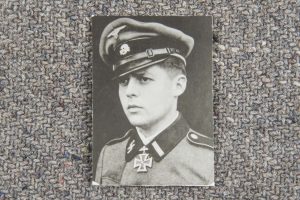
Rare Portrait Photo; Gerardus Mooyman
€400.00Rare Photo considering a portrait of Gerardus Mooyman in the size 5×3,5 cm. Hard to find – this is a Solcbuch or Passport size!
This is a part of my personal collection of Gerardus Mooyman photographs which I have collected trough the last 5 years. I am listing all Mooyman photographs together.
-
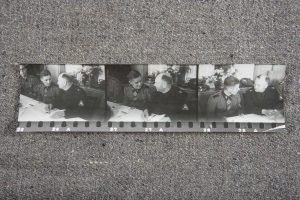
Rare Press Photo; Gerardus Mooyman
€400.00Rare Press Photo; Gerardus Mooyman in a meeting with Mussert. This is a print of the negatives, hard to find!
This is a part of my personal collection of Knights Cross Holder Gerardus Mooyman photographs which I have collected trough the last 5 years. I am listing all Mooyman photographs together in one update. This is a very rare opportunity to acquire a genuine Mooyman photograph.
-
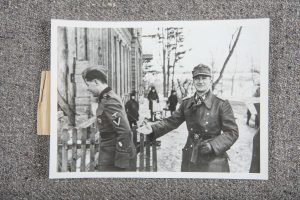
Rare Press Photo; Gerardus Mooyman with Generalmajor der Waffen-SS v. Scholz
€400.00Rare Press Photo; Gerardus Mooyman with Generalmajor der Waffen-SS v. Scholz in good condition.
This is a part of my personal collection of Knights Cross Holder Gerardus Mooyman photographs which I have collected trough the last 5 years. I am listing all Mooyman photographs together in one update. This is a very rare opportunity to acquire a genuine Mooyman photograph.
-
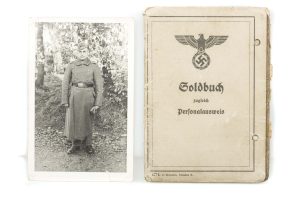
Soldbuch to Hans Schühmacher, Füsilier Regiment 27, 12. VGD, Aachen, Hürtgenwald, Malmedy, Elsenborn
€400.00Soldbuch to Hans Schühmacher serving with Füsilier Regiment 27, 12. Volks Grenadier Division at the end of the war fighting at Aachen, Hürtgenwald, Malmedy and Elsenborn.
The Soldbuch was first filled in 10.6.1941 enlisting with Schutzen Ersatz Kompanie 193. He was then drafted to Landesschützen-Bataillon 479 which was tasked guarding POW’s near Groß-Hesepe. After this he was sent to Infanterie Regiment 27, later to be renamed into Füsilier Regiment 27.
He was promoted to Oberschütze 1.2.42. He was promoted to Gefreiter on 1.3.42 and Obergefreiter on 1.1.44.
He was issued a number of interesting field gear items such as a Tarnnetz or helmet net, a sewing kit, a visor cap, a two piece reversible winter suit and Kopfhaube. He was armed with a K98.
He was wounded a number of times.
11.5.42 wound code –
26.12.43 wound code – Reserve Lazarett Königsberg.
13.1.44 wound code – Reserve Lazarett Brumat, Elsass
25.11.44 wound code 31b indicating shrapnel wounds. Reservelazarett Günzburg / Donau. He was probably wounded during the fighting in Aachen or the Hürtgenwald at this point.He was awarded several awards;
20.2.42 Iron Cross second class when his unit was fighting between Olenin-Bjeloje
15.5.42 Wound badge in Black, same area
20.11.44 Infantry Assault Badge in Silver when his unit was fighting in Aachen or the HürtgenwaldHis unit was part of the 12. Volksgrenadier Division which saw a lot of action on the Western front from early october 1944 until the end of the war. The unit was first sent to defend Aachen and saw heavy fighting for the Hürtgenwald. Mid november the division saw heavy action at Stolberg, Hastenrath and Eschweiler which was his hometown and probably the area he was wounded as well. The division was then merged with the 47 Volksgrenadier Division because of heavy losses on 25.11.44. Two days later US troops breached the line near Inden. Late November they were pulled from the line near Merode and sent for rest and refit between Jülich and Düren. Starting 14.12.44 it was moved to Hallschlag and Scheidt in preparation for the Ardennes Offensive. The first line of troops consisted of Grenadier Regiment 48 and Füsilier Regiment 27. The offensive started from Losheimergraben and on 17.12.44 they started opening the road from Büllingen trough Bütgenbach to Malmedy. The attack stalled at Bütgenbach until the 25.12.44. The division was moved to Hierlot where it severed heavy losses in January 1945 consisting of only 600 battle ready troops. It was sent to the Rhine between Leverkusen and Knapsack. In march 1945 it was sent to the Remagen bridgehead and shortly after it capitulated to the American troops in the Ruhrkessel.
A interesting Soldbuch with a load of entries, great for research!
-
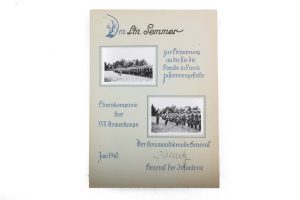
Photo grouping Knights Cross bearer Wolfgang Semmer
€400.00Set of wartime photographs of Knights Cross bearer Wolfgang Semmer and the award ceremony. Major Wolfgang Semmer earned his Knights Cross in June 1940 serving as the Chef of 5. Kompanie Infanterie Regiment 85. The grouping consists of a number of wartime photographs of Semmer and his men. The front indicates it was given as a memory of the Parade in Paris from the assembled Ehrenkompanie of the XVII Armeekorps. It is signed by Werner Kienitz, commanding General of the XVII. Corps who himself was awarded the Knights Cross in 1941. A unique set of photographs, bundeled together in a nice group.
-
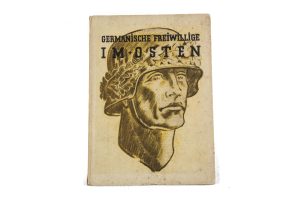
Waffen-SS Propaganda book ‘ Germanische Freiwillige’
€400.00Waffen-SS Propaganda book ‘ Germanische Freiwillige’ by Benno H. Schaeppi. A very interesting book with many period photographs and information. Hard to find in good condition!
-

Rare Press Photo; Drawing of Gerardus Mooyman
€350.00Rare Press Photo considering a photo of a kriegsberichter drawing of Gerardus Mooyman in the size 10×6 cm. Hard to find!
This is a part of my personal collection of Gerardus Mooyman photographs which I have collected trough the last 5 years. I am listing all Mooyman photographs together.
-
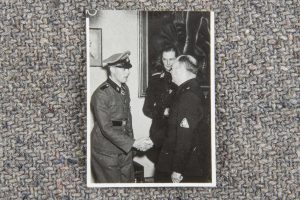
Rare Press Photo; Gerardus Mooyman
€350.00Rare Press Photo; Gerardus Mooyman in the size 4x5cm depicting Mooyman meeting with Zondervan and Mossert.
This is a part of my personal collection of Knights Cross Holder Gerardus Mooyman photographs which I have collected trough the last 5 years. I am listing all Mooyman photographs together in one update. This is a very rare opportunity to acquire a genuine Mooyman photograph.
-
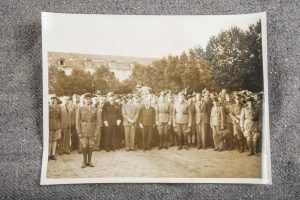
Press Photo; French LVF Volunteers against Bolshewism
€350.00Press Photo; French Heer volunteers. The Legion Des Volontaires Francais contre le Bolchevisme was drafted as Infanterie Regiment 638 and suffered heavy losses for the battle of Moscow. Rare original large 18×24 cm sized photograph taken at Versailles.
-
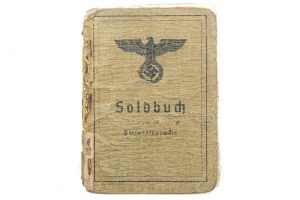
Soldbuch to Unteroffizier Hartjes, Artillerie Regiment 179, 79 VGD – Ardennes, Luxembourg, Eifel
€350.00Soldbuch to Unteroffizier H. Hartjes. The Soldbuch was first filled in 26.8.39 when he enlisted with 2. Batterie Artillerie Regiment 11. His battery was subsequently merged with 5. Batterie Artillerie Regiment 291 between July and August 1940. He was promoted to a Obergefreiter on 1.7.1940 serving with Artillerie Regiment 291. He was promoted to Unteroffizier on 1.12.1940 serving with Artillerie Regiment 306. After serving with this unit for some time he was sent to Artillerie Regiment 170 which was a new unit formed in may 1944. With him being hospitalised and healing he was enlisted with this newly formed unit. This unit was destroyed in the fighting for Walcheren, the Netherlands in November 1944. After this he was sent to Artillerie Regiment 179 right in time for the Ardennes Offensive.
He was issued a number of interesting uniform and equipment pieces under which;
Tragegestell or carrying frame
Tarnnetz or helmet net
Pelzweste or Fur winter vest
Knee warmers
Felt in lay soles
Mapcase
Greatcoat
Gasmask size 3He was issued many different weapons of which 1 rifle and 3 different pistol including one Belgian.
He was wounded 3 times;
15.6.44 wound code 18 indicating Pneumonia, hospitalised at Feldlazerett (Motorisiert) 5 Luftwaffe
1.4.44 wound code 31a indicating bulletwounds, hospitalised in Kriegslazarett Belgrad
6.9.44 wound code 31u(is probably a) indicating bulletwounds, hospitalised in Reserve Lazarett II Olmuss Teillazerett Pöttingeum which is a Neo Gothic style school building in Olomouc, Czech. During the war this was used as a Feldlazarett.He was awarded the Iron Cross second class on 26.1.1943. He was awarded the black wound badge on 8.9.44.
His last furlough was granted on 20.10.44 and lasted 7 days indicating he was back with his unit 27th of October.
Prior to the Ardennes offensive he was drafted in Artillerie Regiment 179 which was a part of the 79 Volksgrenadier Division during the Ardennes offensive. His unit fought in the Ardenes at Vianden, Bourscheid and later retreated to the Westwall. Early in 1945 it fought hard battles with US divisions in Germany. The soldbuch would be a good base for further research! -
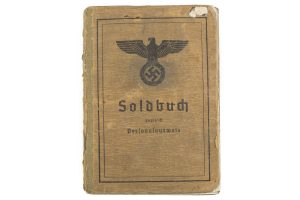
Soldbuch to Gefreiter Fränzel, Artillerie Regiment 179, 79 VGD- Ardennes, Luxembourg, Eifel
€350.00Soldbuch to Gefreiter Fränzel serving with Artillerie Regiment 179 which was part of the 79 Volksgrenadier Division. The Soldbuch was filled 28.6.44 with Stammbatterie Leichte Artillerie Esatz und Ausbildungs Abteilung (Motorisiert) 4. He was later part of 1. Batterie Artillerie Regiment 179 which was a part of the 79 Volksgrenadier Division during the Ardennes offensive. His unit fought in the Ardenes at Vianden, Bourscheid and later retreated to the Westwall. Early in 1945 it fought hard battles with US divisions in Germany. He carried a K98 rifle. He was wounded in March 1945 and was awarded the black wound badge. The soldbuch would be a good base for further research!
Page 5 is loose but present.
-
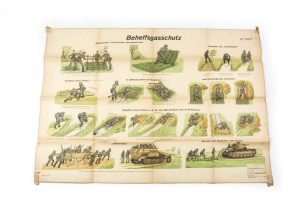
Large instruction poster – Behelfsgasschutz
€350.00Beautiful original period instruction on improvised gas protection techniques or Behelfsgasschutz. The entrenching tool is to show the size of the poster.
-
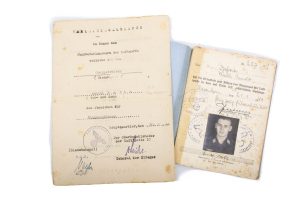
Flugzeugführer document grouping to Obergefreiter Arnold Merth
€350.00Flugzeugführer document grouping to Obergefreiter Arnold Merth. The grouping consists of his Flugzeugführer document and his Luftwaffe Flugzeugführerschein. Merth attended the Flugzeugführerschule B20 and learned to fly the Ju 52, Si 204 and HE 111- E, F, B, P.
-

US Photograph: Operation Market Garden 101st Airborne
€300.00US Photograph: Operation Market Garden 101st Airborne. Great clear photograph of a 101st Airborne Jeep moving towards Son or Veghel. Hard to find, large format photograph.
-
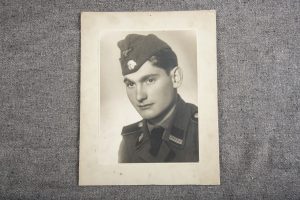
Large SS Totenkopf Rottenführer portrait
€300.00Large SS Totenkopf Rottenführer portrait. Interesting large sized photographic portrait. Nice detail with metal skull added to the sidecap. The photo was taken out of a frame sized 30×24 cm.
-
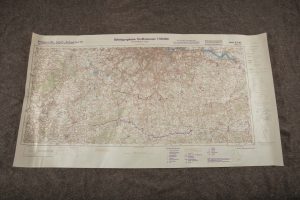
Rare Befestigungskarte 1:1 000 000 Grossbritannien London-Süd
€300.00Rare Befestigungskarte or defence overprint 1:1 000 000 Grossbritannien London-Süd. This map contains all the RAF and British Army installation in the area south of London. This is a vital and secret map which is very hard to find, a special piece for the Battle of Brittain collector!
-
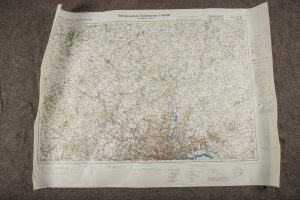
Rare Befestigungskarte 1:1 000 000 Grossbritannien London-Nord
€300.00Rare Befestigungskarte or defence overprint 1:1 000 000 Grossbritannien London-Nord. This map contains all the RAF and British Army installation in the area south of London. This is a vital and secret map which is very hard to find, a special piece for the Battle of Brittain collector!
-
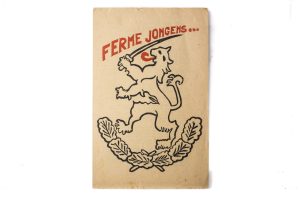
Dutch 34. SS-Freiwilligen Grenadier Division Landstorm Nederland recruitment leaflet
€300.00Rare Dutch 34. SS-Freiwilligen Grenadier Division Landstorm Nederland recruitment flyer. This is a rare smaller sized flyer printed later in the war.
-
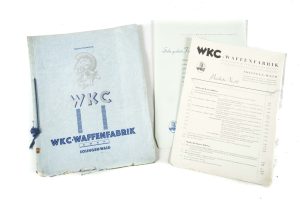
Period WKC Waffenfabrik sales catalogue
€275.00Rare original WKC Waffenfabrik sales catalogue. This catalogue showcases all the daggers, bayonets and swords produced by WKC during the war. It has many interesting features such as custom engravings etc. Rare period catalogue that could be a ultimate collection list for the specialised collector!
-
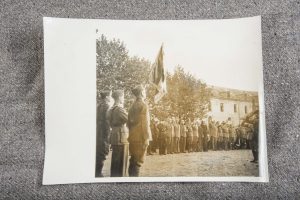
Press Photo; French LVF Volunteers against Bolshewism
€275.00Press Photo; French Heer volunteers. The Legion Des Volontaires Francais contre le Bolchevisme was drafted as Infanterie Regiment 638 and suffered heavy losses for the battle of Moscow. Rare original large 18×24 cm sized photograph taken at Versailles.
-
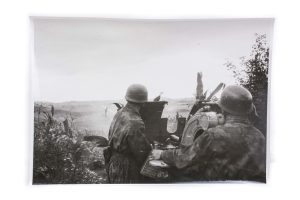
Original Fallschirmjäger Flak photo
€275.00Original Fallschirmjäger Flak photo sized 12,5 x 17,5 cm. The photo is clear and shows numerous interesting details!
-
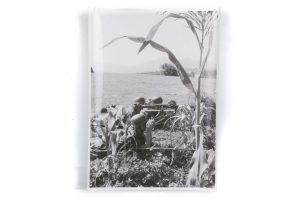
Original Fallschirmjäger MG42 Lafette photo
€275.00Original Fallschirmjäger MG42 Lafette photo sized 12,5 x 17,5 cm. The photo is clear and shows numerous interesting details!
-
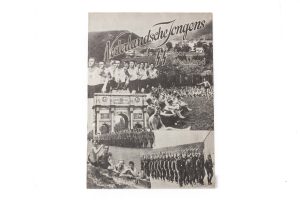
Dutch SS-Standarte Westland recruitment leaflet
€275.00Dutch SS-Standarte Westland recruitment flyer in very good condition. Hard to find example.
-
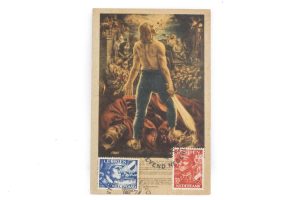
Dutch Postcard of ‘De Nieuwe Mensch’ by Henri van de Velde
€275.00This postcard showcases the artwork “De Nieuwe Mensch” by the painter Henri van de Velde. On the front side, you’ll find the stamp from the NSB exposition “Herlevend Nederland,” accompanied by two Dutch Waffen-SS postage stamps. This print is exceptionally rare and remains in excellent condition.
-
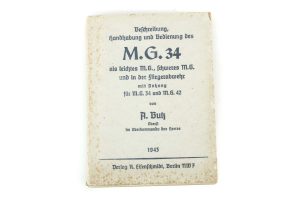
MG34 manual by Oberleutnant A. Butz, 1943
€250.00Rare original and complete army issue MG34 manual in very good condition. The manual is in very good condition and is for as far as I can see not missing any pages. Nice in depth manual about the MG34, its accessories, application, within vehicles Etc. Very hard to find issued manual!
-
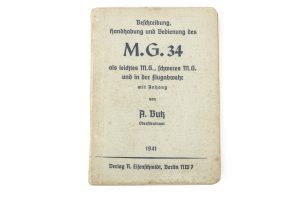
MG34 manual by Oberleutnant A. Butz, 1941
€250.00Rare original and complete army issue MG34 manual in very good condition. The manual is in very good condition and is for as far as I can see not missing any pages. Nice in depth manual about the MG34, its accessories, application, within vehicles Etc. Very hard to find issued manual!
-
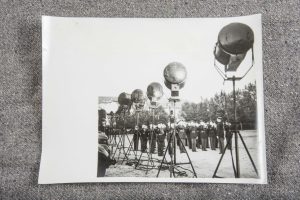
Press Photo; French LVF Volunteers against Bolshewism
€250.00Press Photo; French Heer volunteers. The Legion Des Volontaires Francais contre le Bolchevisme was drafted as Infanterie Regiment 638 and suffered heavy losses for the battle of Moscow. Rare original large 18×24 cm sized photograph taken at Versailles.
-
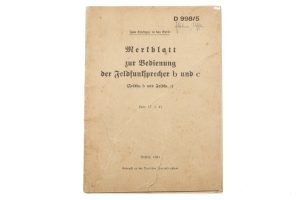
Merkblatt D 998/5 zur Bedienung der Feldfunksprecher b und C
€250.00Merkblatt D 998/5 zur Bedienung der Feldfunksprecher b und C. Hard to find original manual in good condition!
The information can be found here on the excellent website of https://www.cdvandt.org; https://www.cdvandt.org/D-998-5.pdf
-
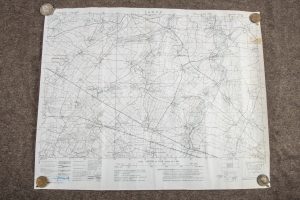
British 1:25 000 map Thaon, Bretteville, Buron, Rots, Abbaye d’Ardenne
€250.00British 1:25 000 map Thaon, Bretteville, Buron, Rots, Abbaye d’Ardenne. This is a very good British Normandy map which shows the full area of operation of the 12th SS Panzer Division. The area depicted is some of the most hard fought over grounds in Normandy with some of the most Iconic photographs in the war taken there. Hard to find region in good condition!
-
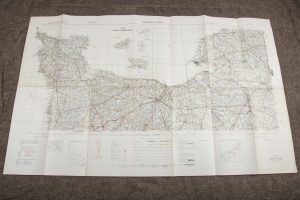
British 1:200 000 Normandy map Sheet 54 Cherbourg – Rouen
€250.00British 1:200 000 Normandy map Sheet 54 Cherbourg – Rouen in excellent condition. This map shows the whole Normandy area. This is a nice and large map which would be very decorative in your house or collection room!
-
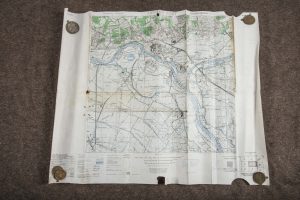
British 1:25 000 map Arnhem East, Emergency Print
€250.00British 1:25 000 map Arnhem East, Emergency Print in good condition. There are some missing pieces in the corners but otherwise great for a display. The map has several period markings for codenames along the Rhine in Arnhem such as Michael, Christopher, Violin, William, Geoffrey, Horace, Tony, Henry VI, Henry V, Henry III, Henry 1, Richard. The map would be a nice Market Garden display piece!
-
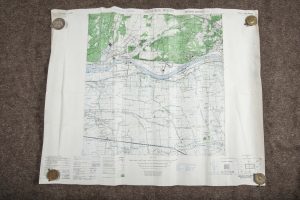
British 1:25 000 map Arnhem West, Emergency Print
€250.00British 1:25 000 map Arnhem East, Emergency Print in good condition. The map shows Renkum and Oosterbeek. The map would be a nice Market Garden display piece!
-
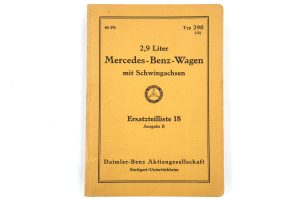
Rare Mercedes spare parts list Type 290 – W18 – 1934
€250.00Rare Mercedes spare parts list Type 290 – W18 – 1934 in excellent condition. Hard to find original Ersatzteileliste! These cars were typical Wehrmacht and Waffen-SS staff cars. NOT to be confused with the modern reprints!
-
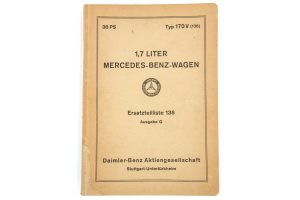
Rare Mercedes spare parts list Type 170 V – W136 – 1942
€250.00Rare Mercedes spare parts list Type 170 V – W136 – 1942 in excellent condition. Hard to find original Ersatzteileliste! These cars were typical Wehrmacht and Waffen-SS staff cars. NOT to be confused with the modern reprints!
-

Rare Jahrbuch der Deutsche Kriegsmarine, 1941 – marked Eigentum des Reichskommissars (!)
€250.00Normally this is NOT a spectacular book; but this version of the Jahrbuch der Deutsche Kriegsmarine, 1941 is marked Eigentum des Reichskommissars (!) indicating this would have been the personal property of Arthur Seyss-Inquart, Alexander Freiherr von Falkenhausen, Josef Terboven, Hinrich Lohse. Erich Koch, Karl Kaufmann or Joseph Grohé. Considering this book was originally discovered in the Dutch capital I would suggest it most probably would have belonged to the office of Arthur Seyss-Inquart. This is a unique opportunity to acquire something that was most probably held and read by Arthur Seyss-Inquart.
-
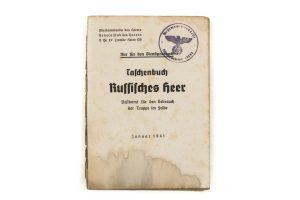
Rare manual; Taschenbuch Russisches Heer
€250.00Rare manual; Taschenbuch Russisches Heer in used condition. This is a rare manual depicting all facets of the Russian army. This manual was classed as secret and is still hard to find nowadays. Many interesting coloured illustrations and photographs inside.
-
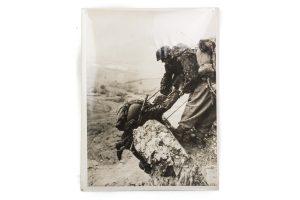
German press photo; Waffen-SS Gebirgsjäger; size 24×18,5 cm
€250.00Large German press photo; Waffen-SS Gebirgsjäger; size 24×18,5 cm in good condition. Nice large format with numerous interesting details such as a coconut canteen and a Erma EMP submachine gun.
-

Original Fallschirmjäger patrol photo
€250.00Original Fallschirmjäger patrol photo sized 12,5 x 17,5 cm. The photo is clear and shows numerous interesting details!
-
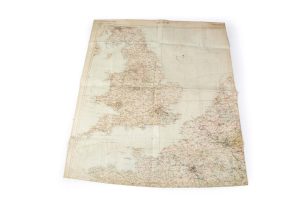
German map Zusammendruck 1:1.000.000 NM30-31 1941 United Kingdom, France and the Netherlands
€250.00Large German Luftwaffe flight map Zusammendruck 1:1.000.000 NM30-31 1941 United Kingdom, France and the Netherlands. A rather large map roughly 90×90 cm. Hard to find large map with a rather interesting area depicted.
-
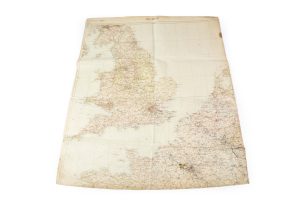
German map Zusammendruck 1:1.000.000 NM30-31 1941 United Kingdom, France and the Netherlands
€250.00Large German Luftwaffe flight map Zusammendruck 1:1.000.000 NM30-31 1941 United Kingdom, France and the Netherlands. A rather large map roughly 90×90 cm. Hard to find large map with a rather interesting area depicted.
-
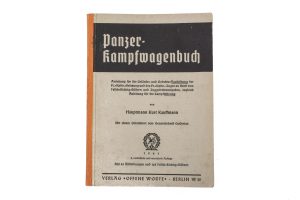
Rare Panzerkampfwagenbuch manual
€250.00Rare Panzerkampfwagenbuch which is a instruction manual for tactical movement of armoured vehicles. It features many examples on the best and right way to fight in armoured vehicles. Rare to find manual in good condition!
Showing 1–60 of 279 results